
Why Gamified Systems Support Mental Resilience
Why Mental Health Matters in Gamification
Employees’ mental well-being is no joke. According to a 2024 Workhuman study reported in Forbes, 80 percent of workers have experienced mental health struggles while on the job, particularly related to productivity anxiety. The cost of demotivated, disengaged employees is significant: according to the World Health Organization, up to $1T of revenue is lost annually as a result. That’s right: T as in trillion!
Building a safe, comfortable workplace is therefore paramount to guaranteeing your workers’ well-being and maintaining your business productivity. A key means to accomplish this? Gamification.
In this article, we’ll take a look at how gamification can provide tangible benefits for employees’ mental health, as well as some of the risks of using gamification. And we’ll explore how gamification features can be used in tandem with real-time data dashboards.
What Is Gamification Anyway?
To start, just what is gamification, and why does it matter?
Gamification is the practice of implementing game-based features into non-game contests. It’s a commonly-used tactic across multiple platforms, and indeed is a ubiquitous feature of modern life.
If you’ve ever redeemed airline points, recorded a run time in your Strava account, or levelled up in learning a language in Duolingo, you’ve engaged with gamification.
Gamification is an effective tactic because it targets dopamine receptors in the human brain. Every time you achieve a “small win,” you get a brief rush or kick of excitement and satisfaction. This in turn spurs you on to achieve the next level, or win the next set of points, of whatever project or goal you’re working towards.
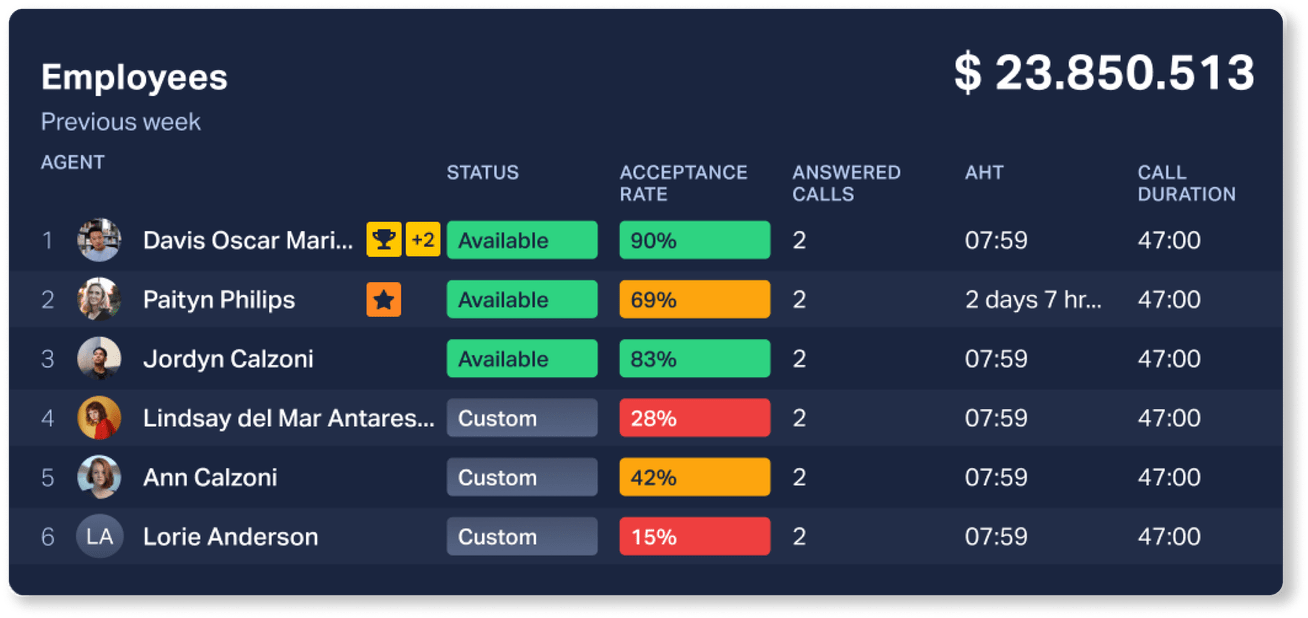 Build your own sales leaderboard
Why Is Gamification Key to Boosting Employees’ Mental Health?
Gamification has exploded in popularity in offices over the past decade. Why? Because it’s proven to be an effective means for boosting and maintaining employee engagement at a high level.
In environments such as call centers, where work can often be repetitive and uninspiring, gamification can provide an essential means to maintain, if not increase, employee engagement, mental stimulation, and morale. Here are three of the biggest benefits of gamification to employee mental health:
- Creating a narrative framework for one’s work. Employee burnout can be caused by overwork or stress, but it can also be due to the feeling that one’s work is meaningless—a lot of time and effort poured into accomplishing….what, exactly?
- This is where gamification is critical, as it can create structure that gives meaning to one’s work. Having a clear system of accomplishment-based levels, concrete goals, and tangible rewards provides employees a motivating sense of working towards something, rather than a feeling their output is disappearing into the void.
- Instant feedback for big and small wins. It’s undoubtedly difficult for sales agents, for example, to keep slogging through outbound efforts for very little reward. However, when a lead is established—or better yet, a deal closed—this provides a powerful and obvious impetus for recognition and celebration.
- Gamification features such as Achievement Badges or Instant Notifications—or a more tangible reward for really big wins—allow employees to mentally focus their efforts on “going for the gold” and receiving that peer-to-peer reinforcement that’s so important for social bonding.
- Stimulating mental effort through challenge. Engaging in challenging activities spurs growth. Of course, challenges shouldn’t be too difficult, as this situation can create disengagement— “It’s too difficult, so why even bother?”
- However, challenges with just the right level of difficulty are a powerful way to boost one’s motivation and skill set. That feeling of the perfect level of mental stimulation—the “Goldilocks level” of not too easy, not too hard where both apathy and burnout are avoided—is called flow.
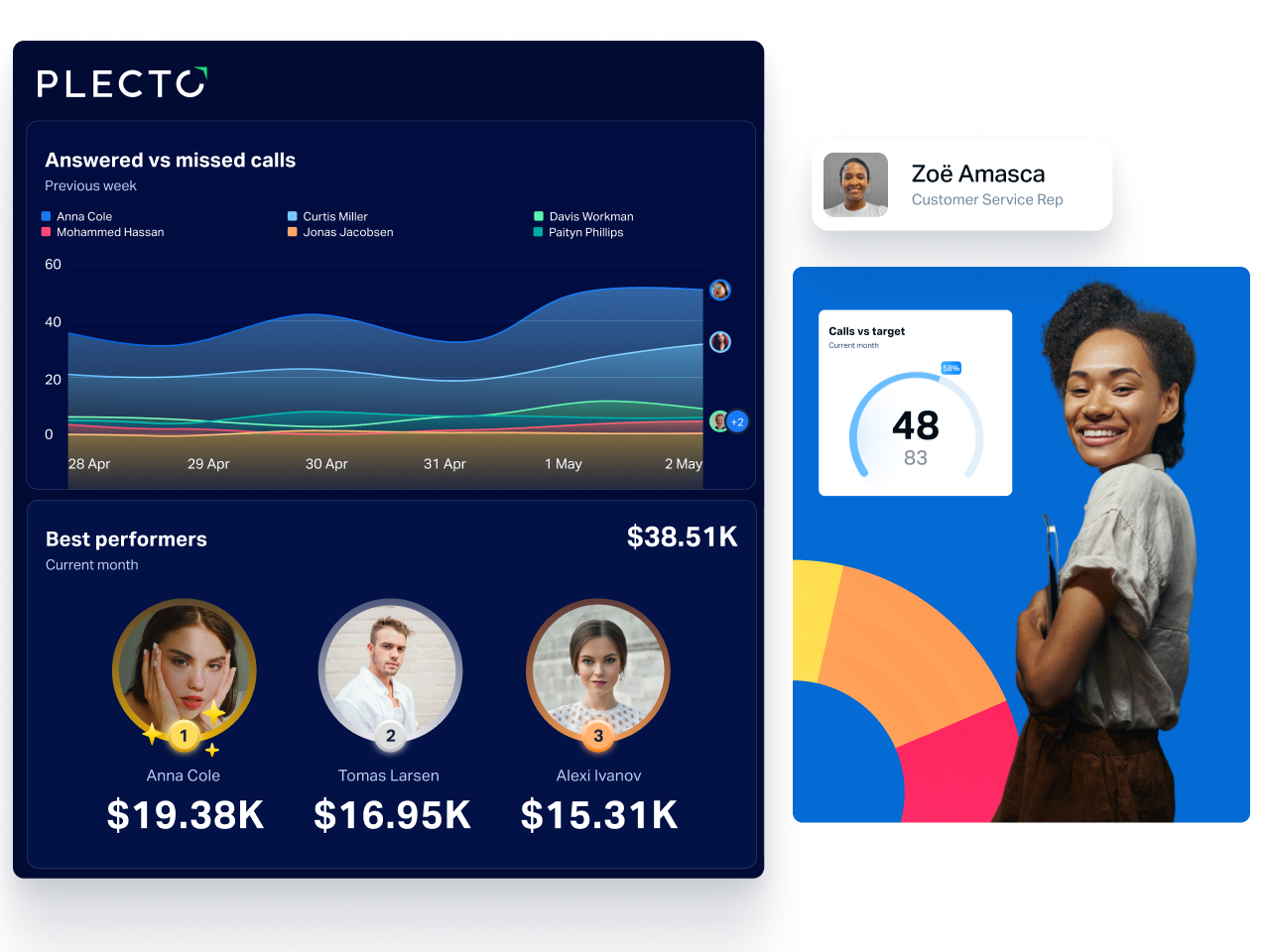
- By providing employees projects tailored to their individual skill levels, and tracking their completed projects via Plecto Leaderboards or Contests, you can provide a framework for employees to experience their own flow states—ultimately creating the engagement that results in increased productivity.
What are Some Challenges Posed By Gamification?
Gamification can be a truly powerful and effective tool, which is why it’s crucial to use it correctly. Implementing a gamification strategy in your workplace to boost employee engagement without necessary forethought can actually result in the opposite effect—where rather than becoming more attuned to their work and more cooperative as a team, employees become more removed from their work and isolated instead.
To support rather than suppress your employee well-being, here are three of the main things to avoid when introducing gamification to your workplace:
- Raising the stakes to an extreme extent. Gamification should be about workplace motivation and bringing out one’s best self. It shouldn’t be about tying one’s employment or sense of personal self-worth to said gamified activity.
- Raising the stakes of gamification performance to a zero-sum endeavor—where one either “wins” with a substantial reward, or “loses” with a substantial penalty—defeats the purpose of gamification as a motivating, fun, and unifying activity for all.
- A negative culture of unhealthy competition. Don’t turn your office into a Squid Game or Glengarry Glen Ross cosplay! There’s no need to create a culture where employees or teams are set against each other to battle to the death—and managers should intervene if some employees feel emboldened to take things to a personal level.
- Rather than competition being the default gamification mode, cooperation can actually prove a far more effective tactic to spur on motivation while avoiding competitive extremes.
- Loss of intrinsic motivation. Gamification can be a powerful means to boost motivation for the dull, unexciting tasks that are inevitable for most employees. However, relying exclusively on gamification to boost workplace motivation can keep employees trapped in a loop where they might eventually feel conditioned to perform tasks. This, in turn, could lead to disengagement—the very problem gamification is intended to address.
- Naturally, this isn’t an ideal scenario. A solid gamification strategy will incorporate just enough extrinsic motivation to allow employees a feeling of satisfaction and recognition, while establishing a paradigm for employees to truly own their performance and take accountability and pride in their work.
Build a Smart Gamification Strategy with Plecto
Gamification carries tremendous potential to increase employee engagement and well-being in the office. But there are some challenges or pitfalls in implementing a gamification strategy that also must be accounted for.
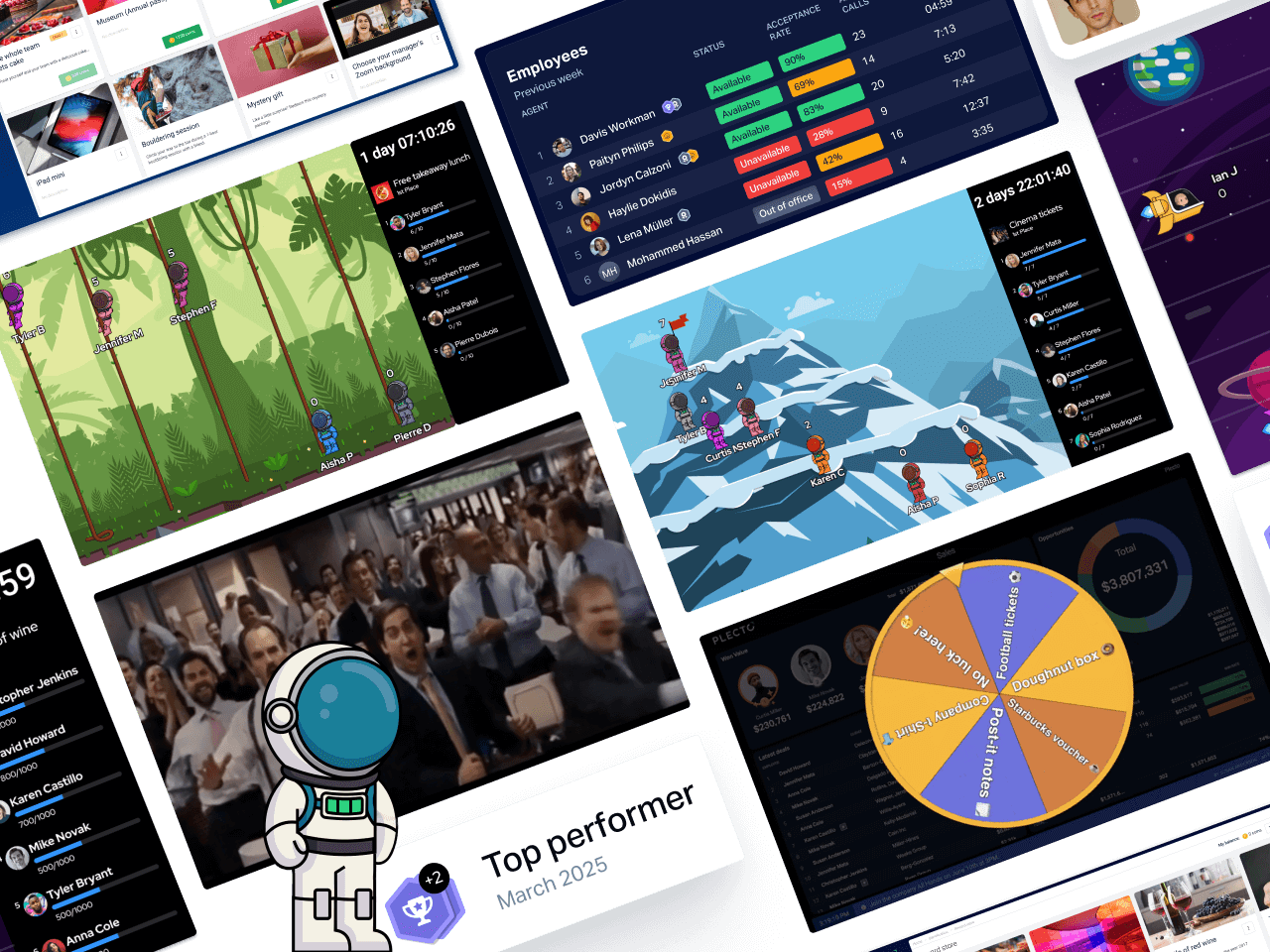
Overall, however, gamification continues to prove an effective—and exciting—means for giving employees a much-needed cognitive boost. Using Plecto’s gamification features, including dashboards, contests, and notifications, is a surefire way to bring employee performance to new heights!
Companies across Europe and North America have experienced the power of Plecto’s gamification firsthand. You can read some of their stories here:
- Düsseldorf Recruitment Firm Boosts Meeting Scheduling and Appointment Rates By 300% with Plecto
- ZRM x Plecto Partnership Drives Motivation and Efficiency at Danish Networking Forum
- US Insurance Firm Feels "Instant Impact" of Plecto's Real-Time Visualization
Get excited for how gamification can transform your office—and watch out for your employees’ mental health too. Sign up for a free Plecto demo or two-week trial today.
Start your 14-day free Plecto trial today.
Enjoyed the article? Share it:


JAMES NIILER