 Sign in
Gamification: Align Employee Behavior with Company Goals
Learn how gamification aligns employee behavior with company goals using real-time feedback and rewards to boost engagement and performance.
Scale Employee Engagement with Your Business Goals
Gamification borrows the mechanics that make games engaging and applies them to everyday work. Think of points, levels, progress bars, and friendly competition. The goal isn't to turn jobs into video games. It’s about helping people see their progress and feel recognized. It’s about understanding how their actions contribute to company success.
The concept isn't new. Loyalty punch cards and sales contests have been around forever. What's different now is the data and design. Real-time dashboards and clear metrics have turned gamification into a practical tool. They work in energizing teams and clarifying priorities across growing organizations.
This page covers what you need to know about gamification. Read on to specifically learn how to use it to connect daily choices with company objectives.
Match Company Goals with Gamification
Understanding company goals
Most companies share common objectives:
- Increase productivity
- Deliver great customer experiences (CX)
- Grow revenue efficiently
- Launch better products faster
- Reduce churn
- Operate safely and compliantly
These aren't just leadership talking points. They should shape daily decisions across sales, support, operations, and beyond.
When those big goals don't translate into how people plan their days, things drift. Reps chase the wrong metrics. Backlogs balloon. Customer issues get solved late. Innovation stalls because no one's sure what matters most right now.
Gavin Yi, CEO & Founder of Yijin Solution, works with manufacturing and production teams. Where alignment between strategy and execution is critical.
Yi says, “When company goals, such as quality and efficiency, are clearly translated into daily shop-floor actions, everything runs more smoothly. Teams make better decisions in real time. Why?
“Because they understand how their work impacts their overall operational performance and customer satisfaction. The key is turning big business goals into visible priorities people can act on every day.”
Gamification helps build that visibility. Let’s take Plecto’s gamification feature, for instance:
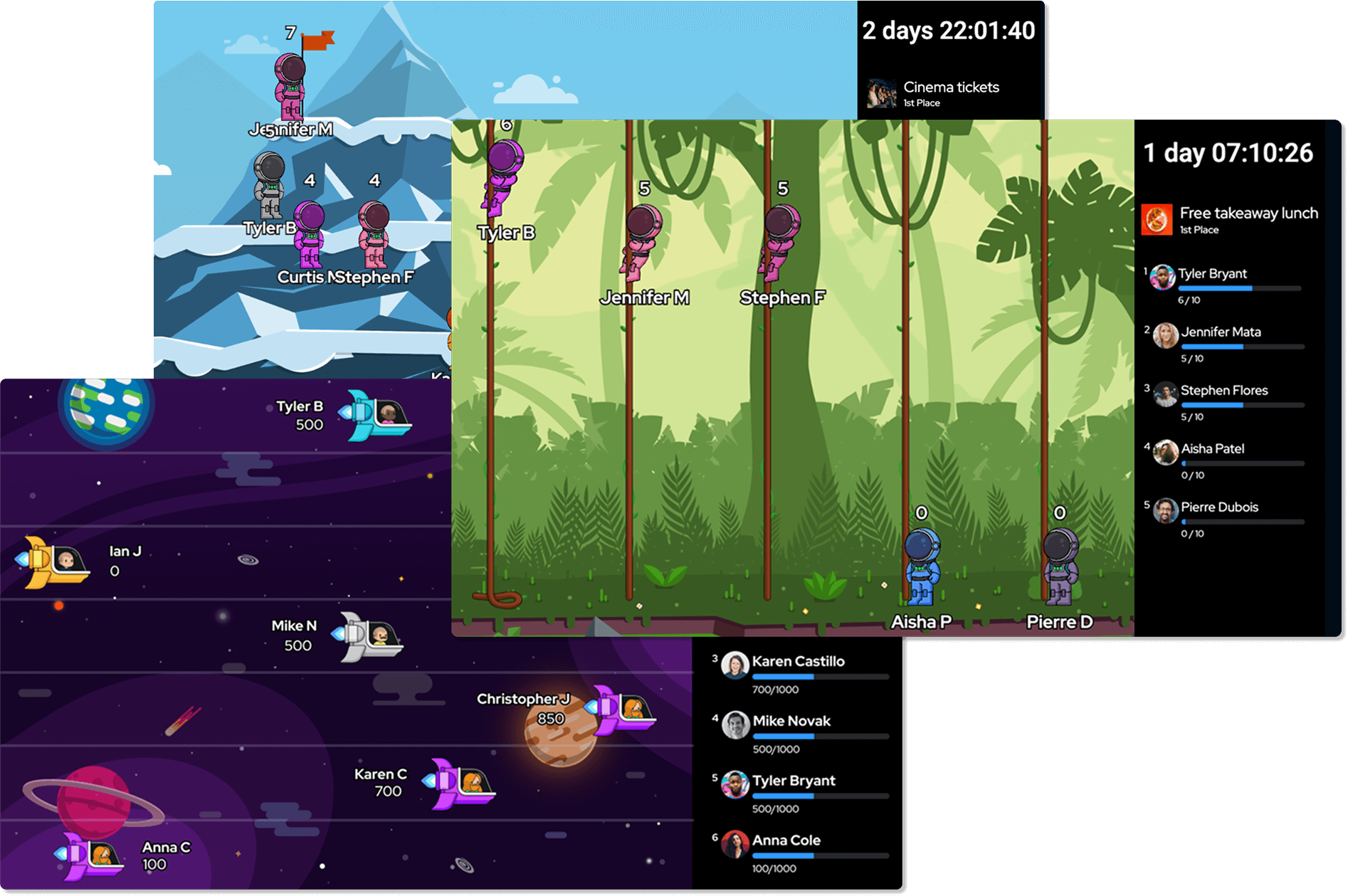 Discover Plecto contests
This platform lets you run competitions that bring out your team’s competitive side. The game is simple and easy: you set a target, and the team works toward it together in a more engaging way.
You can also add themed challenges to make it more fun and memorable, whether in the jungle or up a mountain. These challenges make everyday tasks into something people actually want to complete.
Exploring how gamification works
Gamification draws on basic human psychology. We respond to progress and feedback. We like to see how we stack up. We want to feel competent and connected.
Self-Determination Theory shows that motivation grows when we support autonomy and mastery. Especially purpose. Which is why clear goals and meaningful feedback can be powerful at work.
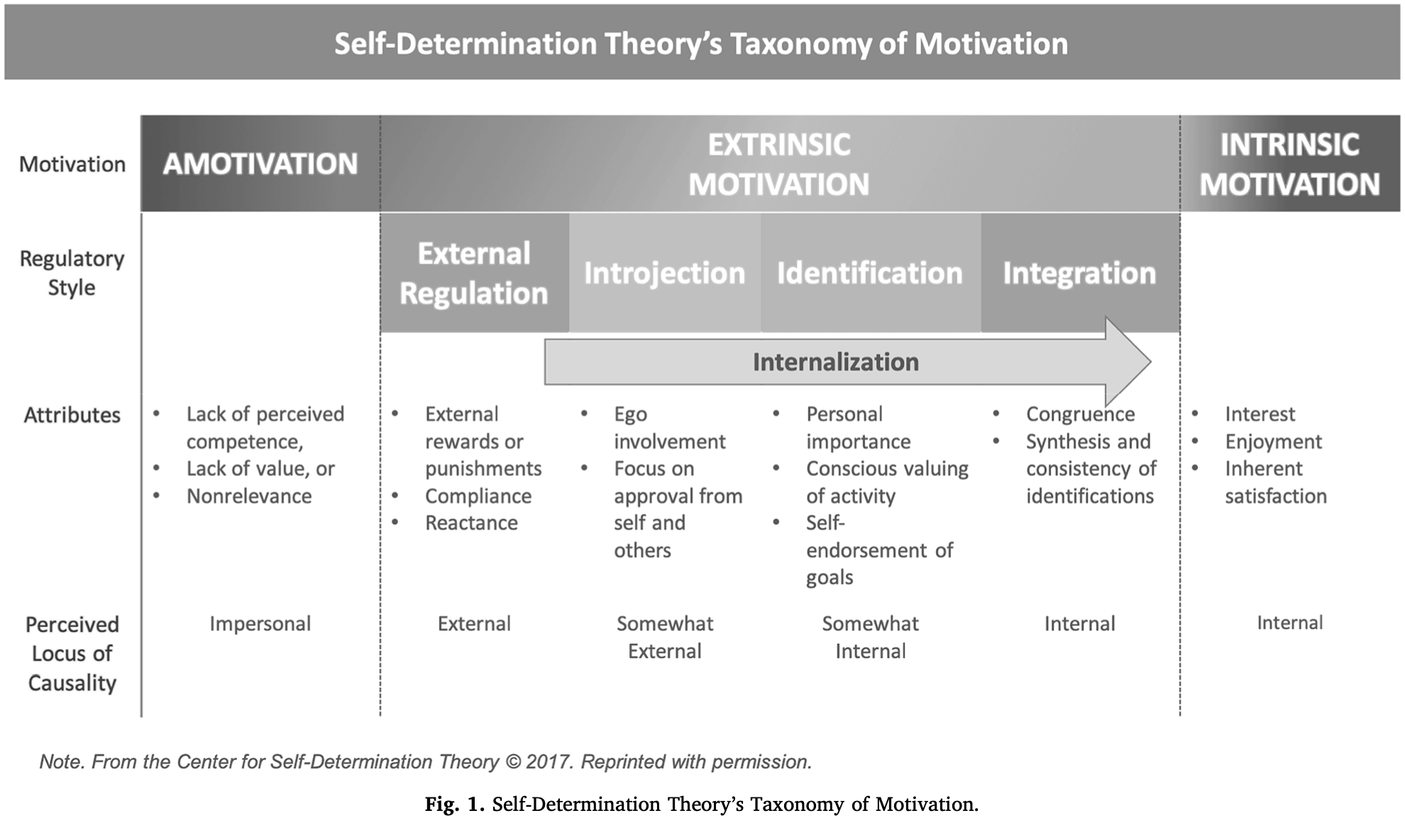
Feedback itself has a long track record of improving performance when it's timely and specific, as shown in this classic meta-analysis. A broad review of gamification studies found positive effects in many settings, especially when the design fits the context.
Bryan Henry, President of PeterMD, has seen firsthand how motivation and performance improve. That is when teams have clear structure and feedback loops in results-driven environments. “Gamification works because it gives people immediate clarity on how they’re doing and what 'good' looks like."
Henry explains, “In environments where performance matters daily, people respond strongly to visible progress and recognition. When you combine real-time feedback with meaningful goals, you naturally guide behavior toward better outcomes without needing constant oversight.”
In business, this means:
- Clear, trackable goals tied to outcomes that matter
- Real-time feedback via dashboards and notifications
- Recognition through badges or levels
- Friendly competition with leaderboards and challenges
- Rewards that reinforce values rather than vanity metrics.
These elements don't just spike activity. They shape which activities people choose.
How To Align Employee Behavior with Company Objectives
AI-powered gamification is making it easier to connect everyday work with company goals in a more dynamic and data-driven way. With this in place, teams can turn high-level objectives into clear, trackable actions. That guides behavior in real time.
Through gamification, here’s how to match employee performance with business objectives:
1. Turn customer goals into daily actions
Support teams offer a good example.
Call center gamification shows how customer satisfaction goals can be broken down into simple daily actions. For instance, you can set streak targets for first-response time and quality assurance scores without handoffs.
Agents earn badges for maintaining strong streaks, while weekly leaderboards highlight both CSAT and collaboration. Not just ticket volume. This way, the fastest path to recognition is also the one that improves customer outcomes.
2. Focus sales on what actually closes deals
Sales teams can go beyond dials and emails. See how Plecto’s real-time KPI dashboard lets you gamify and monitor sales performance:
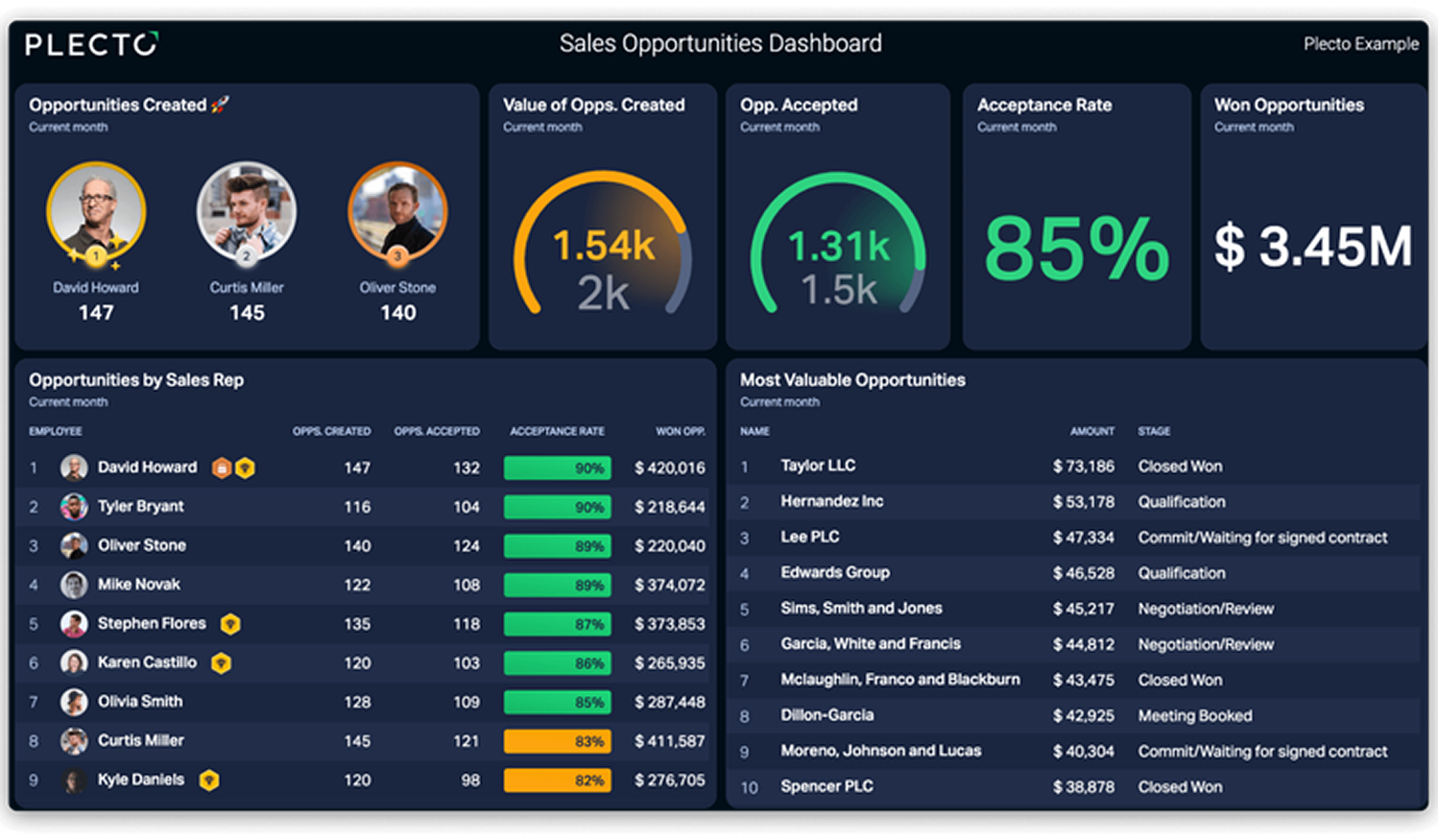 Build your own
Track the behaviors that reliably lead to closed deals. Let’s say, qualified discovery calls, multi-threaded contact, high-quality next steps. Run monthly challenges around those behaviors and celebrate the shape of good work. Not just the end result.
Take it from Adrian Iorga, Founder and President of Stairhopper Movers. He leads a fast-moving service organization where team performance and customer experience directly impact revenue outcomes. “In a service-driven business, it’s not just about volume…It’s about the quality of every interaction.
Iorga shares, “When we introduced structured challenges tied to the behaviors that actually drive results, we saw teams focus less on activity for its own sake and more on what truly moves deals forward. Ultimately, gamification helped make those priorities visible and consistent across the team.”
3. Make progress visible across every team
Collaborative gamification for team success helps make progress visible across different teams. However, focus on shared goals and clear outcomes while monitoring your team's performance.
This makes it easier for everyone to see how their work contributes to broader company objectives and stay aligned on what matters most.
For instance, product teams can track cycle time for small and shippable work. Even the number of validated customer problems solved each sprint. Meanwhile, engineering teams can earn recognition for improving test reliability or faster incident response.
In retail operations, teams might be rewarded for strong mystery shop scores and accurate inventory management. Not just sales volume.
4. Reward behaviors that drive outcomes
The idea is simple: reward the behaviors that reliably lead to the outcomes you care about. Instead of focusing only on end results, you recognize the actions that make those results more likely. Think strong discovery calls, fast responses, thorough problem-solving.
Likewise, it helps to make the journey visible. When employees can see their progress in real time, they understand how their daily work connects to bigger goals. This keeps them focused and motivated. Ultimately, they become aligned without needing constant reminders or top-down direction.
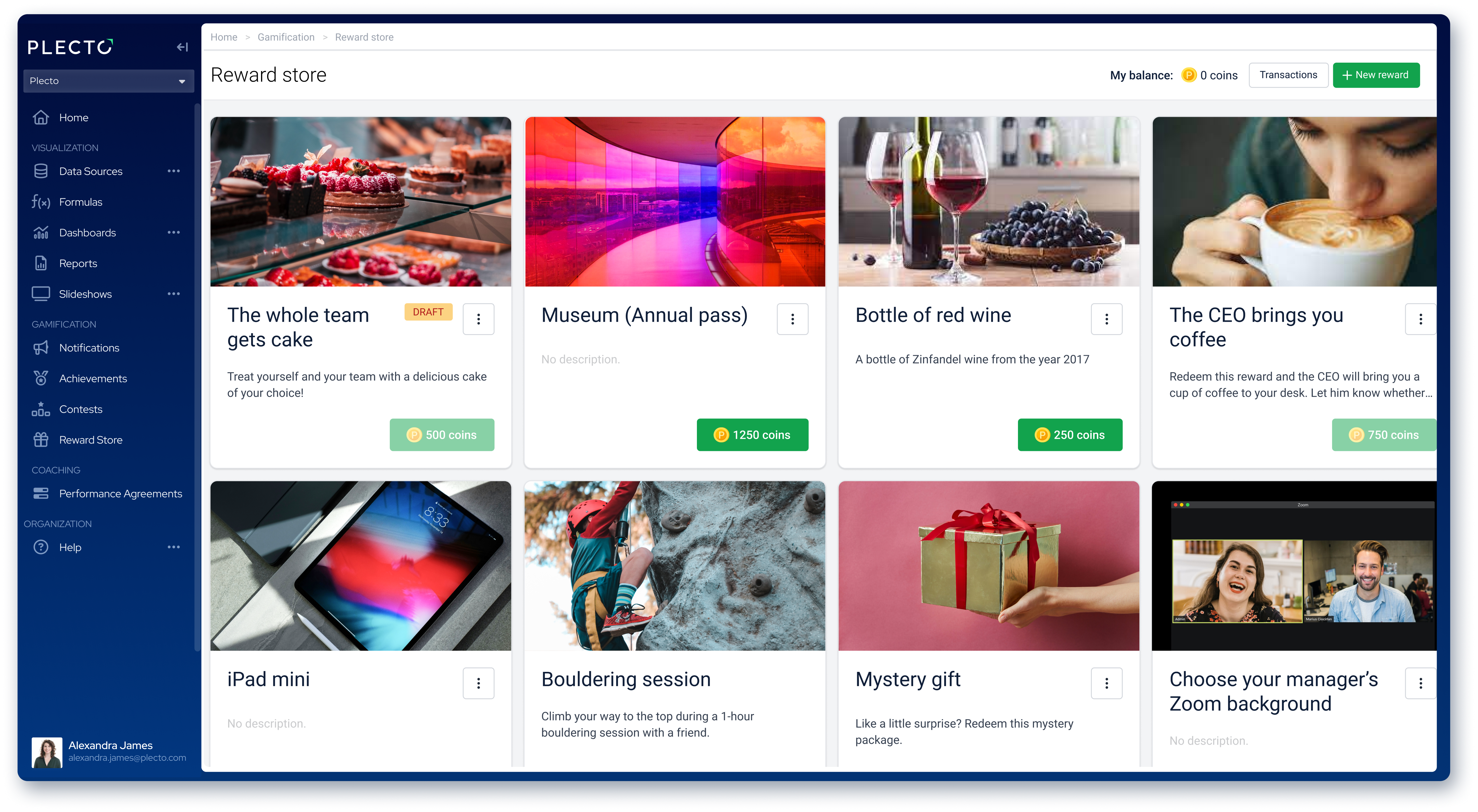
For instance, Plecto’s Reward Store allows you to recognize and reward employee performance. Take a glimpse of the rewards and perks you can offer using this platform:
5. Help employees feel connected and recognized
Learn from Wade O'Shea, Founder of BusCharter.com.au. He leads a transport and logistics business in which frontline performance and coordination directly shape the customer experience.
He notes that engagement improves when progress and recognition are made more visible in day-to-day work.
O'Shea notes, “When we made progress more visible and recognition more immediate, people felt more connected to the business and their role in it. Simple things like tracking performance milestones and celebrating small wins helped teams stay engaged day to day. It also gave managers a clearer view of effort and impact, which made recognition more consistent and meaningful.”
The Pros and Cons of Gamification in Business
The psychological benefits of gaming in the workplace help explain both the strengths and limitations of gamification in business.
When used well, it can improve engagement and performance. However, it also comes with risks if it’s not designed thoughtfully. Especially around competition and behavior.
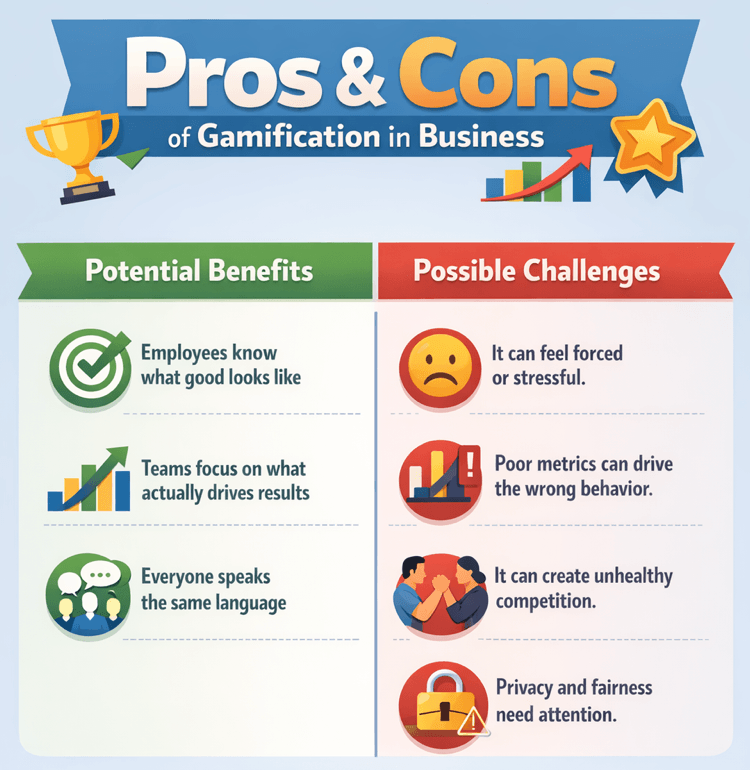
Let’s weigh the pros and cons of gamification in business:
Potential benefits of gamification
When gamification lines up with strategy, both employees and companies benefit.
- Employees know what good looks like. Employees get clearer expectations and less guesswork about what good looks like. They receive more frequent recognition, which tends to boost energy and a sense of belonging. Visible milestones create a stronger sense of progress, while they have opportunities to collaborate and learn from top performers.
- Teams focus on what actually drives results. Companies gain better focus on leading indicators that move lagging results. Competition becomes healthier, nudging teams to raise the bar together. Faster feedback loops mean coaching happens in the moment. Ultimately, a culture of continuous improvement emerges where experiments are encouraged.
- Everyone speaks the same language. Shared language is a less obvious win. When everyone sees the same goals and progress markers, conversations get easier. Teams spend less time arguing about what to do and more time doing it.
Possible challenges of gamification
Gamification isn't automatic. It requires thoughtful design.
- It can feel forced or stressful. Some employees worry it'll feel gimmicky or stressful. Involve them early and co-create rules. Ask what would make the system feel fair.
- Poor metrics can drive the wrong behavior. If you reward volume, you'll get volume (even if it hurts quality). Tie points and badges to behaviors that lead to the right outcomes. Balance individual stats with team metrics. Novelty fades, so rotate challenges and evolve goals with strategy. Plus, focus on mastery rather than momentary wins.
- It can create unhealthy competition. Be crystal clear about how points are earned and how rewards are distributed. Successful gamification requires thoughtful design and genuine employee input. For one, start with pilot programs and gather feedback continuously. Also, make sure your reward systems are transparent and equitable.
- Privacy and fairness need attention. Limit tracking to job-relevant metrics. Offer opt-ins for public recognition. Share aggregate data where possible and follow local regulations. Make sure mechanics work for different roles, schedules, and abilities. Offer multiple paths to win so you don't just reward one working style.
A few practices help
- Starting with strategy, then choosing mechanics
- Piloting with a willing team and iterating
- Blending individual and team goals
- Rewarding learning and coaching
- Keeping feedback immediate and specific
- Reviewing metrics regularly to remove anything that's easy to game
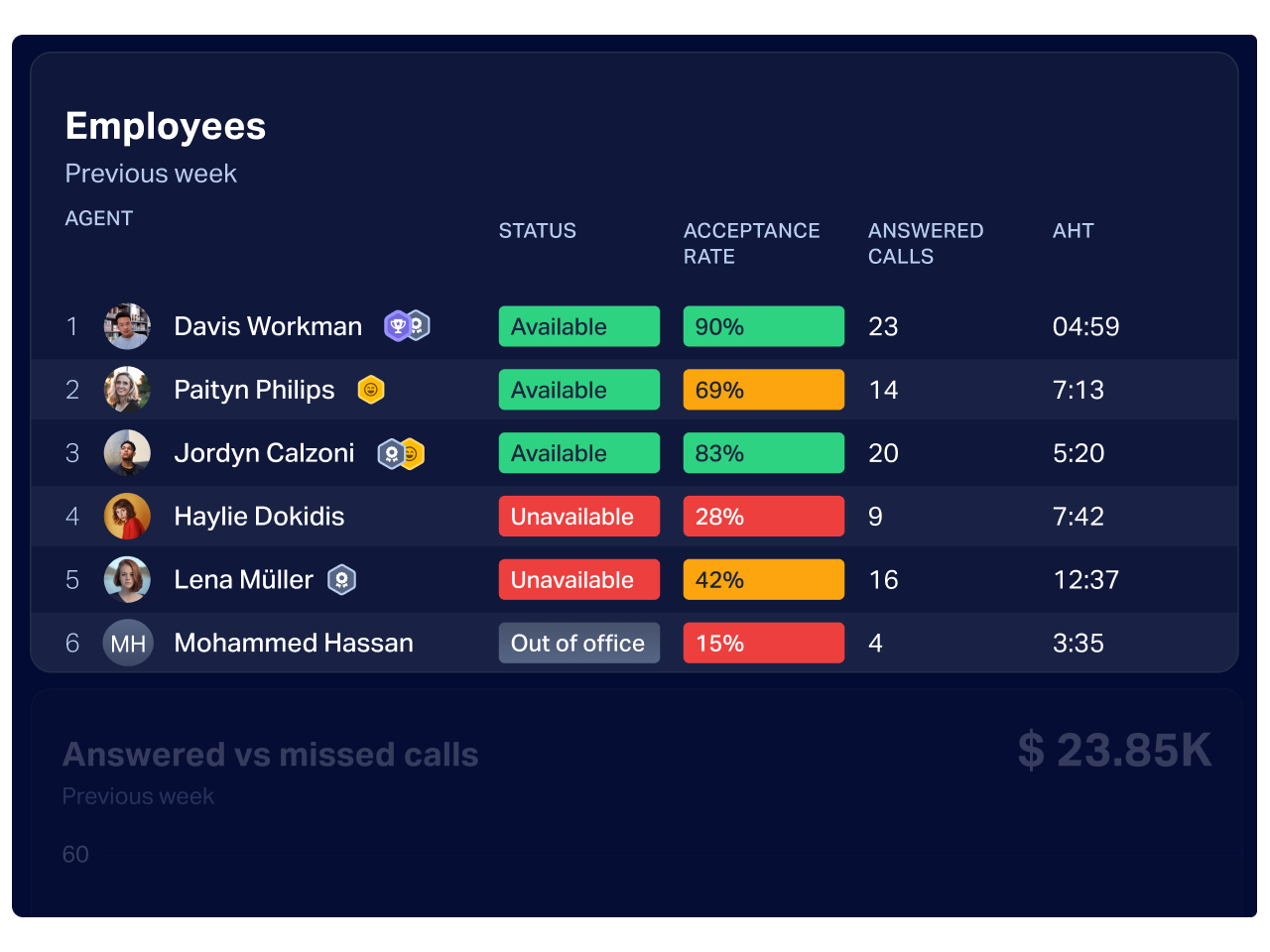
For instance, Plecto makes business goals and key metrics fun and engaging with gamification. This platform enables you to turn daily tasks into team competitions. It allows you to track and share your team's wins in real time. Ultimately, Plecto lets your team celebrate together as you race to hit your team’s target!
 Discover Achievements
Final Words
Gamification works when it connects what the company needs with what people do every day.
For one, it takes big goals and breaks them into clear steps. Then, it makes progress feel rewarding in the moment. That's why it can boost engagement and sharpen focus. Ultimately, it nudges teams toward better habits that stick.
The tools will keep evolving. Richer data, smarter nudges, more personalized challenges. However, the core idea stays the same. Make the right behaviors meaningful and worth repeating.
Ultimately, thoughtful gamification helps people see what matters and enjoy the process of getting there.
Gamification from Plecto helps teams visualize performance and run contests aligned to strategy. They let you celebrate wins as they happen, so behavior and goals stay in sync. To get started, request a demo today!
Start your 14-day free Plecto trial today.
Enjoyed the article? Share it:


ROMAN SHVYDUN