
Why Remote Work Matters Today
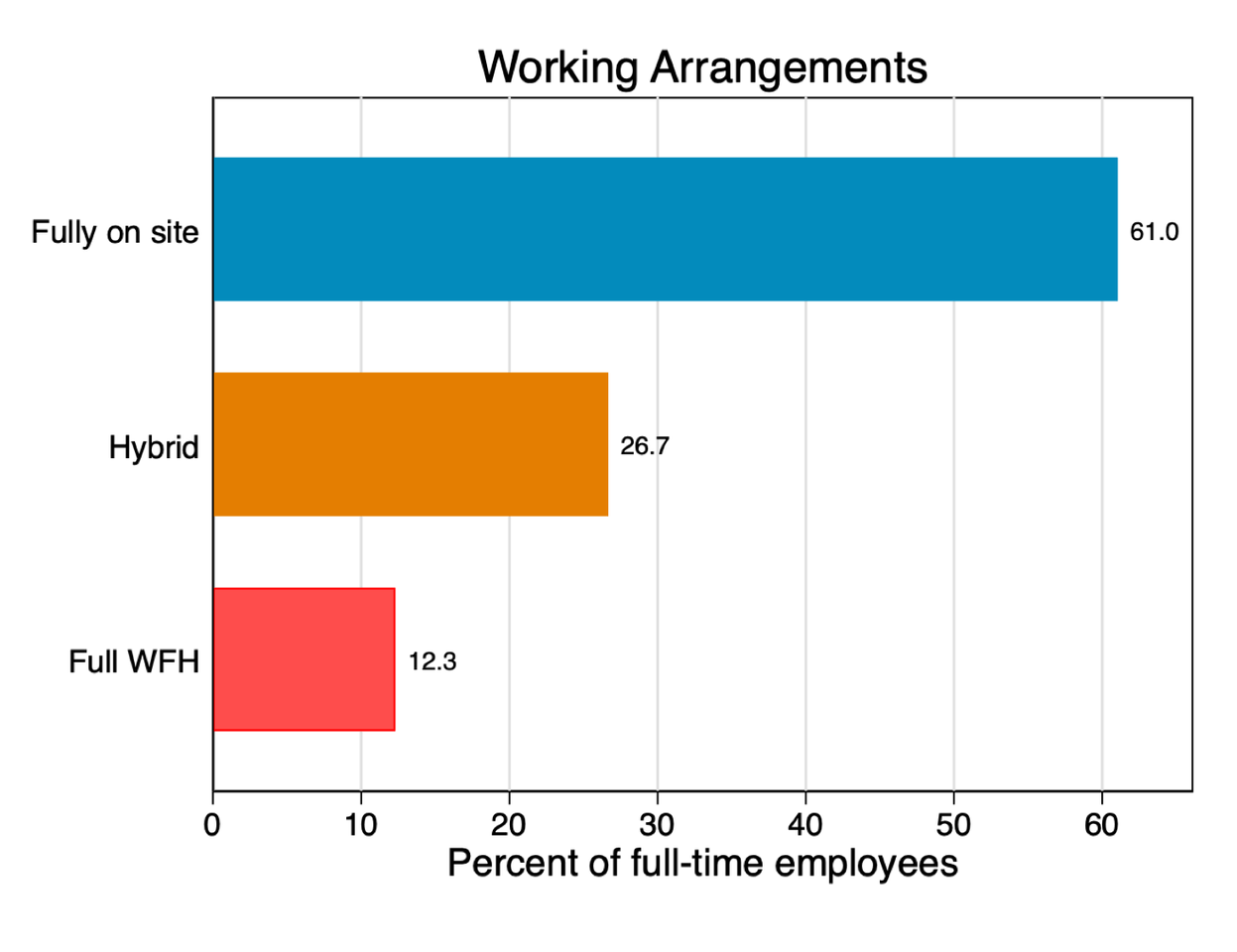
Remote work isn't a trend anymore; it's just work—plain and simple. In fact, WFH Research reported that nearly 40% of employees are working remotely. While over 60% have gone back to the office, 27% are still in a hybrid work setup, and over 12% are working from home.
Sure, some companies and organizations have settled into flexible work arrangements. However, key performance indicators (KPIs) help these teams stay focused on shared goals, even when they're miles and time zones apart.
It’s clear that KPIs give us a common yardstick. But two remote teams can hit the same KPIs and still experience them in wildly different ways. For example, a sales team in New York and one in Manila might both achieve 120% growth in the pipeline. Yet one feels overextended while the other sees a clear runway.
That nuance is what this article explores: Why remote teams experience the same KPIs quite differently. Keep reading to discover the key factors driving the differences in perceptions. More importantly, learn how to align your teams' understanding of KPIs.
Understanding KPIs in the Context of Remote Teams
KPIs are the select metrics we use to measure progress toward a goal. They're the numbers we check in meetings and the charts we share in updates. They are the guardrails that keep projects moving in the right direction.
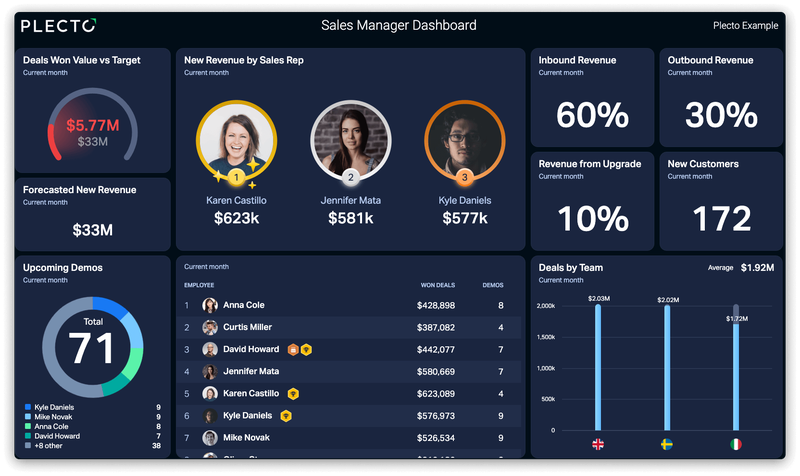
At their best, KPIs get the organization on the same page. Marketing knows what sales cares about. Engineering sees what product needs. Finance can forecast with confidence, from revenue targets to invoice accuracy and payment timelines. Look at some of the best sales KPIs displayed on a Plecto dashboard, designed to guide remote teams:
But here’s the catch: Remote work makes the clarity of key metrics more crucial.
Why? KPIs travel across environments, tools, time zones, and cultures. They are often stripped of the context you'd get in a quick hallway chat. Without that context, the same metric can send different signals.
For instance, one sales team sees green" and moves on. Another sees "green" and worries they're missing risk below the surface. That’s why it’s crucial to get everyone on the same page.
Key Factors Affecting KPI Perceptions in Remote Teams
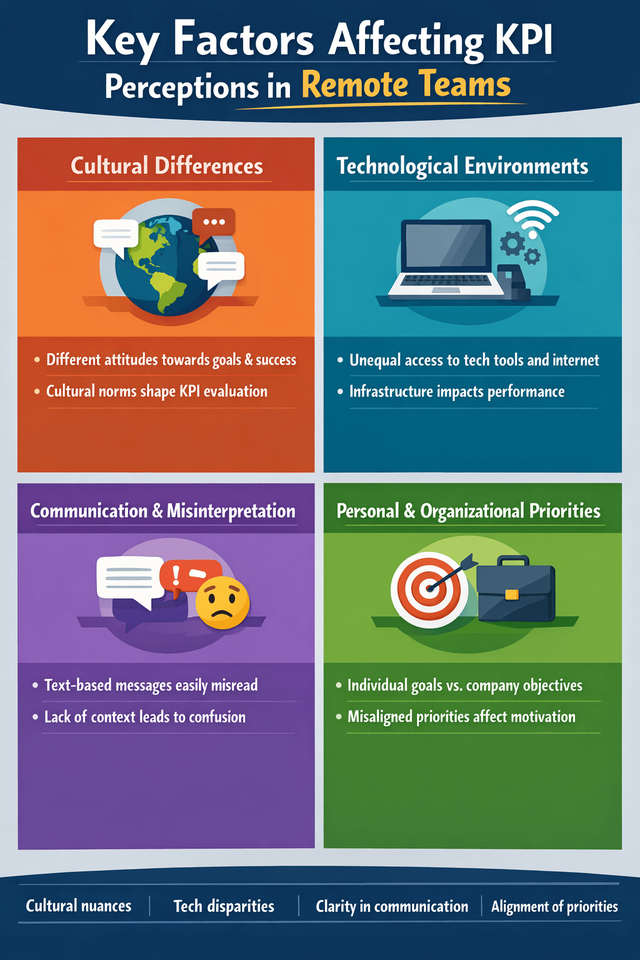
Even when KPIs are clearly defined, remote teams don’t experience them in a vacuum. Differences in culture, technology, communication, and personal priorities all shape how the same numbers are interpreted and acted on across distributed teams.
Below are the factors driving KPI perceptions among remote teams:
1. Cultural differences
Culture shapes how people set goals, as well as celebrate wins and talk about misses. If you've worked across regions, you've felt this. In some places, speaking up about risks is expected. In others, teams prefer consensus and harmony. That shows up in how KPIs are pursued and reported.
In some cultures, exceeding individual KPIs might be seen as showing up your teammates. Meanwhile, in others, it's celebrated as excellence. Leaders need to recognize these cultural lenses when setting and evaluating performance metrics. What looks like underperformance might actually be a different approach to team success.
For example, a sales team in Japan may approach selling blank t-shirts for custom designs by focusing on shared accounts and collective targets. Meanwhile, the U.S.-based team emphasizes individual quotas and top-performer recognition. Both teams may deliver strong results, but they pursue and report KPIs differently.
2. Varied technological environments
Not every remote setup is created equal. Some folks have fiber internet and dual monitors; others are on shared connections or limited hardware. Those differences change how hard it is to reach the same KPI.
Ken Chartrand, CEO of Encore Business Solutions, has seen firsthand how technology can shape the effectiveness of remote teams. That’s why his company focuses on building ERP and CRM solutions that support seamless communication and collaboration across distributed workforces.
“Technological infrastructure inequality can be a real challenge in remote work,” Chartrand says. “A developer with fiber internet and dual monitors will have a very different experience than someone relying on a shared connection and basic equipment. Smart organizations address this by providing standardized tools (monitors, laptops, cameras, etc.) appropriate to each role, along with strong IT support to help close any gaps.”
3. Communication and misinterpretation
Remote communication leans heavily on text. It's efficient, but it's also easy to misread tone and intent. A simple message like "We missed the KPI" can come across as blunt or critical, even if the sender meant it neutrally. That matters because the story we attach to a number often shapes the next action we take.
Morgan Taylor, co-founder of Jolly SEO, manages a team of remote employees, all wearing different hats. He believes that robust communication with proper context in mind is key to a healthy collaboration. And this essentially applies to setting KPIs for remote teams.
Taylor explains: "In remote settings, context gets lost easily. A brief Slack message about missed KPIs can feel harsh without the benefit of tone or body language. Successful remote teams invest extra time in clarifying expectations, and creating shared understanding around what metrics actually mean for their work."
4. Personal and organizational priorities
People bring their own goals to work: career growth, stability, learning, impact. Organizations bring theirs: ROI, profitability, runway, market share. When those two sets of priorities drift apart, the same KPI can feel motivating for one person and frustrating for another.
For example, a support team might be measured on the number of tickets it closes, while individual agents prioritize thorough, high-quality responses to protect client relationships. The same KPI can motivate some employees to work faster, but frustrate others who feel rushed to deliver the service level they value. Without alignment, teams may hit their numbers while missing what truly matters to them.
Team dynamics and leadership play a big role here. A KPI focused on output might help the company hit short-term targets, but clash with an engineer's commitment to quality, or a support agent's focus on customer care. Without regular calibration, people hit the number while feeling they missed what they value.
How To Align KPI Understanding Among Remote Teams
Ensuring KPI alignment among remote teams requires deliberate plans and concrete actions. The goal isn’t just to track the same numbers, but to ensure everyone understands what those numbers mean and how to act on them in a distributed environment. Here’s what you can do:
- Co-create definitions, don't just broadcast them. The most effective remote teams define their KPIs together and regularly revisit what success looks like to them. Weekly alignment sessions, where teams discuss their metrics and calibrate expectations together, create much stronger buy-in than top-down mandates.
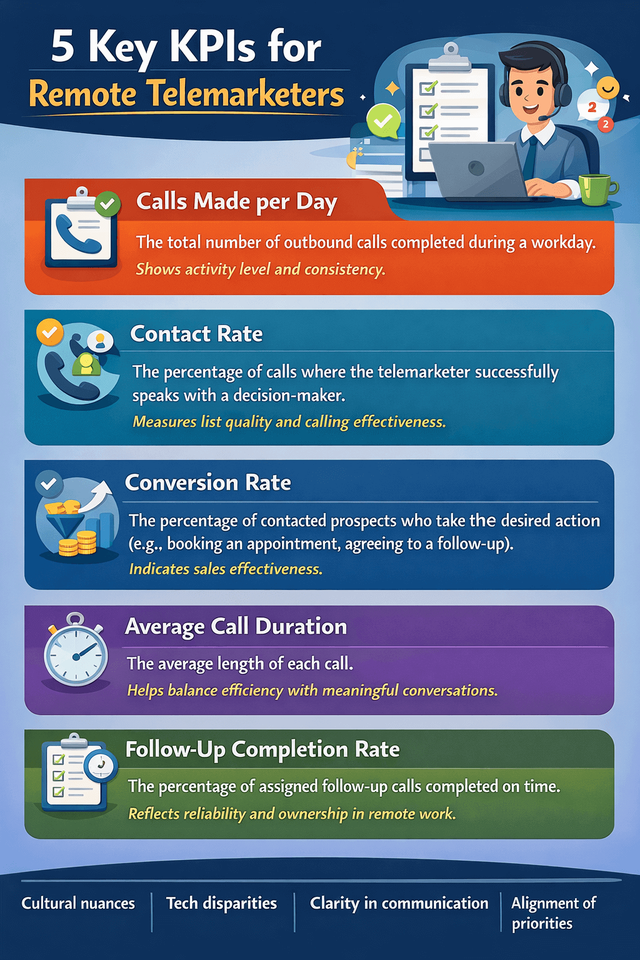
- Make the metric utterly clear and unambiguous. Write a one-page definition for each KPI that covers the following (see the infographic example below):
- The exact formula and data source
- Why it matters and what it's not intended to do
- How it's segmented (region, role, product)
- Known caveats and edge cases
- Who to ask when something looks off
- Add context where people see the numbers. If you use performance dashboards, include brief notes next to key charts that highlight current focus or seasonal effects. A tiny bit of narrative prevents big misunderstandings. That's one reason teams lean on dedicated KPI tools and real-time dashboards to keep everyone looking at the same picture.
- Strike a balance in the entire system. Pair leading KPIs with lagging metrics (qualified meetings booked with revenue won, for example). Then, balance speed with quality (deployment frequency with change failure rate). Doing so reduces the pressure to "game" any single metric and helps teams tell a fuller story.
- Standardize core tech and digital tools. Offer equipment stipends and document minimum setup guidelines for bandwidth, VPN, and security. Even small investments, such as external monitors, headsets, cameras, and backup hotspots, can change how fairly a KPI lands across the team. Technological investment for team equity is key!
- Design for time zone differences. Use async-friendly rituals, like weekly short video briefs and clear handoff notes. Where KPIs depend on live collaboration, consider region-specific targets or windows that reflect actual overlap, not wishful calendars. All remote teams have to meet halfway!
- Establish feedback loops in place. Host monthly metric retrospectives where teams share what surprised them and what they'd change (even what felt fair or unfair). Over time, these conversations surface silent friction, like a definition that penalizes certain regions or a tool that drops data on slow connections.
- Teach the "why" behind KPIs to make sense. It’s best to run short, shared sessions on how KPIs ladder up to company goals. Connect each metric to the customer, to risk, to strategy, and to all that matters. When employees see the path from numbers to impact, they improve their day-to-day performance.
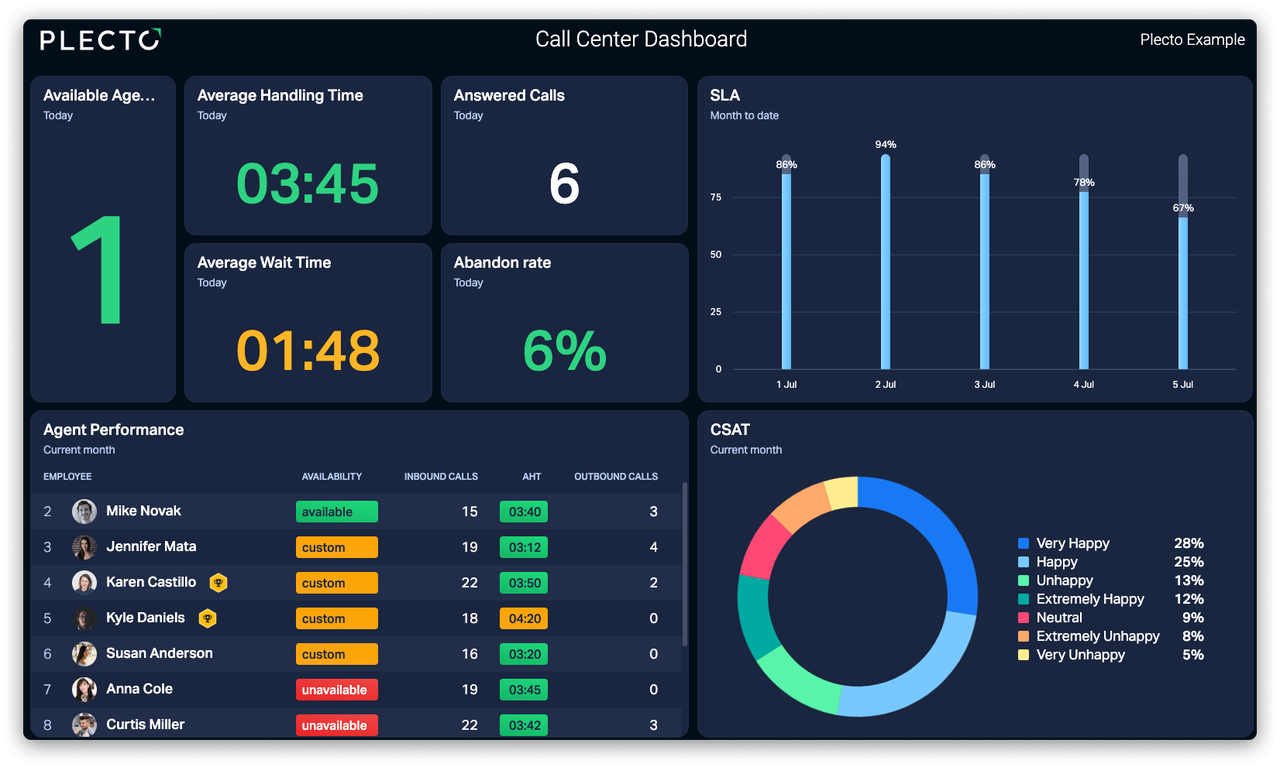
- Use tools that centralize and clarify. Whether you rely on a dedicated KPI platform for real-time dashboards and performance overviews or pair your stack with docs and project tools, make the facts easy to find and make it make sense. Have a glimpse of Plecto’s real-time call center dashboard below. The platform shows the specific KPIs and the service-level agreements in general; more importantly, how agents perform:
Final Words
The message is clear: Remote teams can hit the same KPIs and live very different stories. Why? That is because culture, technologies, communication, and priorities all shape how those numbers come to life.
But here’s the thing: When leaders co-create definitions, add context, balance the system, and standardize the tech, KPIs become clearer and fairer. And when teams have regular space to talk about the story behind the numbers, performance improves without eroding trust.
If you're exploring ways to make KPIs clearer and more actionable, check out practical guides and expert ideas on the Plecto blog. And if you’re looking to motivate your remote team with key metrics, consider leveraging Plecto’s real-time KPI dashboards. Book a demo today!



ROMAN SHVYDUN
Content Expert and Strategist
As a content creator specializing in SaaS business and marketing, Roman Shvydun writes data-driven articles for SaaS websites. His superpower is converting SaaS “dialects” into a universally understandable “language” with actionable steps for brands and marketers in the field. Roman has become a recognizable voice in SaaS thanks to his fresh ideas and analytical skills. In his spare time, he fishes and “hunts” for new technology trends in the industry and beyond.