
Table of contents:
35 Sales Statistics for Entrepreneurs
Sales in 2026 are very different from a few years ago. Decisions are made faster, buyers are more informed, and sales teams are often spread out across locations. At the same time, entrepreneurs often struggle to show clear results, forecast revenue accurately, and grow the business without exhausting their people or wasting resources.
Why are top-performing companies so successful? They no longer rely on gut feelings. They use real data before they act. Sales statistics give businesses the insights they need to know what's effective, understand where momentum drops off, and see how new tools (especially AI) can help them.
Here are 35 key sales statistics every entrepreneur should know and use to make smarter decisions this year.
The AI Revolution in Sales
Artificial intelligence is critical for businesses today. It directly influences how sales teams prioritize, forecast, and close deals. AI shows what’s working, what’s not, and helps sales teams focus their energy where it matters most. Entrepreneurs can use AI tools to search prospects and prioritize leads.
- 65% of B2B sales organizations now rely on AI-driven analytics instead of gut feeling when making decisions.
- Sales teams using AI report up to 40% higher productivity and 25% shorter sales cycles.
- 67% of sales leaders say AI tools are critical or very important for closing deals.
- AI-powered forecasts improve pipeline accuracy by more than 80%.
- Companies that use artificial intelligence for price optimization improve profit margins by at least 5–7%.
Sales Performance and Productivity Metrics
Hard work alone doesn’t guarantee results. In fact, many sales teams underperform because they lack clear processes and visibility. When teams can see progress, understand priorities, and measure outcomes in real time, results follow.
- Companies that have a structured, data-guided sales process achieve 33% higher win rates.
- High-performing sales reps spend 32% more time actively selling (in meetings, calls) than low performers.
- Teams using real-time performance tracking improve results by 20–25%.
- Only 24% of sales emails are ever opened. Personalization beyond the first name boosts open rates by 31%.
- The top 20% of reps make an average of 52 touches per prospect across multiple channels before giving up.
The Modern Buyer’s Journey
Today’s buyers collect enough information before they speak to salespeople. So, they await relevant responses from the first interaction. It means sales and marketing can’t operate in silos – they should understand buyer behavior. Use tools to build a strong client base with details about your customers.
- 79% of B2B buyers complete more than half of their research before contacting a sales rep.
- 71% of buyers expect personalized interactions based on their digital behavior.
- Video content is the preferred advertising format for 68% of B2B buyers.
- Social selling is responsible for 40% of all B2B deals, and LinkedIn is the dominant platform.
- 84% of B2B purchases are made by committees, not individuals.

Outreach and Conversion
Reaching buyers has never been harder. Entrepreneurs who track outreach activity and conversion metrics in real time gain a clear advantage.
- Companies responding to leads within five minutes are 21 times more likely to qualify them.
- Working across multiple channels can increase conversion rates by up to 300% compared to single-channel outreach.
- Sales reps who use social selling are 51% more likely to achieve goals than those who don’t.
- 80% of sales require at least five follow-ups, yet 44% of sales reps give up after just one attempt.
- Buyers are 3x more likely to engage with sales reps who provide relevant insights instead of product pitches.
Team Dynamics
Even in a highly automated world, people remain the biggest growth driver or its blocker. When performance is visible and progress is celebrated, teams stay motivated and focused.
- Companies with formal sales onboarding achieve 50% higher new-hire productivity within eight months.
- Sales role turnover averages 25%, making engagement a serious business risk.
- Gamified performance tracking increases productivity by 30–35%.
- 65% of top-performing reps say coaching is the most valuable part of their role.
- Teams with strong psychological safety are 27% more likely to succeed.
Tools and The Tech Stack
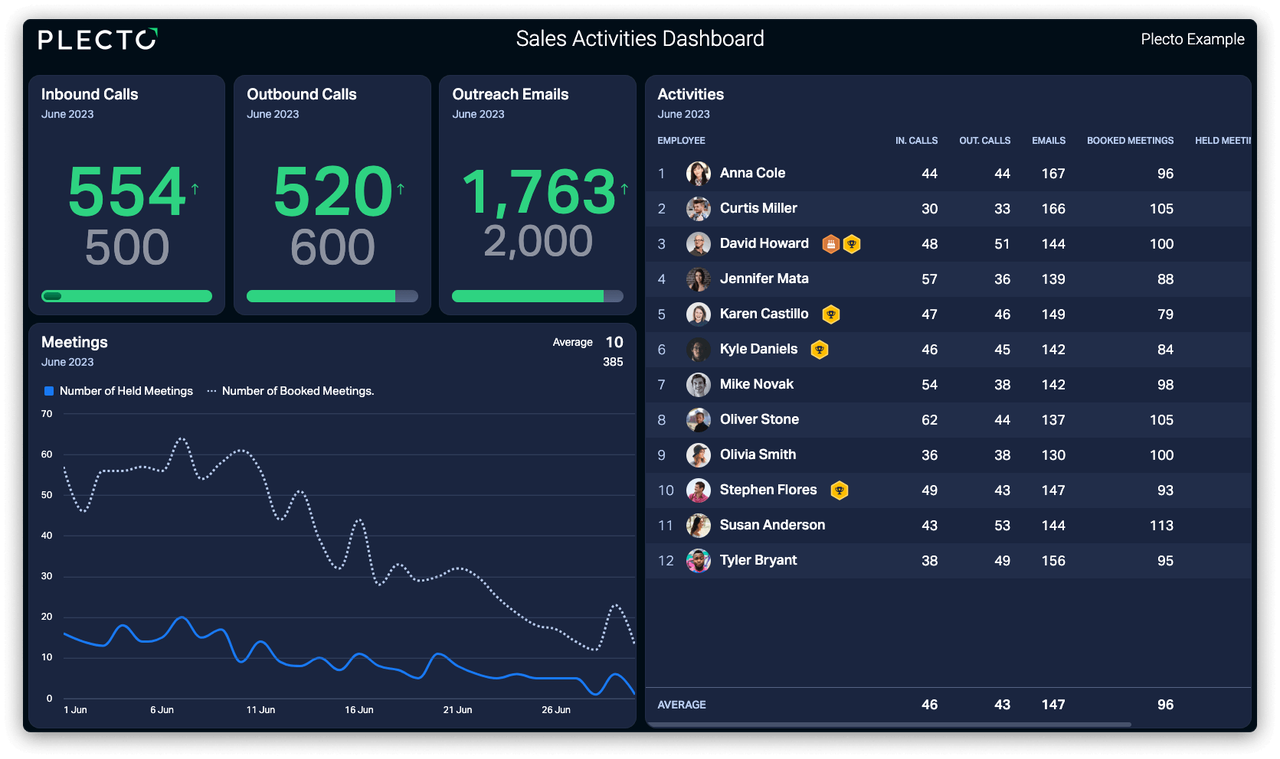
Most sales teams already use many tools, but often not to their full potential or with the right software. Fewer tools, better integration, and shared dashboards help sales teams act on data instead of drowning in it. Automation doesn't only track sales, but also simplifies many other stages of the sales process, like invoicing and payment workflows.
Lankitha Wimalarathna, Founder & CEO at Hiveage, explains: “Most sales stacks fail not because teams lack technology, but because every tool creates another version of the truth. When data lives in silos, salespeople spend more time reconciling information than moving deals forward.
"True automation is not about adding speed. It is about removing friction, so decisions happen closer to reality and revenue becomes a byproduct of clarity rather than effort.”
- The average sales organization uses 10–12 tools, yet only 37% of reps feel they are well integrated or know how to use them to the fullest.
- Poor data quality costs companies 15–20% of revenue every year.
- 43% of sales reps say CRM data entry is their biggest productivity barrier.
- Companies using advanced sales analytics are three times more likely to exceed targets.
- Integration capability is the top purchasing criterion for sales software in 2026.
Retention and Customer Experience
Closing a deal is only the beginning. Long-term success depends on keeping customers engaged. It means retention metrics deserve as much attention as new sales. Tracking onboarding success, customer engagement, and expansion revenue is critical for sales teams.
- Improving customer retention by only 5% increases profits by 25–95%.
- 65% of the company's revenue comes from existing customers.
- The probability of selling to an existing customer is 60–70%, compared to 5–20% for new leads.
- Customer Success teams influence up to 30% of expansion revenue in SaaS businesses.
- 84% of customers say experience is extremely important. They equate it with the product quality they purchase.
A New Roadmap for Sales
The sales world in 2026 is sending a clear message - it’s no longer about how much you do, but how smartly you do it. Buyers are researching on their own, decisions are made fast, and the old gut-feeling approach doesn’t work anymore.
These statistics are not simple numbers but a roadmap. The most successful entrepreneurs will be those who use these insights to refine their process, empower their teams with the right tools (like integrated dashboards and AI assistants), and follow the customer journey at every stage.
So, what’s your next step? Don't read and forget this data. Audit your current sales process. You will definitely find room for improvement. Consider the above statistics to level up your sales process.
Book your demo with
a Plecto expert today.



BROOKE WEBBER
Content Specialist
Brooke Webber is a marketing and sales content specialist focused on people-first strategies that connect brand messaging with real customer needs. Her main areas of interest include buyer psychology, customer experience, and revenue-driven communication, where she has accumulated five years of writing experience. At work, Brooke follows Benjamin Franklin’s principle: “Either write something worth reading or do something worth writing."