
Table of contents:
Building the KPI System That Works for You
Key performance indicators (KPIs) are how we make sense of progress. They turn goals into numbers we can track, measure, compare, and improve. When chosen well, KPIs keep teams focused and highlight where change is needed. They make ambition measurable.
Most companies start with a clean set of KPIs that fit their goals: win new customers, improve retention, shorten cycle times. The early metrics match the stage you're in, and they help everyone pull in the same direction.
Then, you scale with more products, more markets, more people, more moving parts. What used to be a great signal can become noise. Some metrics keep you honest. Others start to lead you astray.
That's when redesigning KPIs stops being optional. Read on to learn how to do this efficiently and effectively without bringing chaos to your team.
When (+Why) KPIs Become Ineffective
There are a few telltale signs your current KPIs aren't doing their job. You see teams hitting targets, but business results feel flat. You notice a mismatch between what's being measured and what actually drives outcomes.
But wait, there’s more: Dashboards get bigger, but they don't guide better decisions. People are busy, yet the work seems oddly disconnected from strategy. Why have your key metrics become ineffective?
Ryan Walton, Program Ambassador for The Anonymous Project, sees the need for ever-evolving KPIs. He's watched how clinging to outdated metrics can derail progress.
Walton says, "The biggest red flag is when your team starts gaming the metrics instead of focusing on real outcomes. If your KPIs encourage behavior that doesn't align with where you're headed, it's time for a change.
"For example, we've seen sales teams chase call volumes when they should be measuring deal quality."
Growing businesses run into specific challenges that push KPIs out of date. Market dynamics shift, and the competition changes the game.
Complexity rises as you add new revenue streams or expand globally. Strategy evolves, but dashboards don't. Suddenly, your team is steering with an old map.
Common triggers include:
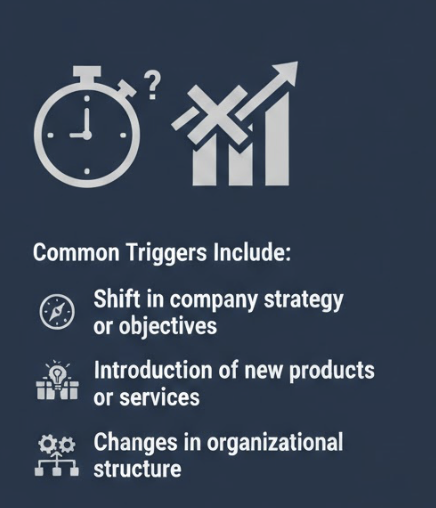
- Shift in company strategy or objectives
- Introduction of new products or services
- Changes in organizational structure
For example, KPIs for remote teams are monitored the same way, but team members experience them differently.
A company might keep track of logged hours and/or closed tickets. They assume productivity is stable, while collaboration quality and decision speed quietly decline.
On paper, performance looks steady; however, in reality, friction is growing in ways the old metrics were never designed to capture.
The Dangers of Sticking to Outdated KPIs
Hanging onto the wrong KPIs has a cost. You get blind spots.
Teams over-optimize local metrics and under-deliver on company outcomes. Leaders make decisions off lagging indicators that don't predict the future. It's like grading a marathon by the number of water cups picked up along the route…busy, but not better.
Take it from Adrian Iorga, Founder and President of Stairhopper Movers. He has seen this pattern repeat when tracking and measuring the performance of his moving team.
Iorga explains, "Outdated KPIs create a false sense of security. Teams think they're performing well because they're hitting targets, but those targets no longer matter to the business.
“This misalignment leads to wasted resources and missed opportunities. The real danger is that by the time you realize it, your competitors have already moved ahead."
The fallout shows up in everyday ways:
- Inaccurate performance assessment
- Misguided strategic decisions
- Reduced competitive advantage
For instance, seven KPIs for sales managers might focus heavily on activity. Think of calls made, emails sent, meetings booked, demos scheduled, follow-ups completed, CRM updates, and pipeline volume.
On paper, the team looks productive. But if win rates and deal margins aren’t improving, those activity metrics can mask the real issue: effort is up, but impact isn't.
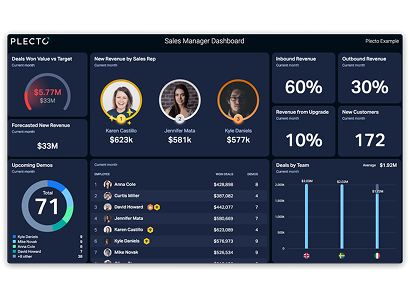
That’s why it’s best to update your KPIs as you scale. And that’s where an automated platform like Plecto’s dashboard for sales can help.
Key Steps: How To Redesign Effective KPIs
Redesigning KPIs is more than adding numbers. Choose those that fit your direction. For instance, KPIs guide the best sales tactics in 2026 only when they reflect real drivers of growth, such as customer lifetime value (CLV) and first contact resolution (FCR), not just surface-level activity. Here’s how:
1. Conduct a KPI audit
Start by taking inventory. What are you measuring now, and does it truly connect to outcomes like customer lifetime value (CLV), or is it just surface-level activity? Spot who uses each metric and for which decisions. More importantly, decide whether it directly influences the results you care about today.
Questions to ask:
- Do current KPIs still drive the right behaviors?
- Who actually looks at each metric, and what do they do with it?
A practical tip: Tag every KPI with two labels. Decision and owner.
If you can't name the decision a metric informs, or who's accountable for moving it, that KPI probably doesn't deserve a spot on your main dashboard.
2. Align with business strategy
KPIs are only as good as their connection to strategy. If your company has shifted from growth-at-all-costs to efficient growth, your metrics should reflect that.
Many teams use an outcome hierarchy to connect company goals to department and team KPIs. It creates a chain from your top-level metric to everyday work.
Key steps:
- Connect KPIs with new strategic goals and objectives
- Make sure metrics reflect both short- and long-term visions
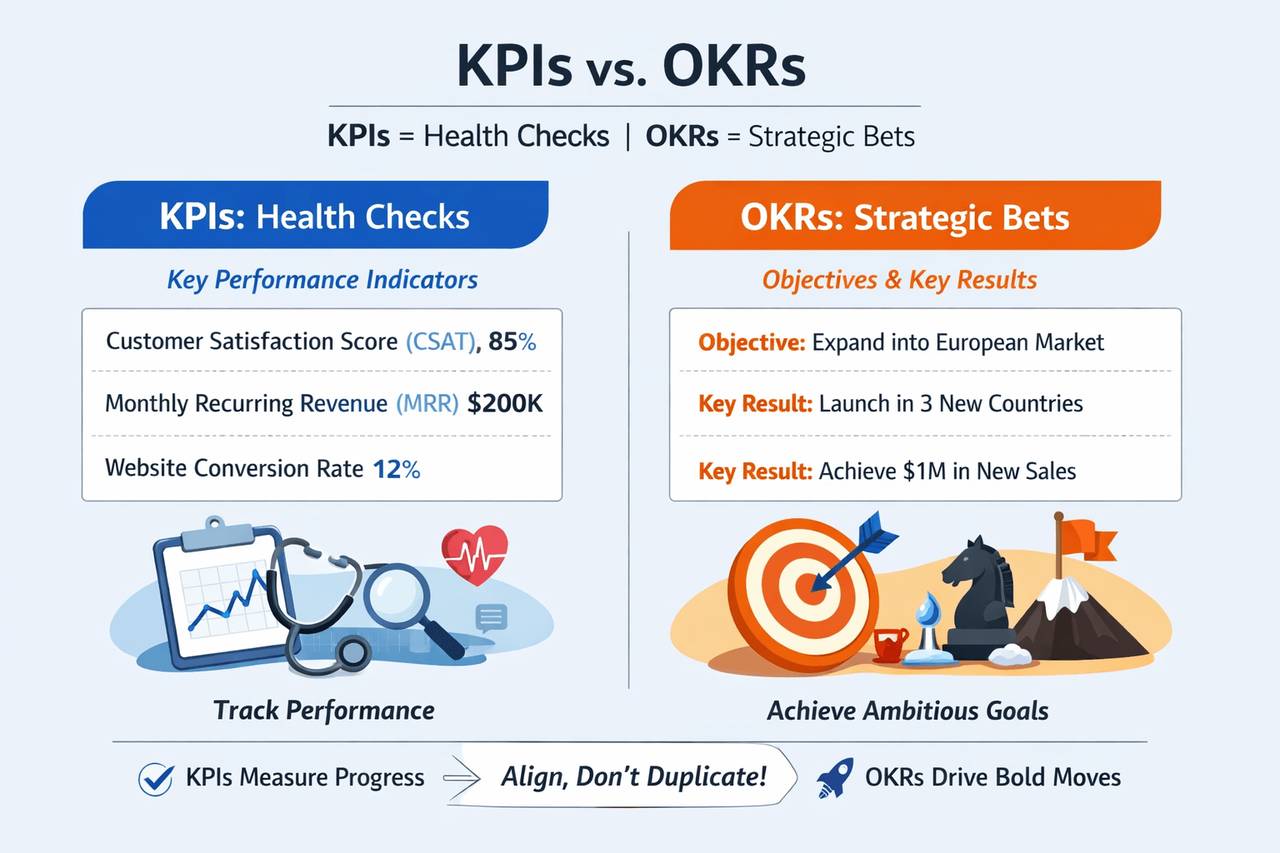
If you use OKRs, make sure your KPIs don't duplicate objectives. Put them in an analogy:
- KPIs are the health checks
- OKRs are the bets
Done right, they complement each other. Here’s how:
3. Emphasize flexibility and scalability
Design for change. Set clear triggers for when KPIs get reviewed, such as product launches, entering a new market, a pricing shift, and/or a certain scale threshold. Don't rely only on a calendar.
Learn from Ryan Beattie, Director of Business Development at UK SARMs. Having designed KPIs with flexibility and scalability in mind, he has strong opinions on the matter.
Beattie shares, "Design your KPIs with change in mind. Include review triggers based on business milestones, not just calendar dates.
“When we help clients implement scalable KPI frameworks, we always build in quarterly assessment checkpoints and clear criteria for when metrics need updating."
Practical approaches:
- Design KPIs that accommodate future growth and changes
- Implement tools for regular KPI review and adjustment
A mix of input and output metrics helps, too:
- Inputs (such as qualified pipeline or build frequency) are more actionable
- Outputs (such as revenue or NPS) confirm impact
4. Foster a data-driven culture
Metrics don't work if people don't understand them. That’s why you should build data literacy and explain formulas. Make sure definitions are consistent across teams. Keep metric documentation one click away from any dashboard view.
What this looks like:
- Train employees to read and interpret data
- Create transparency around how metrics are calculated and why they matter
A concrete example is Plecto’s dashboard for call centers. It’s a data-driven performance platform that makes KPIs visible and understandable in real time.
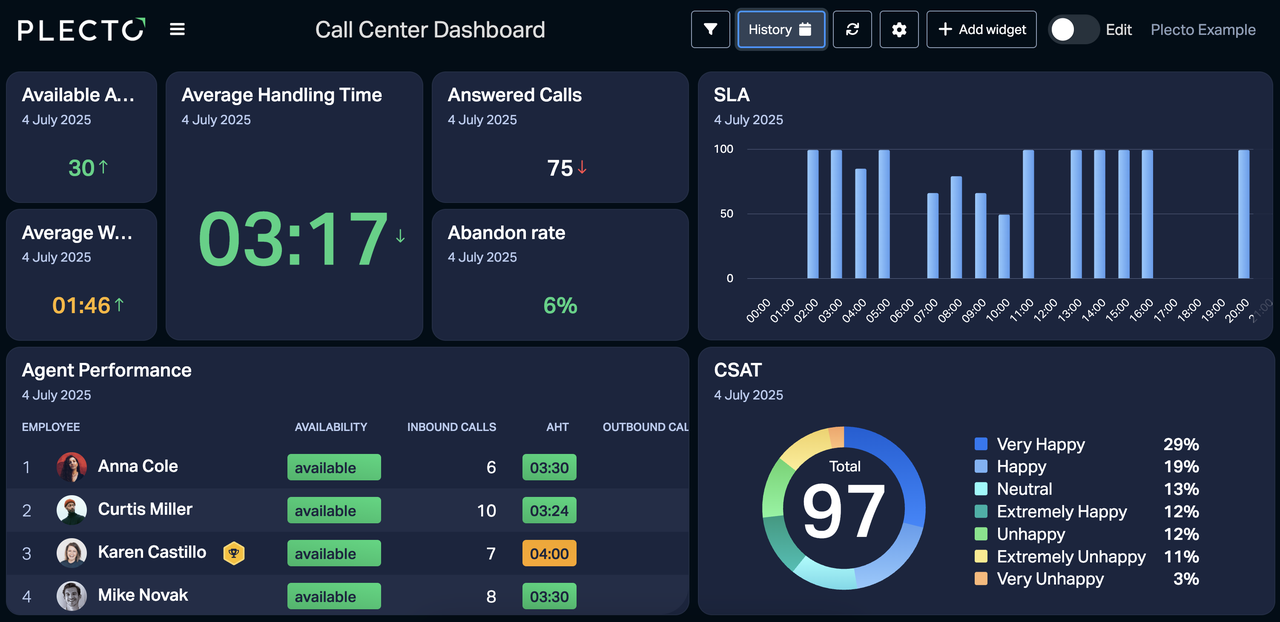
For instance, a customer support team can track first contact resolution (FCR) on live dashboards, with clear definitions of what qualifies as “resolved” and how the metric is calculated.
With data-driven insights, agents understand how improving FCR directly impacts customer satisfaction and long-term value. Ultimately, this dashboard takes data from a scoreboard into a shared performance driver.
How To Avoid Chaos During KPI Transition
Redesigning KPIs doesn't have to be a massive disruption. Treat it like a product rollout. Start small, gather feedback, iterate, then scale.
Share the why behind the changes, not just the what. Remember, clarity reduces anxiety.
Andrew Bates, COO at Bates Electric, focuses on the human side of KPI transitions. Having managed and measured his team of electricians, he understands what it takes to connect with his people.
Bates suggests, "Treat it as a collaborative process, not a top-down mandate. Start with pilot groups to gather feedback before the full rollout.
“Give people time to understand why the changes matter. When employees see how new KPIs connect to their daily work and career growth, adoption happens naturally."
What keeps things steady:
- Communicating changes clearly across all levels
- Using pilot testing for new KPIs to gather feedback
- Rolling out gradually to reduce disruption
Emily Carter, Content Specialist at Searqle who has led multiple KPI redesign initiatives in scaling companies, puts it this way:
"When people push back on new KPIs, it’s rarely about the numbers. It’s about uncertainty. Metrics shape how people are judged, rewarded, and trusted.
“If you introduce new scorecards without giving people context and time to adjust, they’ll protect themselves instead of embracing the shift. The real work isn’t designing better KPIs. It’s helping people understand how those KPIs help them succeed."
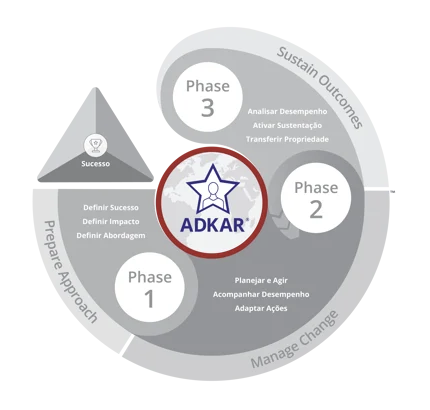
If you use a formal change framework, the Prosci ADKAR model maps neatly to KPI updates:
Final Note: Making KPIs Work as You Scale
As companies grow, the best KPIs change from simple scoreboards to living systems. They start as a few obvious measures and mature into a layered set of inputs and outputs that line up with strategy.
When you notice misalignment, don't wait. Audit what you track and reconnect metrics to outcomes. Ultimately, build in review triggers so you can adapt without drama.
Remember: KPIs aren't permanent fixtures. They should change as your customers, products, services, and teams change. Revisit them regularly and retire the ones that no longer serve you, so your people know how their work moves the numbers that matter.
Ready to scale your business while making your key metrics work? Consider leveraging Plecto’s real-time KPI dashboard to keep the entire process running smoothly and keep your whole team utterly organized. Sign up below for a free demo today!
Build your first dashboard.
Start your 14-day free trial today



ROMAN SHVYDUN
Content Expert and Strategist
As a content creator specializing in SaaS business and marketing, Roman Shvydun writes data-driven articles for SaaS websites. His superpower is converting SaaS “dialects” into a universally understandable “language” with actionable steps for brands and marketers in the field. Roman has become a recognizable voice in SaaS thanks to his fresh ideas and analytical skills. In his spare time, he fishes and “hunts” for new technology trends in the industry and beyond.