 Sign in
Everything You Need to Know About CPG Order Fulfillment
Don't let CPG orders go unseen. Learn about key challenges in fulfilling them—and how live data visualization delivers results for your business.

CPG Order Fulfillment 101: Everything You Need to Know
Getting products into customers’ hands quickly and accurately is what keeps consumer packaged goods (CPG) brands competitive. From food and beverages to personal care items and household essentials, customers want fast delivery, accurate orders, and a smooth buying experience every time.
Behind that experience is a complex process known as consumer packaged goods (CPG) fulfillment. This involves managing inventory, processing orders, and making sure products move efficiently through the supply chain. When this process turns well, it helps businesses grow, builds trust with customers, and keeps everything running like a well-oiled machine.
What Are Consumer Packaged Goods (CPG)?
Consumer packaged goods are everyday items produced in large volumes. They’re usually packaged for individual use, and cover a wide range of categories, including:
- Food
- Beverages
- Household supplies
- Personal care items
- Over-the-counter health products
Because people use these products every day, they rely heavily on proper order fulfillment. For retail-ready consumer packaged goods (CPG) brands, this often means shipping products from a warehouse or fulfillment center to a retail distribution center, or directly to customers in the case of direct-to-consumer (DTC) sales. It includes everything that occurs after someone places an order until they receive their product.
 Build your own
Key Components of CPG Order Fulfillment
CPG fulfillment is a group effort that helps get products from manufacturers to consumers as efficiently as possible. Each step in the process is key to making sure everything runs smoothly, stays on point, and keeps costs in check.
Inventory Management
Good inventory management gives you better control over your revenue, profit margins, and brand reputation. But creating an effective inventory requires a careful balance. Too much inventory can lead to potential markdowns, higher costs, and waste, but not enough inventory can slow your growth and damage how people see your brand. Many companies use the FIFO (first-in, first-out) method to manage shelf life and keep products fresh.
Order Processing
Order processing begins the moment a customer places an order. It includes checking the order details, picking the items from the warehouse, carefully packing them, and preparing them for shipment. Being quick and accurate is essential, as even small mistakes, such as sending the wrong item or incorrect quantity, can damage customer trust. Good organization is key to making the process faster and more precise.
Distribution and Shipping
Distribution and shipping play a big role in the success of consumer packaged goods (CPG) brands. They help make sure products are delivered smoothly from the manufacturer to your favorite stores. These processes involve tracking inventory, coordinating transportation, and managing storage. Depending on what they sell, who they’re targeting, and their overall business plan, CPG brands can take different approaches to distribution and logistics.

Technology in Order Fulfillment
New partners and potential customers often ask, “What technology do you use to fulfill orders, and what does fulfillment support?” This can involve a lot of information because there are many ways to get the job done, and technology plays a big role in these options.
Warehouse Management Systems (WMS)
A warehouse management system, or WMS, is software that helps companies run their daily warehouse operations. It tracks goods and materials from when they arrive at a distribution or fulfillment center until they leave. Warehouse management system software is an important part of supply chain management and provides real-time visibility into a company’s entire inventory, both in warehouses and while in transit.
Order Management Systems (OMS)
An order management system (OMS) is software that helps manage and track orders throughout their lifecycle. It provides real-time updates on order status information from the sale to delivery. Since customer orders and inventory levels are closely linked, an OMS simplifies both inventory management and order tracking. This system gives clear visibility into the retail fulfillment process by gathering all relevant data in one place.
Automation and Robotics
In fulfillment warehouses, finding skilled workers is difficult, and resources are limited, but customers still have high expectations. Supply chain leaders need to achieve more with fewer resources. Automating manual tasks with intelligent automation has become essential. This automation helps warehouses deal with ongoing labor issues and changing customer demands. Robotics can perform repetitive tasks accurately, and that boosts efficiency and reduces errors.
 Build your own
Challenges in CPG Order Fulfillment
As consumption patterns change and competition in the market increases, distributors encounter challenges that affect their profits, efficiency, and customer satisfaction. The first step to fixing these issues is recognizing that they exist.
Demand Volatility
Customer demand can change quickly, especially in the CPG industry. Trends, promotions, and external factors can all influence buying behavior. Demand can change due to:
- Uncertain sales caused by overstock or stockouts
- Difficulty keeping inventory at the right levels
- Changes in customer preferences and behavior
- Poorly timed promotions or restocking schedules
These factors may be subtle, but they affect many other things in the industry.
Seasonality Pressures
Seasonal trends play a big role in CPG sales. Holidays, weather changes, and special events can cause demand to rise or fall at certain times of the year. Some common problems include:
- Unpredictable demand during festivals or holidays
- Sudden weather changes that disrupt stock planning
- Increased pressure on delivery timelines
- Risk of running out of popular seasonal items
Pay attention to the patterns, and plan ahead for major events or seasonal shifts. This helps prevent being caught off-guard.

SKU Proliferation
Many CPG brands offer a wide range of products, sizes, and variations. That leads to SKU proliferation, where the number of unique items increases rapidly. This develops due to many challenges, including:
- Managing thousands of SKUs with different demand patterns
- Difficulty tracking expiry dates and batch movements
- Increased picking and dispatch errors in warehouses
- Complex warehousing and space management needs
- Time-consuming manual tracking that slows down operations
Without the right logistics in place, these can all quickly affect your business.
Rising Operational Costs
Costs related to labor, transportation, and storage continue to rise. These expenses can put pressure on profit margins, especially for high-volume, low-margin CPG products. Some common culprits include:
- Rising fuel costs, which affect delivery budgets
- Increasing logistics and warehousing fees
- Labor shortages that slow down operations
- Frequent delivery route inefficiencies that increase expenses
These increases cut into your bottom line and often grow over time.
Lack of Real-Time Visibility
Limited visibility into inventory turnover and order status can create major problems. Without real-time data, it becomes difficult to make informed decisions or respond quickly to issues. This lack of visibility can lead to:
- Inaccurate stock data that causes order mismatches
- Delayed communication with retailers and field teams
- Slow responses to changes in market demand
- Higher chances of products being unavailable
- Difficulty tracking warehouse movements and van sales
That’s why it’s so critical to understand these problems. By learning about the most common challenges associated with CPG order fulfillment, you can be proactive and protect your business.
 Build your own
Solving the Visibility Gap with Plecto
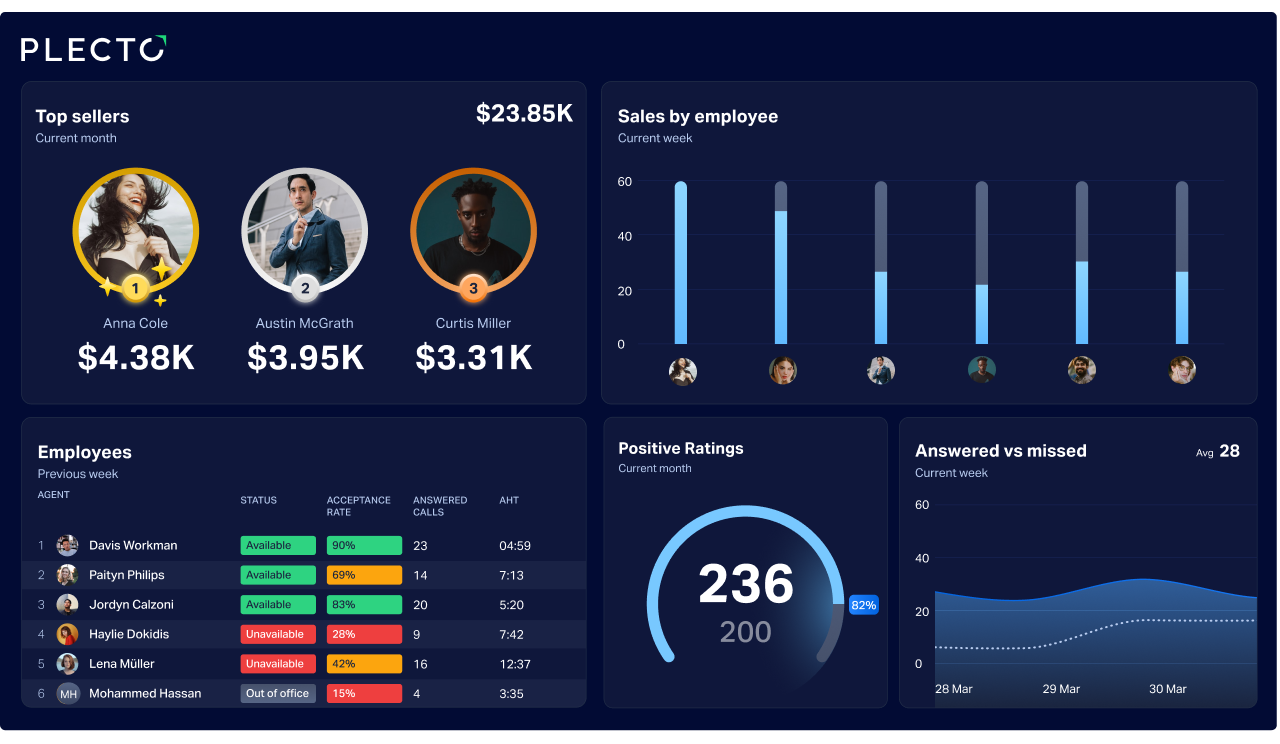
That visibility gap is exactly what Plecto was built to close. It pulls data from your inventory systems, CRM, and fulfillment platforms into one live dashboard, so your team stops relying on end-of-day reports to find out what went wrong hours ago.
Stock levels, order status, warehouse movements—everything is visible as it happens, on office screens or a mobile app. When a delay surfaces, your team sees it in real time and can act on it before it ripples into a missed delivery or an unhappy retailer.
Best Practices for Efficient Order Fulfillment
Whether you’re handling fulfillment yourself or partnering with a third-party logistics provider, following best practices can boost your delivery game and keep your customers satisfied.
Lean Inventory Management
The foundation of smooth order processing is accurate and up-to-date inventory data. A good inventory management system (IMS) helps you track stock levels in real time, reducing the risks of overselling or running out of stock. By connecting inventory management with your order processing, you can keep your stock information reliable, and that prevents errors while improving customer satisfaction.
Omnichannel Fulfillment Strategies
Omnichannel fulfillment is about simplifying how orders are managed by blending inventory and order handling from different sales channels. It gets everything in sync, like picking, packing, receiving, and dealing with returns, across various platforms. The goal is to make it easy for customers to browse, buy, and receive products or services without any hassle.
Enhancing Shipping and Delivery Strategies
Shipping is important for customer experience. Faster and more reliable delivery options can help a brand stand out from competitors. To improve efficiency, businesses should optimize how they choose carriers, plan delivery routes, and package products. Giving customers several shipping options allows them to pick what works best for them.
Conclusion
To achieve smooth order fulfillment, you need a partner who knows the consumer packaged goods (CPG) industry well. It’s important to use effective strategies and techniques for fulfilling orders, and regularly check how things are going. Between Plecto's real-time updates; accurate inventory management; and fast third-party logistics (3PL) shipping, you can meet customer expectations without overextending your internal resources. Sign up for a free Plecto trial or demo today.
Start your 14-day free Plecto trial today.
Enjoyed the article? Share it:


LAURA GREENE