The Scoreboard Effect: How Rack Electric Empowered Technicians to Own Their Performance
Integrations used with plecto
Company background
Founded in 1994, Rack Electric is a premier family-owned electrical contractor based in Boca Raton, Florida, specializing in turnkey standby generator solutions and comprehensive residential and commercial electrical services. Led by CEO Jesse Rack, the company has grown into one of the largest independent generator dealers in the Southeast, known for its "Rack’s Got Your Back" 24/7 emergency commitment. By blending over 30 years of traditional service expertise with a modern, data-driven approach to field performance, Rack Electric provides reliable, high-scale energy infrastructure for thousands of clients across South Florida.
Company & Industry:Rack Electric, a high-growth residential/commercial electrical contractor specializing in standby generators.
The Tech Stack: Integrated ServiceTitan with Plecto to provide real-time KPI visibility via mobile and office dashboards.
Core Problem: High-scale "growing pains" and a lack of technician accountability due to invisible performance data.
Primary Results: Improved revenue per technician, increased generator lead conversion, and a shift toward a data-driven performance culture.
Company overview
Rack Electric is a licensed electrical contractor based in Boca Raton, Florida, specializing in whole-home standby generators and residential/commercial electrical work. With more than two decades of experience, the company is known for reliable service, fast response, and deep expertise across South Florida.
The business operates through two main teams: office staff handling dispatch, scheduling, and customer coordination, and field technicians responsible for installations, maintenance, troubleshooting, and on-site service.
As call volume and generator demand increased, the company faced the typical growing pains of high-scale home service operations: keeping technicians performing well, maintaining quality, and ensuring leadership had clear visibility into daily workflow.
This is why Rack Electric began shifting toward a more structured and data-driven approach. As Jesse Rack, CEO of Rack Electric, noted in our interview, aligning the office and field around real-time metrics became essential for pacing the day and improving technician accountability.
Despite its growth, Rack Electric remains a family-run company focused on safety, customer satisfaction, and long-term generator service relationships, making performance visibility and technician engagement critical to sustaining that growth.
Challenge
Before Plecto, Rack Electric operated much like many fast-growing home service companies: the data existed in ServiceTitan, but technicians never actually saw it. Jesse summed it up clearly: “You didn’t know where you were at until the end of the day or week.”
That meant technicians moved from job to job without any sense of how they were performing. They didn’t know their job count, daily revenue, or whether they were ahead or behind their peers.
Without a visible scoreboard, there was little reason to push for add-ons, generator leads, or to turn a good day into a great one. As Jesse put it, “The guys just went through the day without really knowing what they were doing.”
They simply lacked real-time feedback.
This also widened the gap between the field and the office. The office team had visibility into capacity, pacing, and opportunities throughout the day. The techs did not. Jesse described it plainly: “We could see what was happening, but they couldn’t. They were in their own world.”
Decisions were made in two different “information worlds”: the office worked with data, while techs relied on intuition.
As the company grew, this mismatch became harder to manage. More jobs, more generator work, and more technicians meant more complexity—but the systems supporting performance visibility hadn’t caught up. Rack Electric was transitioning from a small family operation into a structured, scalable business, yet the daily rhythm wasn’t supported by real-time insight.
In short, a lot of potential was being lost simply because people didn’t have the right information at the right moment.
Implementation: Integrating ServiceTitan with Real-Time KPI Dashboards
The shift began with a clear objective: transforming ServiceTitan data into actionable field insights. Rack Electric realized that to scale, they needed to bridge the gap between back-office reporting and front-line execution.
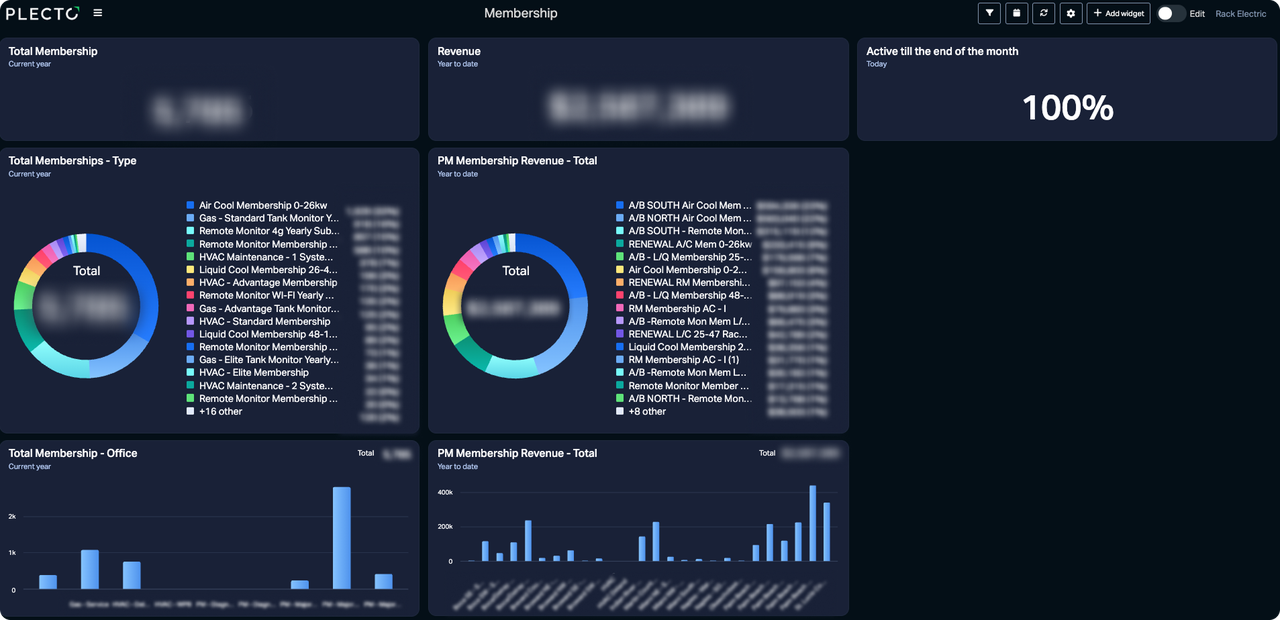
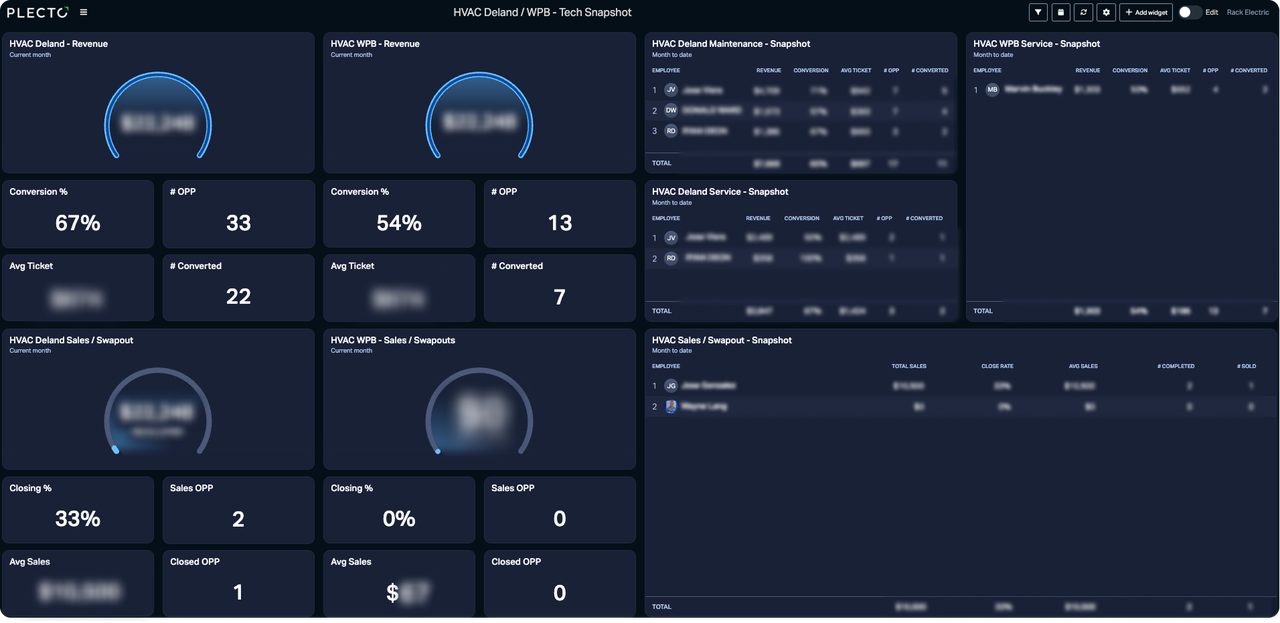
Step 1: Data Integration & Customization The team utilized Plecto’s ServiceTitan integration to pull live data. They moved away from static weekly reports and focused on real-time KPI tracking, specifically targeting revenue per technician and lead conversion rates.
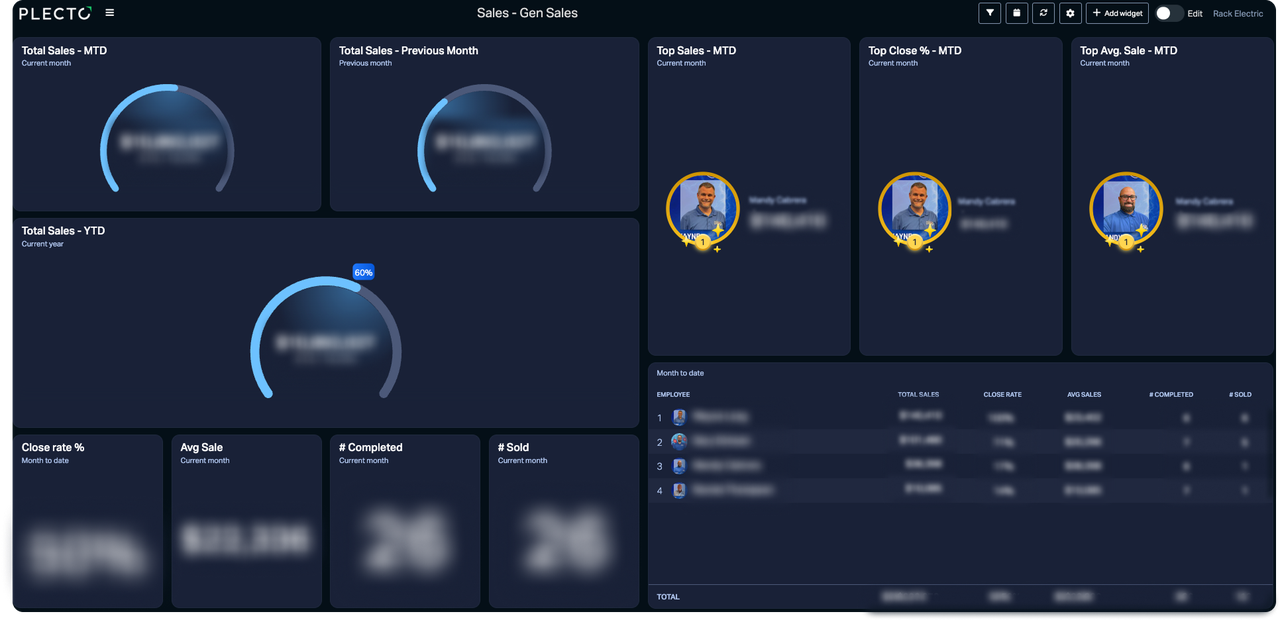
Step 2: Gamifying Field Service Performance By setting up automated leaderboards, Rack Electric introduced a "gamified" experience. Technicians no longer had to wait for a manager's review; they could see their ranking in the "Revenue" and "Generator Leads" categories instantly on their mobile devices.
Step 3: Visual Management in the Office & Field To ensure a "single source of truth," the company installed high-visibility TV monitors in the office and synchronized them with the mobile app for the field. This created a visual management system where the office staff and technicians were looking at the same pacing metrics simultaneously.
The Resulting Behavioral Shift: Instead of moving through the day blind, techs adjusted their effort as they went. They compared themselves with others, reacted to pacing, and understood exactly what the office saw. Jesse noticed a new dynamic forming: “It creates a kind of competition. They see where they stand, and it pushes them.”
The implementation didn’t need new rules or complex processes. It needed one shared source of truth—and the motivation that appears when performance is no longer hidden.
Results
The impact was the opposite of subtle. The moment Rack Electric put real-time performance in front of their technicians, the entire rhythm of the day changed.
Instead of moving through jobs on autopilot, techs suddenly had a reason to look up, check where they stood, and push a little harder. As Jesse noted, “Just by having the graphs, just by having the real-time data visible, it changes everything.”
Technicians who previously didn’t pay much attention to numbers began checking their phones, comparing results, and reacting to pacing in real time. The office felt it too: conversations became faster, decisions cleaner, and the team finally stopped waiting for end-of-day clarity.
Here’s how the shift showed up in practice:
Technicians held themselves accountable. The visibility itself created ownership; no additional pressure was needed.
Motivation increased across the board. With rankings now visible, healthy competition became a natural part of the day.
Better execution on add-ons and generator leads. Real-time pacing made technicians more alert to opportunities throughout the day.
The office and field operated as one unit. Everyone reacted to the same data at the same time.
Faster decisions during the workday. As Jesse explained, “You're not gonna have to do so much manual data entry anymore. It's gonna take that correct data and then put it into a graph.”
A stronger performance culture emerged. Plecto reinforced what Rack already had: “We have a strong culture already, and this just helps sharpen it.”
Together, these changes didn’t just improve performance. They reshaped how the entire company operates, giving Rack Electric a daily rhythm built on clarity, momentum, and shared accountability.
Conclusion
Rack Electric’s experience shows how quickly a team can shift once performance becomes visible. What used to be a day run on intuition became a day led by real-time clarity. Technicians gained ownership, the office gained control, and both sides began reacting to the same information instead of guessing or waiting for end-of-day reports.
This transparency didn’t just boost individual performance; it aligned the entire company. Dispatch worked smarter, techs pushed harder, and leadership finally had a clear view of momentum as it happened. The result was a stronger rhythm, a more competitive mindset, and a culture that sharpened itself every single day.
Plecto didn’t introduce new rules or processes. It introduced visibility—and visibility transformed everything.
No stats, no accountability. It’s that simple. When technicians can’t see their performance, they can’t own it. And when the office and field operate on different information, momentum disappears.
Give your team the visibility they need to perform at their best. With Plecto, home service companies get real-time dashboards, pacing tools, and technician insights that turn every day into a measurable win — not a guessing game.