How Real-Time Visibility Eliminated 2–3 Hour Scheduling Delays at Golden Rule
Integrations used with plecto
Company background
Golden Rule Plumbing, Heating, Cooling & Electrical is a large home service provider based in the Des Moines metro area, serving nearly 700,000 households. With around 175 employees and approximately 75 technicians operating across multiple trades, the company handles high daily call volume where accurate, up-to-date scheduling is critical to operations and customer satisfaction.
Key Metrics: Booking accuracy, technician capacity, and schedule pacing.
Outcome: Eliminated data lag, zero overbooking, and synchronized marketing.
Introduction
Golden Rule Plumbing, Heating, Cooling & Electrical is one of Iowa’s leading home service providers, serving nearly 700,000 homes across the Des Moines metro area. With around 175 employees and 75 technicians on the road daily, maintaining a balanced schedule is key to smooth operations and satisfied customers.
For years, the team managed capacity with a whiteboard in the customer service room. Managers exported data from the CRM every few hours, wrote the numbers by hand, and updated the board manually. But as job volume and demand fluctuated throughout the day, information quickly went out of date.
The lag between updates often led to overbooked technicians or missed opportunities on slower days. The team needed a faster, more reliable way to see what was happening live, and act on it before small scheduling gaps turned into customer frustration.
Challenge
Managing schedules for 75 technicians across multiple trades is a constant balancing act. At Golden Rule, even a small delay in information could disrupt the entire workflow. The team used a whiteboard in the customer service room to track how many jobs were booked for each day, updating it manually every few hours based on CRM reports.
It was a system that depended entirely on people — and time. If a manager got busy or forgot to refresh the board, the numbers stayed outdated. Employees never knew for sure whether the day was full or if more calls could be booked.
As Derrick Dickey, Golden Rule’s Director of Data and Technology, explains:
“The CSR manager would run reports out of our CRM, write the numbers down on paper, and walk them over to the board every two to three hours. That created lag — we didn’t always know where we were, and sometimes got overbooked, which meant rescheduling customers.”
That lag directly affected both productivity and customer experience. When the schedule was full but the board showed open space, technicians were overbooked and appointments had to be moved. The lack of real-time visibility turned daily scheduling into guesswork — and every mistake came with a cost.
Solution
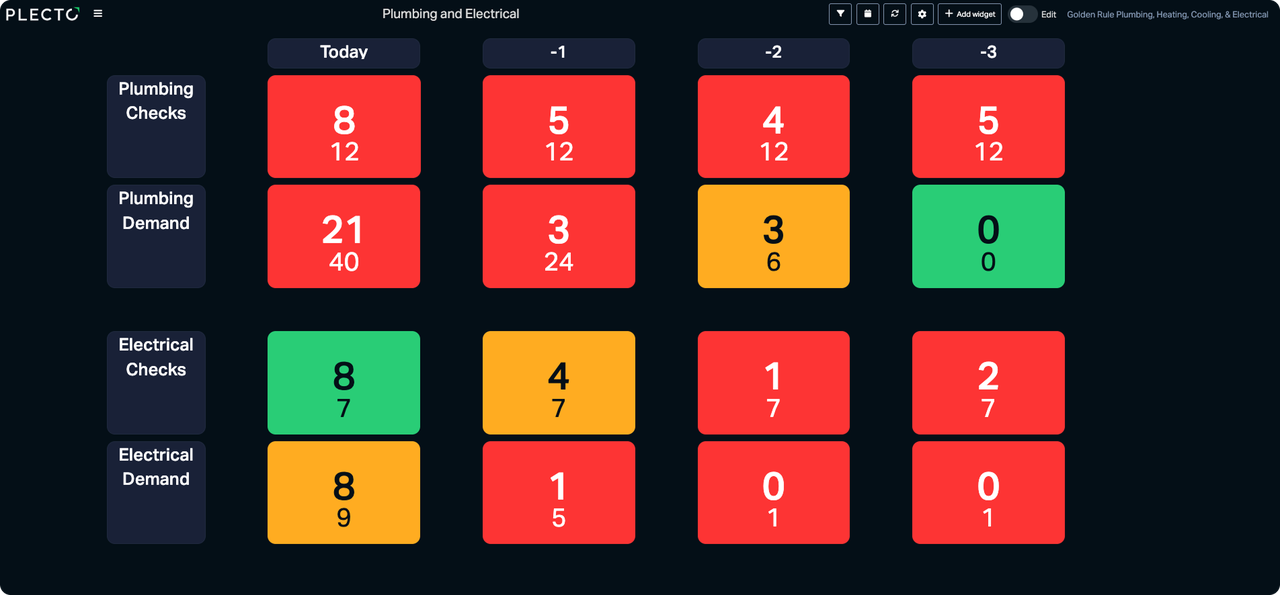
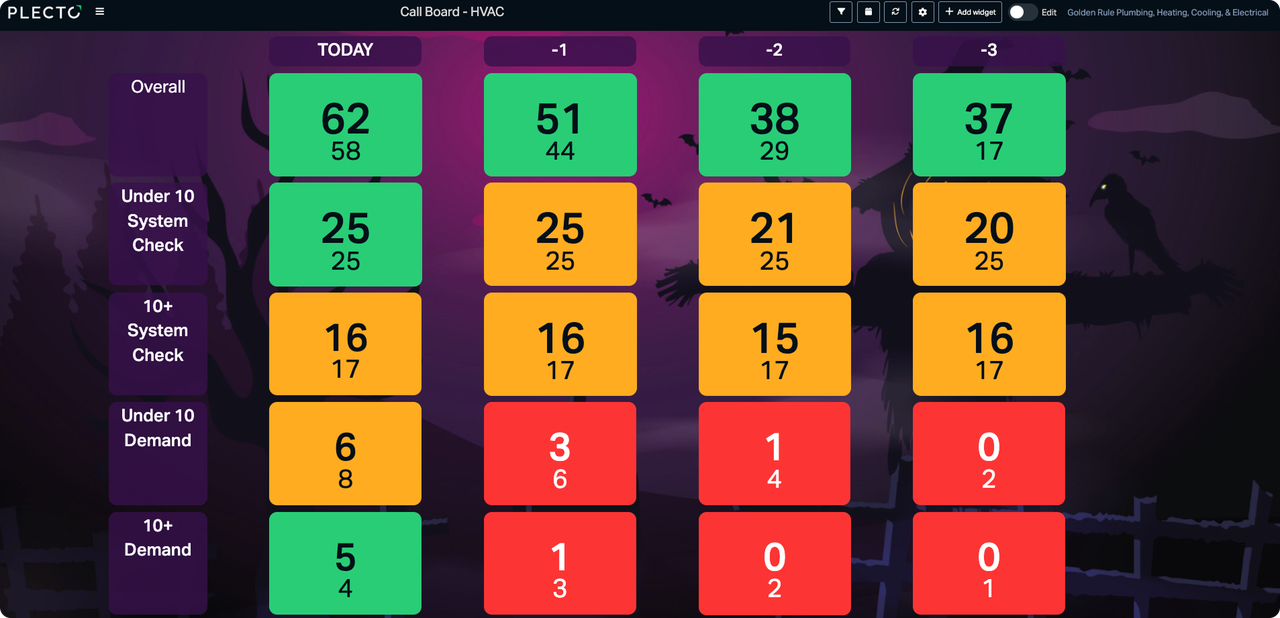
To eliminate the delays and manual updates, Golden Rule turned to Plecto’s real-time dashboards. The team built a “three-day call board” that automatically pulls data from their CRM, showing how many jobs are booked today and for the next three days. “We use Plecto and the boards we’ve created to manage that in an automated way,” says Derrick. “It has a direct connection into our CRM and updates in real time.”
The dashboards are displayed on TVs in the customer-service room, giving everyone immediate access to live scheduling data. When calls come in, CSRs can see at a glance whether to book for today or another day — no waiting for reports, no guessing.
“People rely on the dashboards and know they’re there, updated and available,” Derrick explains. “Instead of asking where they’re at, they just turn around, look at the TV, and know within moments if they should book for today or another day.”
Plecto also made collaboration between departments seamless. Golden Rule’s Marketing team can instantly see when the schedule is light and launch targeted campaigns to fill open spots, while operations can react faster to spikes in demand. What used to require hours of manual reporting now happens automatically — visible to everyone, in real time.
Conclusion
Golden Rule’s experience shows how visibility drives control. By replacing manual tracking with Plecto’s automated dashboards, the team gained the clarity to make faster, smarter decisions without adding new tools or processes. What once relied on handwritten updates now runs in real time, giving every employee the same accurate view of daily operations.
For Golden Rule, that means fewer scheduling surprises, smoother communication across departments, and a more consistent experience for every customer. It can mean the same and more for you.