Table of contents:
AI-Powered Gamification: The Next Evolution of Workplace Motivation
Picture your sales floor on a Monday morning. The leaderboard is up, the same three names are at the top like they've been for six months, and everyone else has quietly decided the contest isn't really for them.
That’s exactly what traditional gamification looks like. Those at the top of the board keep doing more to retain their slate, while the rest give it up because ranking high seems impossible and maybe not worth the effort. This results in disengagement and reduces your organization’s productivity.
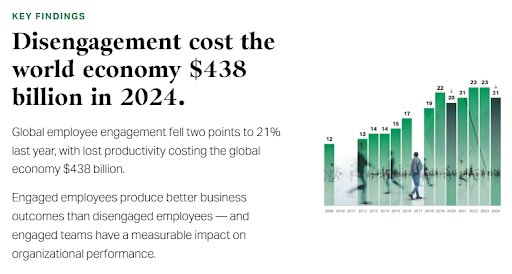
According to Gallup's 2025 State of the Global Workplace report, the global employee engagement fell to 21% in 2024, costing an estimated $438 billion in lost productivity.
To fix that, you need AI-powered gamification. Technically, AI changes the usual static approach to engagement, which favors only those at the top, into a personalized mechanism for each employee. The result is higher and individualized engagement.
In this article, we’ll explain what’s unique about AI-powered gamification and how to implement it.
Why Traditional Gamification Loses Steam
Traditional gamification works until it doesn't, and the reason is almost always the same.
1. First, The Basics Still Work
People genuinely like to see their progress, and most of them are at least a little competitive once you give them a visible target to aim at. Leaderboards, points, and badges tap into that in a way that doesn't need much explanation.
Sales gamification built on these fundamentals, things like activity-based contests and instant win notifications, genuinely move the needle when they're set up right. This positive reinforcement, repeated often enough, shapes your employees’ behavior over time.
2. Now Comes The Novelty Problem
Here's where things usually fall apart, though. The initial energy fades once it becomes clear that the same handful of people will win every month. For the rest of the team, the system you build to engage them suddenly stops feeling like an opportunity and becomes someone else's contest.
Gavin Yi, CEO & Founder of Yijin Solution, says: "The moment a system stops calibrating to where the person is, you feel it. The challenge either stops meaning anything or it starts feeling impossible.
"Either way, they check out. Workplace gamification works the same way. If it isn’t adjusting to the individual employee, it’s slowly losing them."
3 Things AI Actually Adds to Gamification
AI is not reinventing the wheel, but it has made existing mechanics more flexible and personalized. Here’s how.
1. Challenges That Adjust to the Person
The issue with one-size gamification is that the same monthly target gets handed to everyone, regardless of where they actually are. But the truth is, someone who just hit their stride doesn't need the same push as someone still figuring out their cadence.
So, AI tracks where someone is in their development, what they've struggled with, and what kind of challenges they tend to engage with, then calibrates their gamified experiences accordingly.
Kashif Ali, Growth Specialist at PsychologySchoolGuide.net, a resource that helps students navigate accredited psychology programs online, sees this dynamic among learners with very different starting points. "The students who stick with a program aren't always the most naturally talented," Ali says. "They're the ones whose learning path meets them where they are.
"When the challenge level is right, you don't have to push people to keep going. They want to. That intrinsic pull is what good adaptive systems are trying to recreate."
Duolingo's Birdbrain model runs on the same principle, adapting lesson difficulty in real time to keep learners in a productive zone rather than bouncing between bored and stuck.
Apply that logic to onboarding or sales enablement, and new hires aren't drowning on day one while your tenured reps aren't sleepwalking through challenges built for someone half their experience.
2. Real-Time Nudges Instead of Late Feedback
Most performance feedback arrives somewhere between unusable and irrelevant.
An employee misses their call targets for three weeks, and the conversation happens during a quarterly review, when nothing from those three weeks is actionable anymore. By then, you're just documenting history.
What actually changes behavior is a nudge that shows up while there's still time to act on it.
For instance, a prompt when someone is close to a milestone, a business newsletter, or an in-app coaching trigger when performance data suggests a rep is losing confidence before it shows in closed deals, lands differently than a retrospective summary from a month ago.
Bryan Henry, President at PeterMD, one of North America's largest online men's health clinics offering telehealth care and personalized treatment plans, runs a care model built entirely on this timing principle.
"In telehealth, the intervention that actually works is the one that shows up when the patient is ready to act on it," Henry says. "Not in a monthly check-in, not in a summary report. Right when it's relevant. Workplace coaching and engagement have the same timing problem. AI solves it the same way."
3. Performance Tracking That Goes Deeper
Points earned and levels completed only tell part of the story, and in some cases, they tell the wrong one entirely. They don’t show where employee momentum is slipping or where daily behaviors affect outcomes that matter, such as win rates, customer satisfaction, and cycle time.
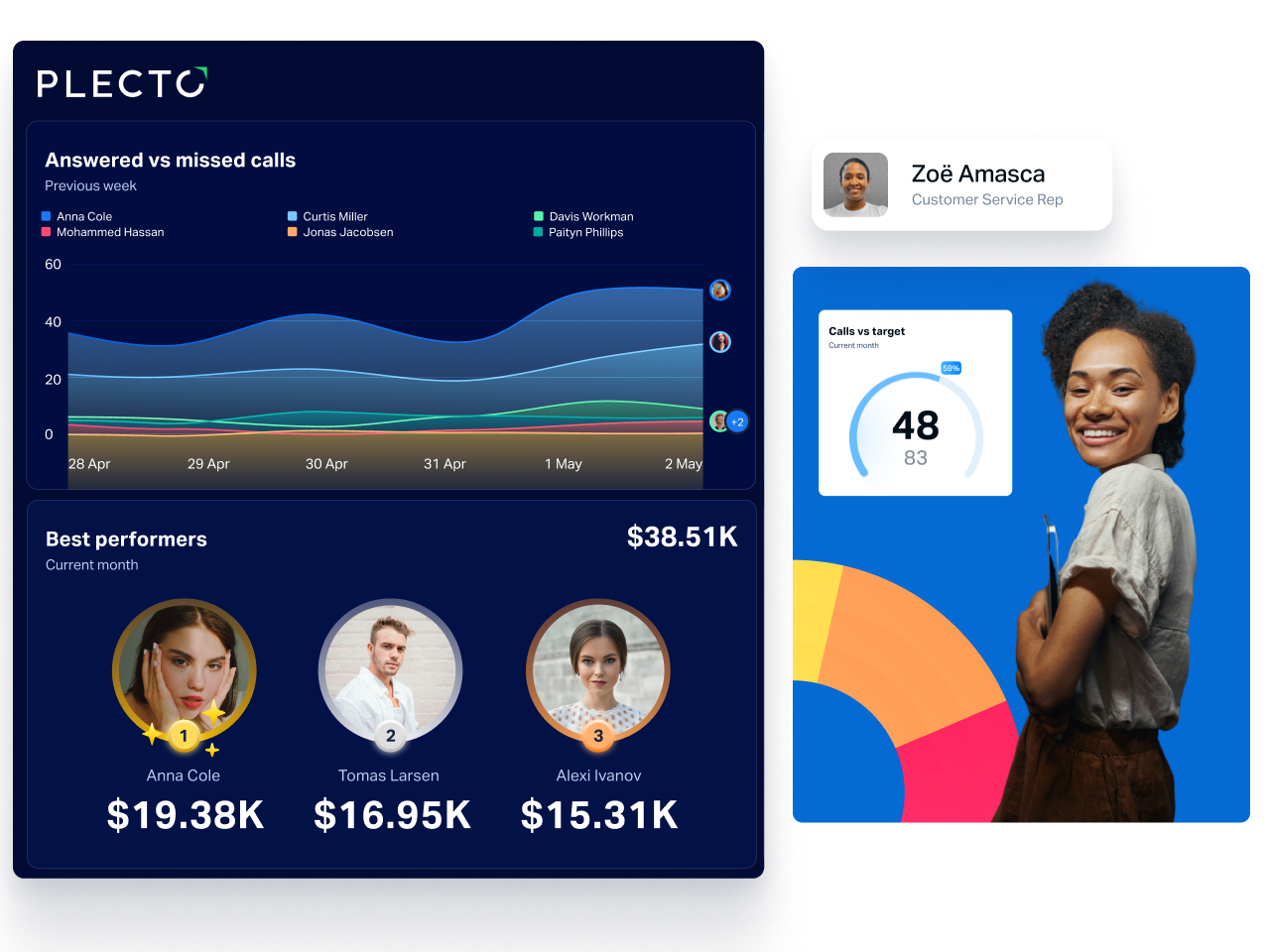
AI-enabled gamified performance dashboards solve that while ensuring you’re not just tied to points and levels, and they also provide much more usable data that you can use to optimize workplace engagement.
The goal, ultimately, is to consistently and properly make each touchpoint of employee experience a positive one while boosting productivity.
How AI Gamification Works Across Teams
Sales, marketing, support, and operations are core to an organization’s growth. Here’s how AI-powered gamification influences each.
Sales and Marketing Teams
Somewhere along the way, sales gamification became synonymous with deal-count leaderboards. Which sounds fine until you realize that deal count doesn't tell you why someone is closing or what's actually working.
AI can move the system past that, rewarding the specific activity patterns that consistently lead to revenue rather than the outputs that are easiest to see.
It can identify which rep needs a confidence challenge versus a stretch goal, and flag coaching opportunities when a pipeline starts showing warning signs, not after the quarter closes and the damage is done.
Customer Support
Speed is the most visible metric in support, but it's rarely the most important one. Resolution quality, first-contact resolution, and consistency across ticket types are what actually move customer satisfaction scores.
Challenge structures built around speed push agents to close tickets fast, not well, and that tradeoff tends to show up in CSAT (customer satisfaction score) before anyone notices the pattern.
AI changes the design logic here. It can detect when an agent is consistently struggling with a specific ticket category and adjust their training queue before that gap becomes a pattern.
The result is shorter ramp times and fewer agents sinking in the deep end, which matters a lot for retention in high-turnover support environments. So, they still hit the gamification goals, but in a more efficient way.
Field and Operations Teams
Not every team sits in the same building. Take distributed teams containing field technicians, regional managers, and operations staff spread across locations as an example. Static leaderboards designed for office environments don't translate well when your team is spread across job sites, and monthly recognition emails arrive too late to reinforce anything.
AI gamification closes that gap by connecting real-time performance data to employee recognition that fires in the moment. For instance, a technician who resolves a complex job efficiently gets flagged and acknowledged the same day, not at the end of the quarter when no one remembers the specifics.
Gareth Edwards, General Manager at Fox Family Heating & Air Conditioning, runs a distributed field team across Sacramento and shares how his company does it: "Our technicians are out on jobs all day, not sitting in a shared office where feedback happens naturally.
"So, when someone handles a tough job well, we let them know it that day through a connected system, not at the end of the month. This improves work motivation and productivity despite the proximity barrier.”
That shows real-time recognition tied to actual performance keeps the team aligned and pushing the same standard, regardless of where they're working.
How to Implement AI-Powered Gamification
Getting this right upfront saves a lot of backtracking later. Here's where to focus.
1. Define What You're Actually Trying to Change
Before you touch a platform or pick a mechanic, get specific about the behavior you're trying to shift. Not "improve engagement" or "boost morale," because neither of those is measurable and neither will tell you whether anything is working six months from now.
Think of:
- Increase outbound call volume by 20%
- Get first-response time in support under two minutes
- Lift cross-sell attempts per rep by 15%
The more precisely you name the behavior, the more your AI gamification system can track the right signals and surface relevant coaching rather than generating generic leaderboard activity that looks busy but doesn't connect to anything.
2. Set Metrics That Measure the Right Things
If your system rewards call volume, even when your real goal is conversion rate, you might end up producing reps who make many calls. The numbers will look good. Revenue won't follow, and by the time you connect the two, you've spent several months reinforcing the wrong behavior.
That’s why you should work with your managers to identify the core metrics worth measuring before anything goes live. Agree on which specific behaviors consistently lead to the outcomes you care about, then build the gamification around those, not the metrics that are easiest to pull from your CRM.
3. Choose the Right Platform
When evaluating a gamification platform, look for a few things that separate a system that actually drives behavior from one that just looks busy on a screen.
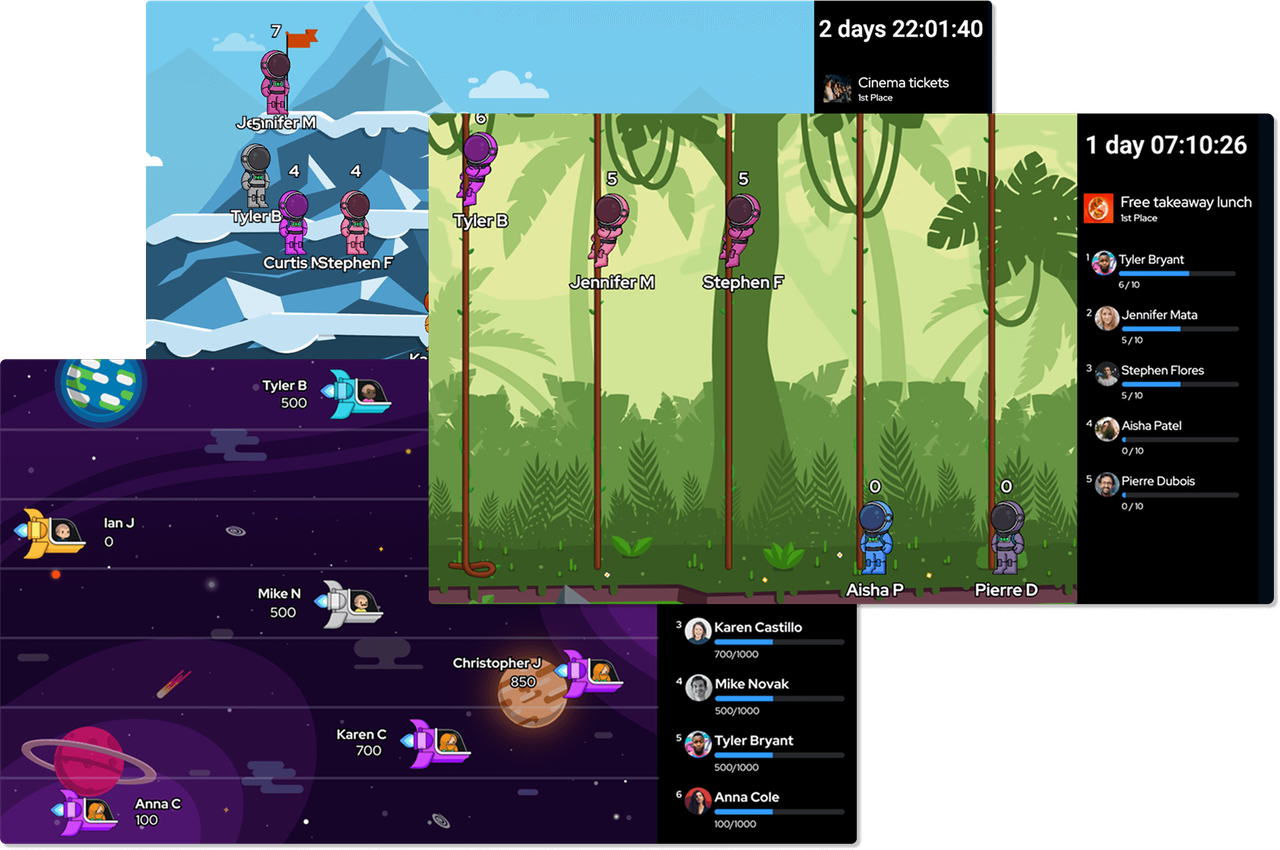
You want real-time recognition that fires when a win happens. Contests and leaderboards built around the specific metrics you care about, not generic defaults. Achievements and badges that managers can award manually or automate based on defined triggers. And dashboards your team can see throughout the day, not just on request.
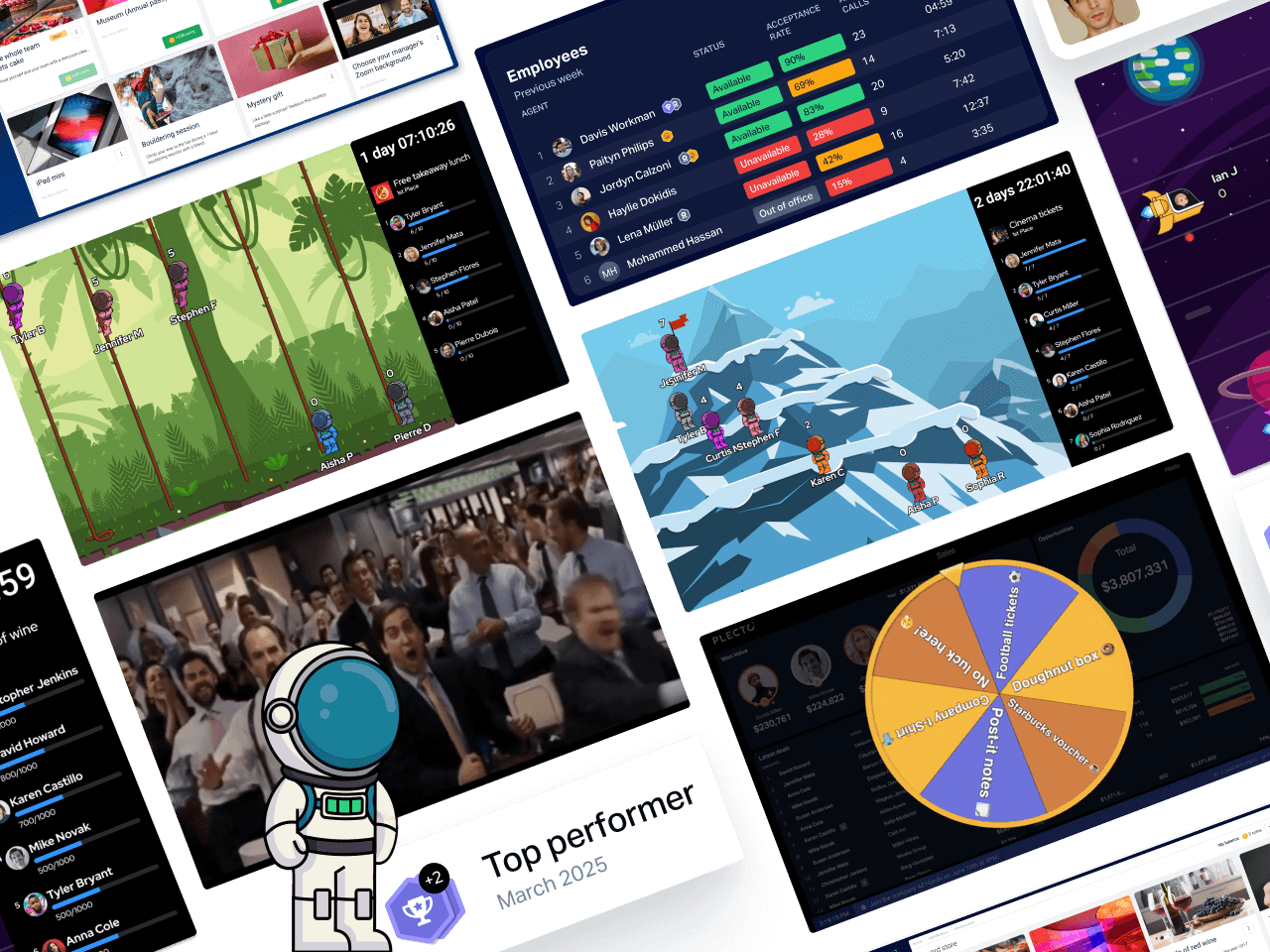
Plecto covers all of that. Contests can be themed and tied to any KPI you're tracking.
- Achievements appear automatically next to employee names when targets are hit
- Instant notifications fire the moment someone closes a deal, hits a milestone, or moves a prospect through the pipeline, complete with a custom video, sound, or GIF if you want to make some noise about it.
- Dashboards display live on TV screens across the office or on mobile for field teams
Plecto also has a Reward Store where employees earn virtual coins redeemable for real-world prizes, and a Spinning Wheel for managers who want to add a bit of unpredictability to the recognition.
4. Integrate With Your Existing Tools
AI gamification pulls its value from the data it has access to, and a system that can only see part of your operational picture produces a partial view. Map out which data sources matter most for the behaviors you're tracking, then confirm those integrations exist and work reliably before you sign anything.
Ask for a demo that specifically tests the connections to your core tools. Any vendor that hedges on that demo is telling you something worth noting.
Then start with one team and build from evidence. A pilot with one team and clear metrics will teach you more than a company-wide rollout ever could. You'll find out which assumptions were wrong, which mechanics actually land, and where the coaching triggers need adjustment before any of that becomes a system-wide problem.
5. Protect Employee Privacy From Day One
Any system that tracks work patterns will raise questions about surveillance. That's reasonable, and the answer is to get ahead of it with transparency before anyone has to ask.
Your employees should know what data is being collected, how it's used, and specifically what it won't be used for. Written policies available before the rollout remove a friction point that would otherwise show up at the worst possible time.
Build governance policies before launch, not after. You can use the NIST AI Risk Management Framework as a practical starting point for thinking through risk in AI-driven systems and in local data protection regulations, such as the GDPR.
Conclusion
There's a version of gamification where the same people win the same contests, and everyone else tolerates the system until they stop noticing it's there. That’s traditional. AI-powered gamification flips that script, ensuring each employee receives a challenge tailored to their competencies in real time.
Start by defining what you’re hoping to achieve with the gamification and set aside metrics to track. Pick a platform like Plecto to handle the mechanics, pivot with one team first, and gradually scale across your organization.
Book your demo with
a Plecto expert today.



ROMAN SHVYDUN
Content Expert and Strategist
As a content creator specializing in SaaS business and marketing, Roman Shvydun writes data-driven articles for SaaS websites. His superpower is converting SaaS “dialects” into a universally understandable “language” with actionable steps for brands and marketers in the field. Roman has become a recognizable voice in SaaS thanks to his fresh ideas and analytical skills. In his spare time, he fishes and “hunts” for new technology trends in the industry and beyond.