
Table of contents:
AI Call Center Gamification: Challenges and Real-Time Coaching
A call center is a demanding place. An agent usually handles up to 100 calls a day and needs to quickly switch between different requests. In addition to this, they must achieve strict KPIs. In this environment, engagement becomes the currency that helps performance and retention.
For years, gamification has been one of the proven strategies. Leaderboards, badges, and “Top Performer” titles brought a sense of competition and recognition. It worked ten years ago, but today, this approach is outdated. Standard rewards and repeating incentives are no longer motivating. Today’s agents need something more dynamic. They need something that adapts, guides, and responds in real time. This is where the next generation of gamification begins.
Why Traditional Gamification Is No Longer Working
Gamification can increase employee productivity by up to 48%. But the methods should match the era. For many agents, earning points or moving up a leaderboard brought real excitement. However, it’s not enough today. In some cases, the old gamification approach may even affect employees.
- One-size-fits-all. Everyone is different. An experienced rep who handles tough technical questions needs different incentives than a beginner. Top performers are bored, and newer agents find goals unachievable. So, these programs disconnect employees.
- No real-time feedback. Leaderboards are not instantly updated, and the feedback is often late. If an agent has a difficult call, there’s no immediate tip or help until the end of the shift. They get information only days later during a review.
- Low motivation. Even the funniest game soon turns into a routine. This can lead to burnout and higher turnover. It’s a real problem for a call center where turnover rates can reach even 30% and more.
How AI and Technology Are Changing the Game
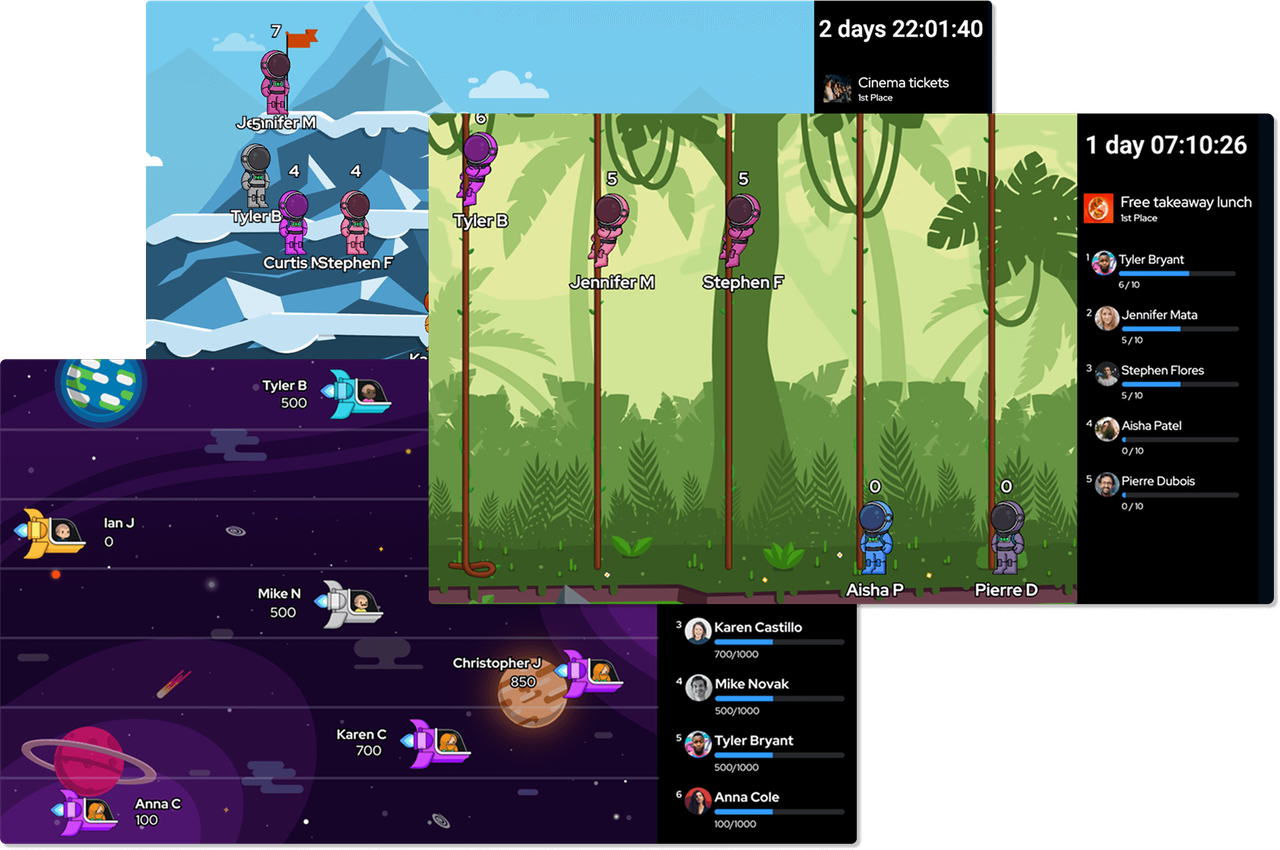
AI makes gamification smarter, more flexible, and personalized. Algorithms study what an agent has achieved and offer ways for them to grow. There are no fixed rules. Modern systems use real-time data from calls, CRMs, and performance metrics and create experiences for every agent. Here’s how it all works.
Personalized challenges. AI analyzes each agent’s call resolution rates, handle times, CSAT scores, tone consistency and generates an individual challenge. For example, an agent excels at speed but struggles with empathy – they may be assigned a task in active listening. The key idea is that such an approach keeps every member of the team engaged and encourages them to perform better.
Real-time coaching. Modern platforms monitor calls in real time. They immediately notice changes in sentiment, compliance risks, or when an agent is losing a customer’s trust. Agents now get instant feedback. They may see a gentle on-screen prompt to slow down, get an alert if the customer’s mood is turning negative, or receive a tip on how to resolve the issue.
Dynamic goal setting. Static daily KPIs kill creativity within a team. AI changes that. For example, if the team achieves targets early, AI offers bonus challenges. When the workload goes up, it adjusts goals to prevent overload. This keeps everyone productive and lets the team adapt on the go.
Live recognition. The Friday shout-outs should be left in the past. AI sends instant notifications. For example, after a successfully solved issue, an agent immediately gets a message on a dashboard or a mobile app, “Great call! You earned 50 points!” Public leaderboards are still fine, but private wins reduce unhealthy competition and amplify positive reinforcement.
How To Implement an AI-Driven Gamification Strategy
You don’t need a complete reset to introduce AI to your call center routine. You will need new software and a shift in your team culture. Here’s how to start:
- Centralize your data. All your systems – CRM, telephony, invoicing and performance tools – must be connected into a single, reliable source. The aim is to build a hub where sentiment analysis, call transcripts, and KPIs can be combined with gamification elements. Choose software that can work with your existing stack. It would be another plus if it supports real-time data visualization, customizable formulas, and built-in coaching.
- Define what success means for you. The number of calls or sales is only part of success. You should look at the small actions that brought these results. These are little things that happen during each call and make the call effective. Identify handle time, upsell rate, or customer satisfaction (CSAT), and use AI to track and reward these behaviors.
- Involve your agents. Don’t introduce anything without your team. People don’t like anything forced. Involve agents from the beginning. Talk to them about what motivates them, what kind of challenges they find useful, and how they like to be recognized for their work. This feedback enables you to create a relevant and fair system.
- Test your new system. Experiment with a small team. The best way is to run a one-to two-month pilot with one team before a big change. It will show you what works and what should be avoided. Plus, you will have trained team members who will be able to teach others during the full launch.
- Track and improve. Monitor how gamification influences your agents. See how active they are. It will tell you how well your system is working. Use your findings to make small changes as you go. Gamification is not static, and you should work on it continuously.
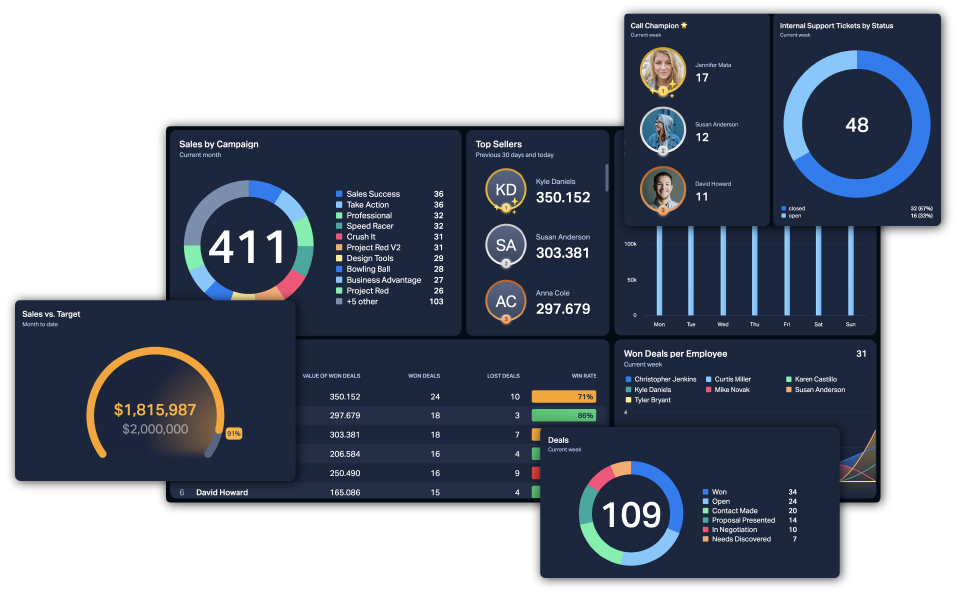
The right tools make this transition much smoother. Platforms like Plecto help teams add gamification, track performance, and see real-time results in one place, and you don’t need to change your whole tech setup. Moreover, you can connect Plecto dashboards with tools like Gong and use AI-powered insights in your daily work. You will save what already works, but make your gamification methods more flexible.
These tools pay off quite quickly. You can see results within a few weeks because agents become more productive and need less time for training. But it’s not a one-time setup. As your team matures, your system should evolve to keep pace.
Conclusion: A New Kind of Gamification
The leaderboard on the wall is still around, as public recognition and healthy competition are absolutely fine. However, these should not remain the main way to engage employees. Modern call centers use AI to refresh old methods. A kind of gamification grows with each agent, responds to every interaction, and makes each win truly rewarding.
Call center turnover is one of the highest, so keeping agents engaged is more than a bonus. When your people feel recognized, challenged at the right level, and coached in real time, they are more likely to stay and provide the kind of customer service that helps the business grow. This is the real benefit of the next generation of gamification, and it is already happening.
Build your first dashboard.
Start your 14-day free trial today



BROOKE WEBBER
Content Specialist
Brooke Webber is a marketing and sales content specialist focused on people-first strategies that connect brand messaging with real customer needs. Her main areas of interest include buyer psychology, customer experience, and revenue-driven communication, where she has accumulated five years of writing experience. At work, Brooke follows Benjamin Franklin’s principle: “Either write something worth reading or do something worth writing."