 Sign in

Make Work Feel Fun Like Sport: How to Build a Winning Mindset at the Office
Make work feel fun like sport with live feedback, points and recognition. Here is how to use gamification to build a winning mindset at the office.
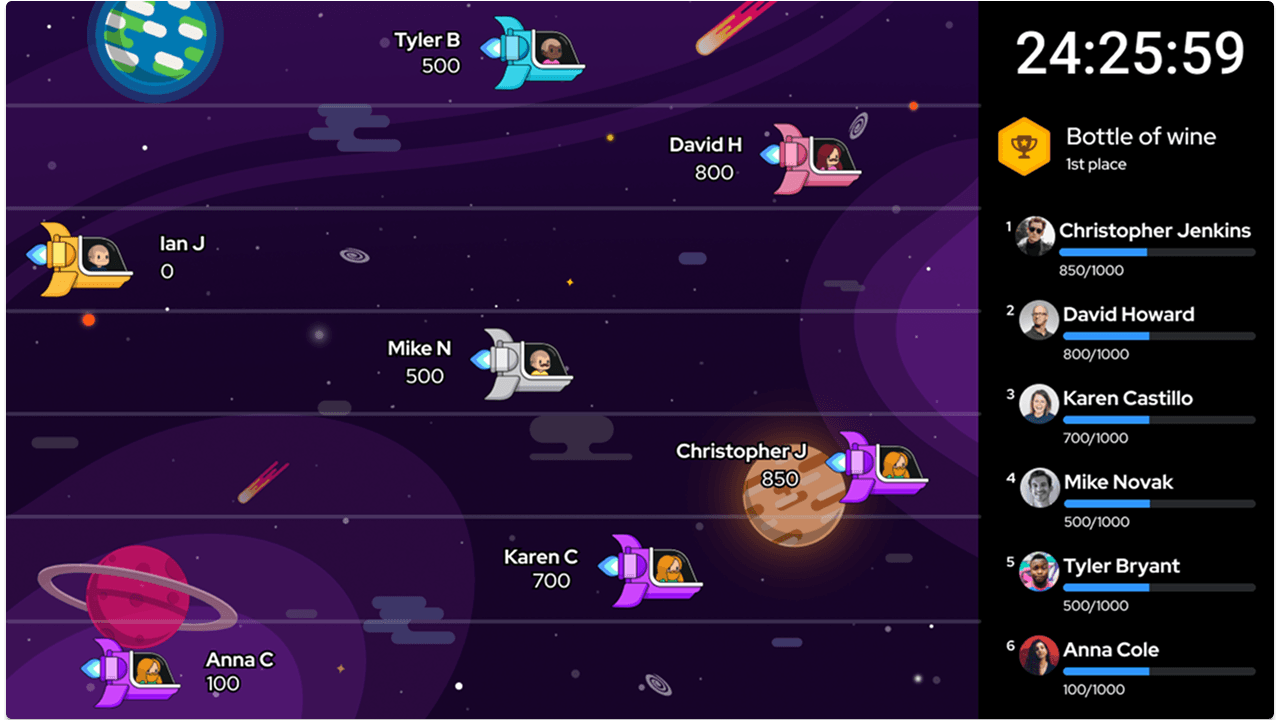
Athletes push themselves to the limit because they know the score, and that is exactly the mechanic to copy if you want to make work feel fun like sport. They see the result right away and understand exactly what it takes to win. In many workplaces, that immediate feedback is missing completely. Changing that takes more than a ping-pong table in the break room. It takes a system that gives employees the same clear goals and recognition they would get on a football pitch.
In his book Feel-Good Productivity, author Ali Abdaal describes how joy and play sustain a high level of productivity. He notes that Nobel laureates such as Giorgio Parisi and Kary Mullis credited their success to treating their scientific work as play and puzzle-solving. For decades, companies have tried to raise motivation with annual bonuses and long-term goals. Research shows, however, that the brain responds far better to immediate feedback and visible progress. When you build game elements into the working day, you change the experience of work itself.
Make work feel fun like sport: why sport motivates us more than work
The consultancy Game of Work was founded in 1973 by Charles Coonradt, whom Forbes has called the grandfather of gamification. Coonradt boiled down what makes sport motivating into five principles: clearly defined goals, better scorekeeping, more frequent feedback, freedom to choose your own methods and consistent coaching. In sport, players get constant feedback. They always know whether they are ahead or behind. In a typical workplace, feedback is often delayed or missing altogether. Employees work blind and only see their results in a report at the end of the month.
To make work feel fun like sport, you need to make data visible. You can bring your company's most important metrics together across departments and show them in real time on interactive dashboards. When salespeople, support agents and managers can see their progress minute by minute, a natural drive appears. Goals become clear, and the path to success is transparent to everyone involved.
Many companies find that data visualization lifts team performance significantly. Employees no longer have to guess how they are doing. They have access to the same information as management, which creates ownership of their own results. That is exactly why Plecto is built to support full transparency.
Make work feel fun like sport with the right feedback loop
An effective feedback loop needs precise measurement. You have to define the actions that lead to success and reward them immediately. The principle is called behavior design. If a customer service agent solves a complex case, the recognition should come right away. You build the loop by defining clear KPIs, so everyone knows what counts as a win.
Plecto's AI Formula Assistant makes these loops easier to set up. You can also build dashboards through a plain conversation using Plecto's MCP integration, which works with Claude and ChatGPT. That way, any manager can create advanced measurement systems without writing complex code.
Follow-up can be structured with coaching tools. Managers and employees can hold 1:1 meetings, set up performance agreements and take quizzes. When feedback becomes part of everyday work instead of a yearly event, the workplace moves closer to the dynamics of sport.
The science behind play and performance at work
The human brain is wired to seek reward and meaning, which explains why playful elements at work have a direct effect on our energy levels. Instead of treating burnout as an unavoidable result of hard work, research points another way. Job Demands-Resources theory explains how resources such as recognition and play act as a shield against stress. This became clear in a 20-day diary study of 57 Norwegian naval cadets. When the cadets proactively added fun and competition to their otherwise routine tasks, they felt more positive energy and less exhaustion. The effect was strongest when they combined fun with competition.
The effect is not limited to the military. A 2025 meta-analysis confirms a clear link between fun at work and high work engagement. And when employees make their own work more fun or more competitive, it meets their basic psychological needs for autonomy, competence and relatedness, another study shows.
Neuroscientist Paul Zak has dug deeper into the biology behind this. In his book Trust Factor, he describes how trust and a clear sense of purpose make the brain release oxytocin. The hormone works as a social glue. It increases empathy and makes it easier for teams to work together. When employees feel trusted and understand the rules of the game, work turns from a duty into an engaging challenge.
The OXYTOCIN model: build trust and make work feel fun like sport
Paul Zak developed the OXYTOCIN model to map the eight building blocks of organizational trust. The model consists of Ovation, eXpectation, Yield, Transfer, Openness, Caring, Invest and Natural. Each element contributes to a culture where employees dare to take chances and innovate.
The first element, Ovation, is especially relevant when you want to make work feel fun like sport. Ovation is about recognizing top performance publicly, unexpectedly and ideally right after the goal is reached. When an employee hits a target, public recognition triggers a strong sense of pride. You can make that recognition systematic with slideshows on the office TV screens. Plecto has TV apps for LG, Samsung and Android TV and can also run on Google Chromecast. When a deal closes, the screen can show a personal notification with animation and sound. You can easily tailor the notifications and the other gamification features to your needs.
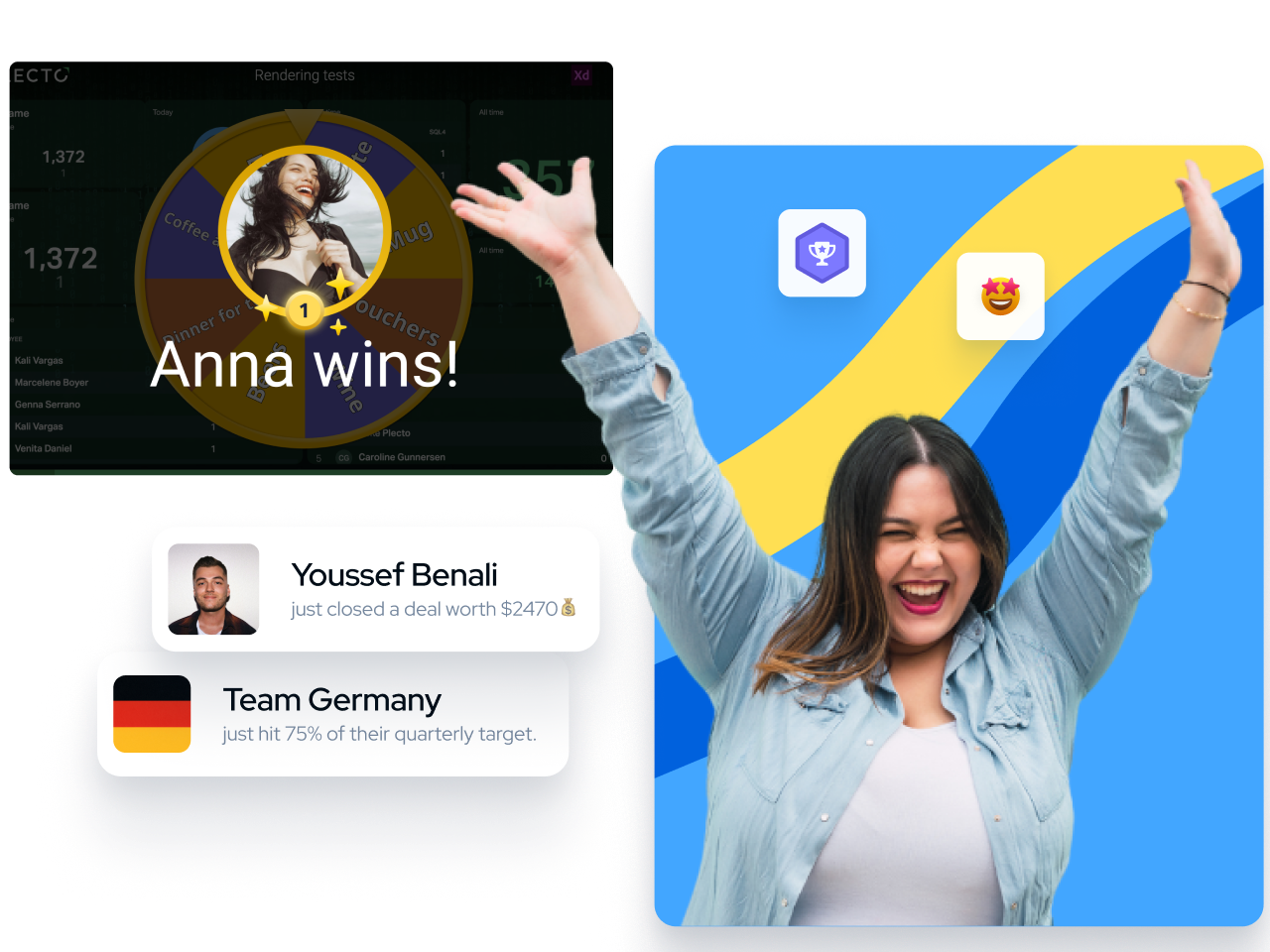
The other elements of the model, such as eXpectation (setting difficult but achievable goals) and Openness (sharing information broadly), are directly supported by transparent data sharing. When everyone has access to the same reports and dashboards, you build a culture of trust and shared direction.
Make work feel fun like sport with a points system for daily tasks
Many companies talk about gamifying tasks but lack concrete ways to do it. To make work feel fun like sport even in the most routine tasks, you can build a personal points system. Start by identifying the most repetitive tasks. Then give each task a point value. A cold call might be worth five points, while a CRM update is worth one.
The next step is to visualize the points. You can use formulas to calculate complex point structures automatically. The system works best when data updates without manual work. You can connect your systems directly through the API and integrations. Plecto supports data import through direct integrations, SQL, Excel and manual entry.
The platform offers more than 150 integrations across departments. For example, you can connect time tracking through the Harvest integration, pull data from Salesforce, Zendesk and Dinero, and send notifications to Microsoft Teams. When data flows automatically, the points system becomes a natural part of the working day without extra admin.
Gamification pitfalls: avoid toxic competition
Gamification can fail if it is implemented badly. One of the biggest risks is creating a hypercompetitive environment where employees work against each other to win. If gamification turns play into a stressful metric, the positive effect disappears completely.
Researcher Mireia Las Heras of IESE Business School surveyed 2,690 people in Spain and Latin America and found that employees who bring a playful attitude to work are more creative. To protect that creativity, the focus should often be on competing against yourself or toward a shared team goal rather than beating your colleagues. With permissions, you can control who sees which data and contests and limit access to specific teams and employees. That precise control keeps contests healthy and motivating.
Also remember that not everyone is motivated by the same things. Some thrive on public leaderboards, while others prefer personal milestones. By offering different kinds of recognition, such as badges for consistency rather than only rewarding the highest revenue, you create an inclusive environment.
Recognition and rewards: make work feel fun like sport in practice
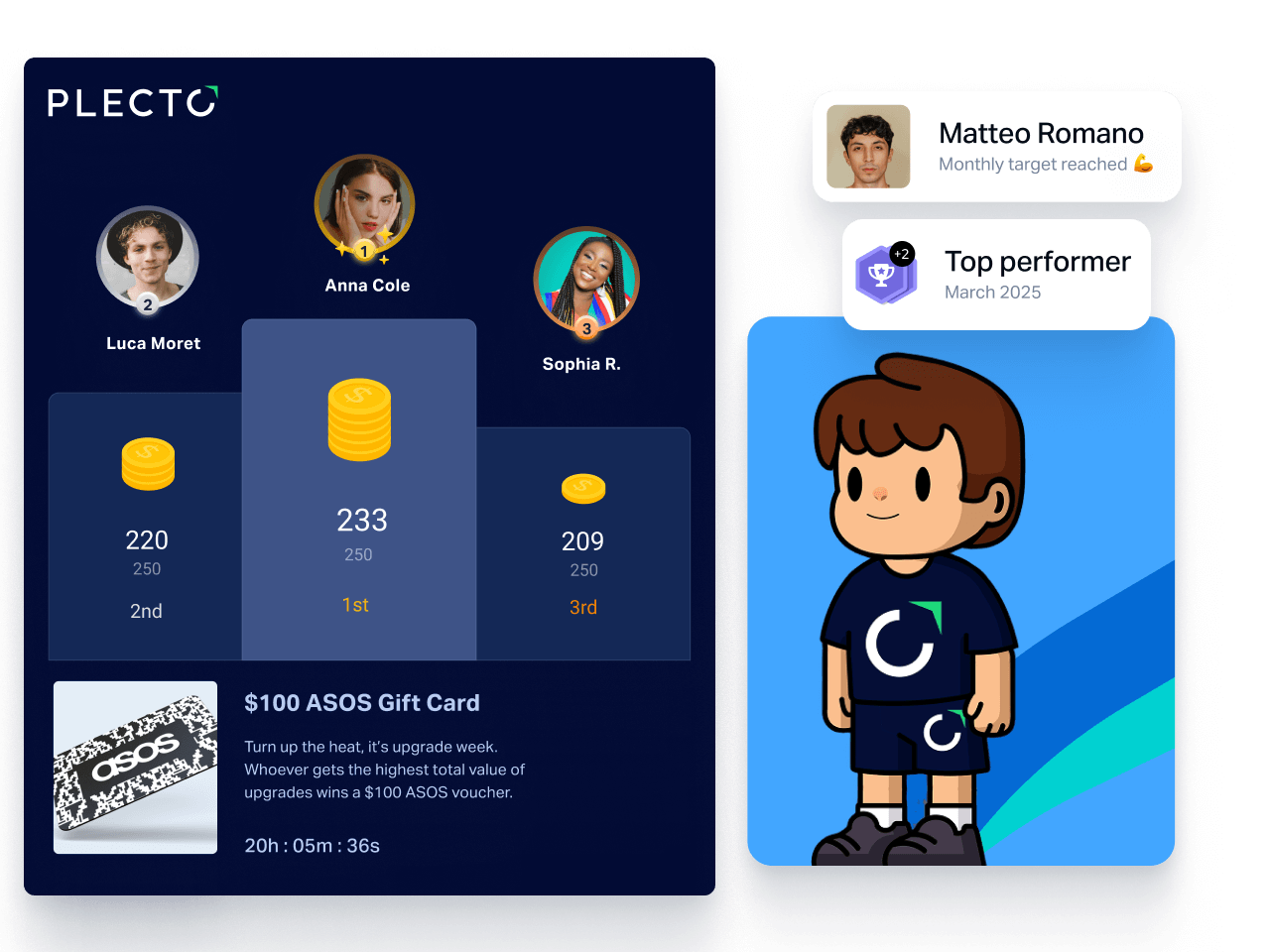
To complete the sports experience and make work feel fun like sport, there has to be a prize. Plecto offers features such as virtual coins, a Reward Store, contests and achievements. When employees earn coins through their work, they can redeem them for physical or social rewards in an internal store. The rewards give real value to the points they earn during the week.
The real estate office Home Østerbro uses Plecto to visualize data and build motivation. The office shows its dashboards on a TV screen and uses the mobile app to keep everyone up to date on the go. You can download Plecto's mobile app for free on iOS and Android.
You can read more stories from our customers, see dashboards for real estate agents or explore a retail dashboard for inspiration in your own industry. Plecto also makes it easy to share results with management through automated reporting in PowerPoint and Excel formats.
Conclusion: make work feel fun like sport with your first feedback loop
Start building your first feedback loop today. Pick one routine task, give it a point value and show the result on a screen where the whole team can follow along. When you make progress visible and celebrate small wins in real time, you will quickly make work feel fun like sport. Want to see how live data and gamification can lift your team? Start a 14-day free trial and set up your first dashboard in minutes.
Questions
Frequently asked questions about how to make work feel fun like sport
Start small. Pick two or three important KPIs and make them visible to the team. Then add simple recognition when goals are reached. You can read more about the first steps to get started or book a demo for personal advice on your setup.
Yes. Sales teams are often the first to adopt gamification, but it works just as well in customer service, marketing and development. It is about measuring the right things. A developer can earn points for fixing bugs, while a marketer can be measured on conversion rates. Read more about gamification beyond sales.
Focus on team-based goals or personal progress. Reward collaboration and knowledge sharing, and make sure everyone has a real chance to win or be recognized. Use the system's settings to tailor contests to your department's culture.
Start your 14-day free Plecto trial today.
Enjoyed the article? Share it:


