
6 Ways Plecto Can Promote Accountability in Home Service
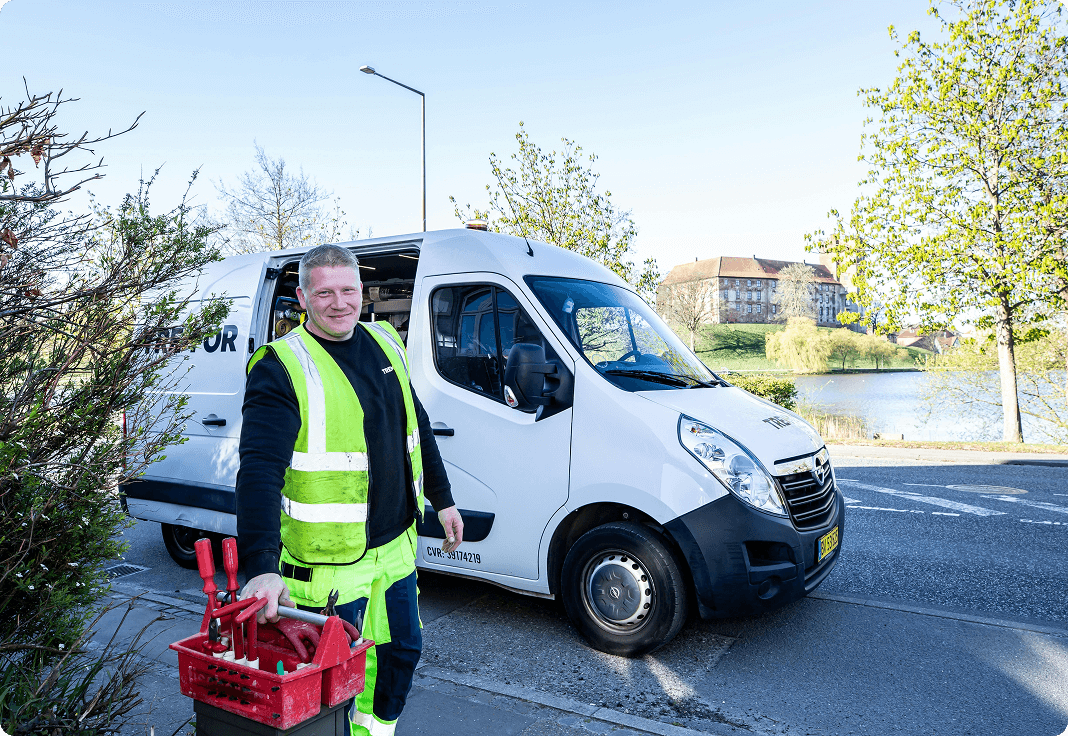
6 Strategies for Home Service Accountability
Why Accountability Matters in Home Service
Accountability. The cornerstone value of any home service firm, accountability means that one takes responsibility for his or her actions.
Accountability is especially important in home service (and the trades in general) because home service technicians aren’t just in an office—they’re out in the field, all on their own, acting independently. Technicians maintain accountability and integrity by ensuring their work is done well—that they’re proud of the job they’ve done, and their customers are happy with it too. But how does a technician communicate their good work back to the office?
This is where data dashboard solutions such as Plecto come in. Plecto creates a strong two-way communication channel between technicians and management, encouraging a team culture where employees in the field can:
- Own their performance
- Take responsibility for their actions
- Keep their actions visible for themselves and their colleagues.
Using Plecto’s data dashboards, technicians and teams can self-monitor their work progress, while management can get immediate insight about the metrics that matter.
In this article, we’ll look at six of the best ideas to encourage accountability in home service by using data dashboards.

Idea 1: Tech Integration
It won’t surprise you that, first and foremost, we recommend incorporating tech solutions into your daily operations. Using Plecto’s real-time or dynamic dashboards facilitates easier communication across your office: between departments, between field and office, and between technicians and management.
This is where accountability comes into play: individual responsibility is easy to understand when everyone can clearly see and communicate with each other.
By integrating your data with a software solution like Plecto, you can visualize your data in an easy-to-understand way and make it accessible for everyone. You can track and monitor your most important KPIs, and even use gamification to encourage performance and bring some fun to your team!
Idea 2: Performance Tracking
Knowledge is power. That’s the core idea of using a dashboard system. Keeping and tracking KPIs onscreen is among the most important ways to encourage accountability throughout the office.
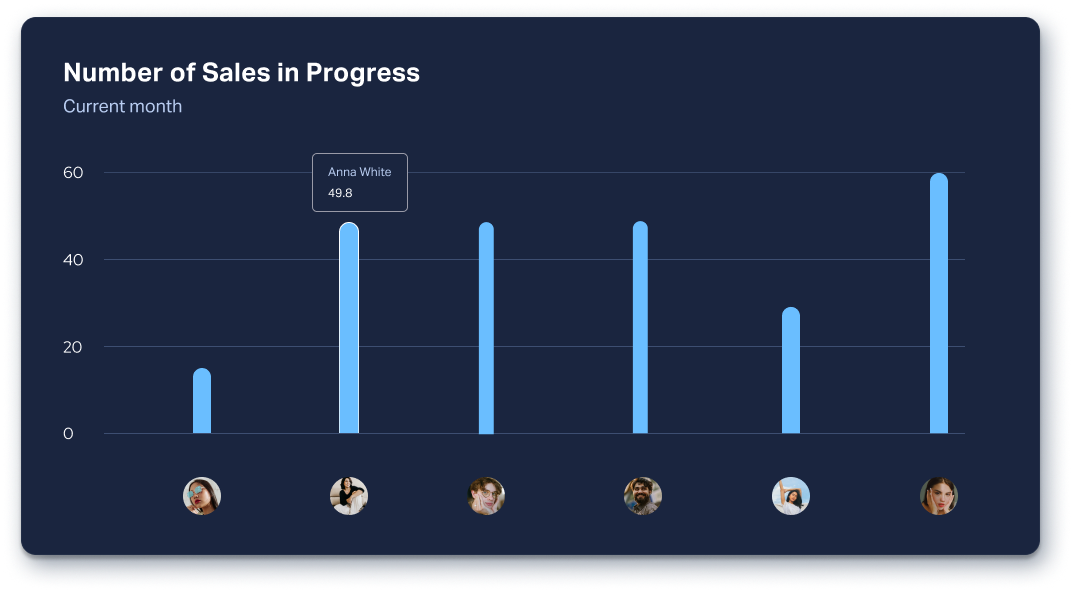
For example, your technicians might need to complete a certain number of jobs per month. Or your CS team might need to respond to a certain number of tickets per month. Or your sales team might need to generate a certain amount of revenue per quarter.
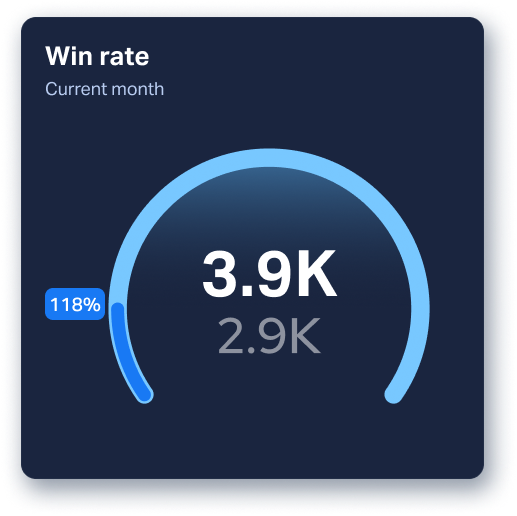
Publicly visualizing these targets allows you to see exactly what you need to accomplish, and how far away (or close!) you are to achieving your goals. When everyone can see their own progress to hitting their targets, and others’ too, it creates a powerful incentive to perform at the best possible level. Having defined, quantifiable targets allows your employees, teams, and business overall to meet big goals and make the impossible, possible.
Dashboards from Plecto are perfect for monitoring, observing, and tracking your business metrics in an efficient and engaging way. It’s easy to understand your data when visualized in widgets such as line charts, bar charts, and speedometers—and they look great too! You can use any pre-existing KPI widget template—or feel free to create your own, especially with unique home service-focused KPIs.
Idea 3: Transparent Communication
Keeping things clear is essential for smooth operations within your team and for successful interactions with customers. Knowing where you and everyone else stands creates the foundation for a culture of accountability.
Dashboards can have either an internal or external focus. With an internal focus, dashboards encourage transparent communication by visualizing performance metrics and providing ongoing updates for the entire team. In this way everyone, not just management, can know and understand what’s going on.
With an external focus, KPIs that gauge customer interactions and feedback can be tracked on dashboards. Of course, this allows your team to observe and build upon what your customers say, helping create a more positive and beneficial experience for them.
Idea 4: Education and Certifications
Having your technicians obtain new certifications and standards doesn’t just increase their knowledge and skillset. It also builds confidence in your company and gives your employees more credibility in your customers’ eyes. In other words, education helps create a sense of accountability to your customers.
For this reason, helping your technicians obtain additional training and certification is one of the best investments you can make in your company. Track your employees’ progress to obtaining their certifications on your dashboards, giving them an extra boost of motivation and the recognition they deserve for their hard work!
Idea 5: Customer Feedback
Accountability works when there’s someone to be accountable to. For any job, an employee needs to be accountable to his or her boss.
But home service and the trades add an extra layer of accountability. Not only does a technician need to be accountable to his or her supervisor, but also to customers. Customer relationships are the foundation of a successful home service firm: without the trust that customers have in your business—and in your individual employees—you won’t go anywhere.
This is why customer feedback and the metrics that track it are absolutely essential for any home service company to engage with. KPIs such as CSAT, NPS, and CES can be tracked and displayed on a data dashboard, giving you access to the latest information about how your customers feel about your product and service. Taking this knowledge into account, you can improve your services as needed to build a better company more responsive to customer needs.
Idea 6: Provide Incentives
We talked about extrinsic motivators in another article, and we’re not shy to repeat some of that information here! The best motivators are often real-life incentives, whether a ticket to the movies or a big game, or a gift card to dinner for two. Real-life incentives promote accountability, as they encourage people to perform their best to win a substantial reward.
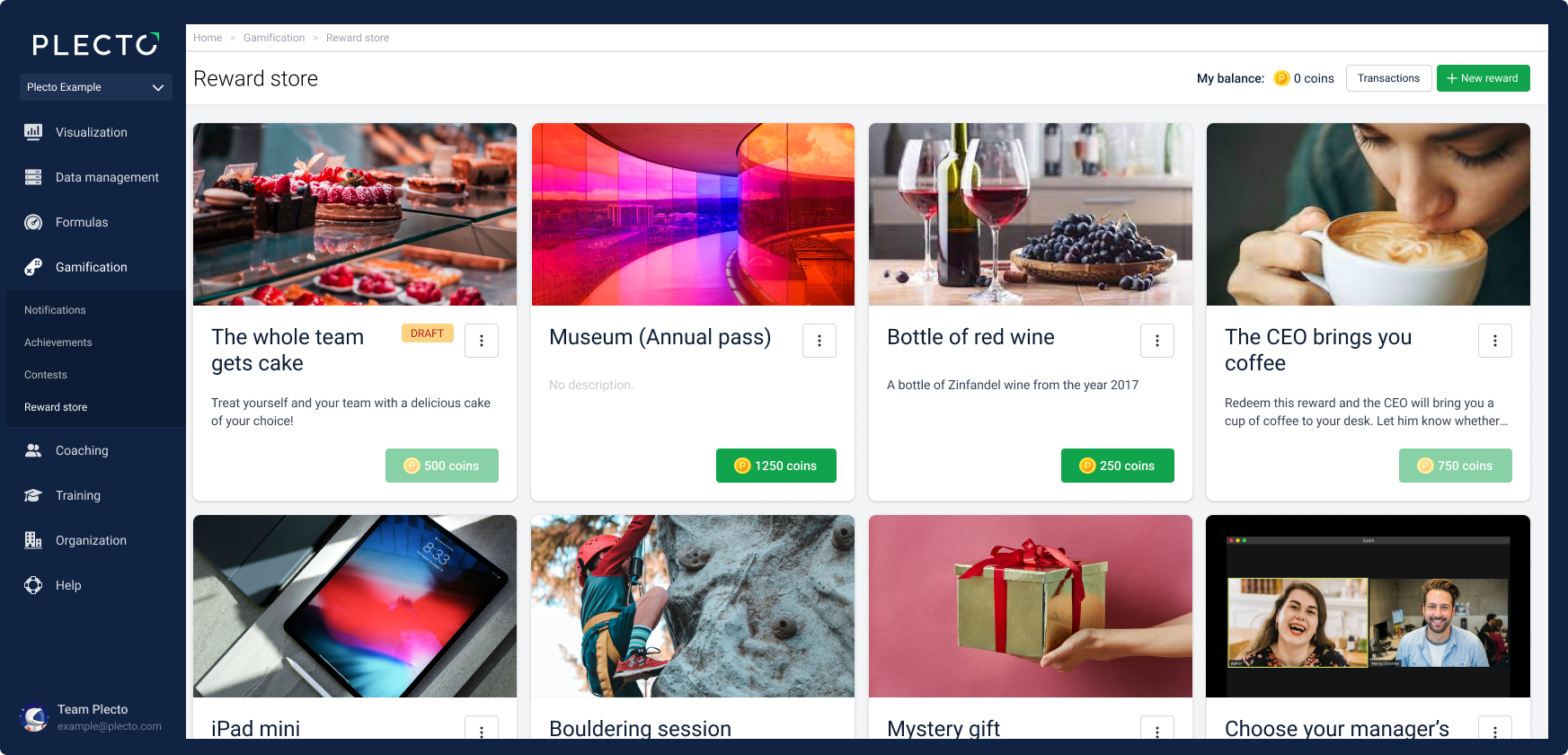
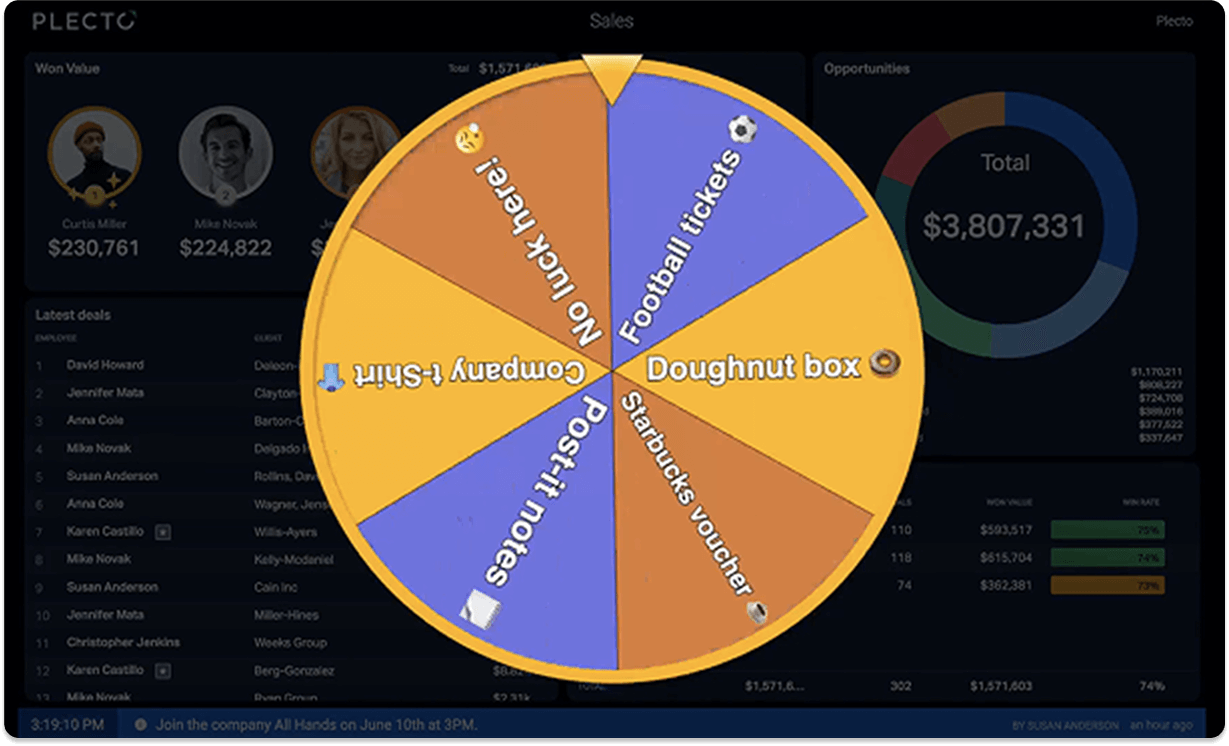
Plecto offers ways to access these exciting awards and more, whether through the Reward Store or the Spinning Wheel. In the Reward Store, employees can earn virtual coins for completed tasks or jobs and redeem them for IRL prizes.
Meanwhile, the Spinning Wheel lets employees take a turn at a “wheel of fortune” to access an unknown prize! (The Spinning Wheel is especially appropriate to use for employees who have completed a set number of tasks, or have finished a contest and are drawing for a prize.)
Plecto Dashboards: The "It" Factor in Home Service Accountability
These are only a few ideas for how you can use data visualization on dashboards to encourage accountability in your home service company. Dashboards are powerful tools, and with the visualization and data tracking capabilities they offer, you can build a team culture centered on accountability and personal responsibility.
Plecto’s real-time and dynamic dashboards are the tools you need to help you get there. Sign up for a free demo today!
Q&As
Why is accountability particularly challenging for home service technicians?
Accountability is uniquely difficult in home service because technicians work independently in the field rather than in a central office. This creates a "visibility gap" where management cannot easily track the integrity of the work being performed, and technicians have no immediate way to showcase their hard work to the office. Maintaining accountability requires bridging this gap so that technicians feel a sense of ownership over their performance and results, even when working solo.
How can Plecto’s dynamic dashboards be used to encourage technicians to "own" their performance?
Plecto’s dynamic dashboards allow for two-way communication between the field and the office. By integrating field data (like job completion status or customer satisfaction scores) into a real-time visual format, Plecto empowers technicians to own their performance metrics as they happen. Managers get immediate insight into the KPIs that matter, while technicians receive instant feedback—such as through gamification or notifications—which validates their work and reinforces a culture of personal responsibility.
How does transparent communication help technicians take more responsibility for their actions?
When performance data is displayed publicly on digital dashboards, it creates a culture of transparent communication where individual responsibility is easy to understand. Technicians can see how their specific contributions impact the team’s overall goals. This visibility encourages "self-monitoring," where employees take responsibility for their own results and keep their actions visible to both themselves and their colleagues, reducing the need for traditional top-down oversight.
Start your 14-day free Plecto trial today.
Enjoyed the article? Share it:


JAMES NIILER