 Sign in
The Gamification Reset: What To Do When Your Team Has Gone Blind to the Scoreboard
Discover why employees stop responding to leaderboards, and learn practical ways to refresh gamification, improve motivation, and boost performance.
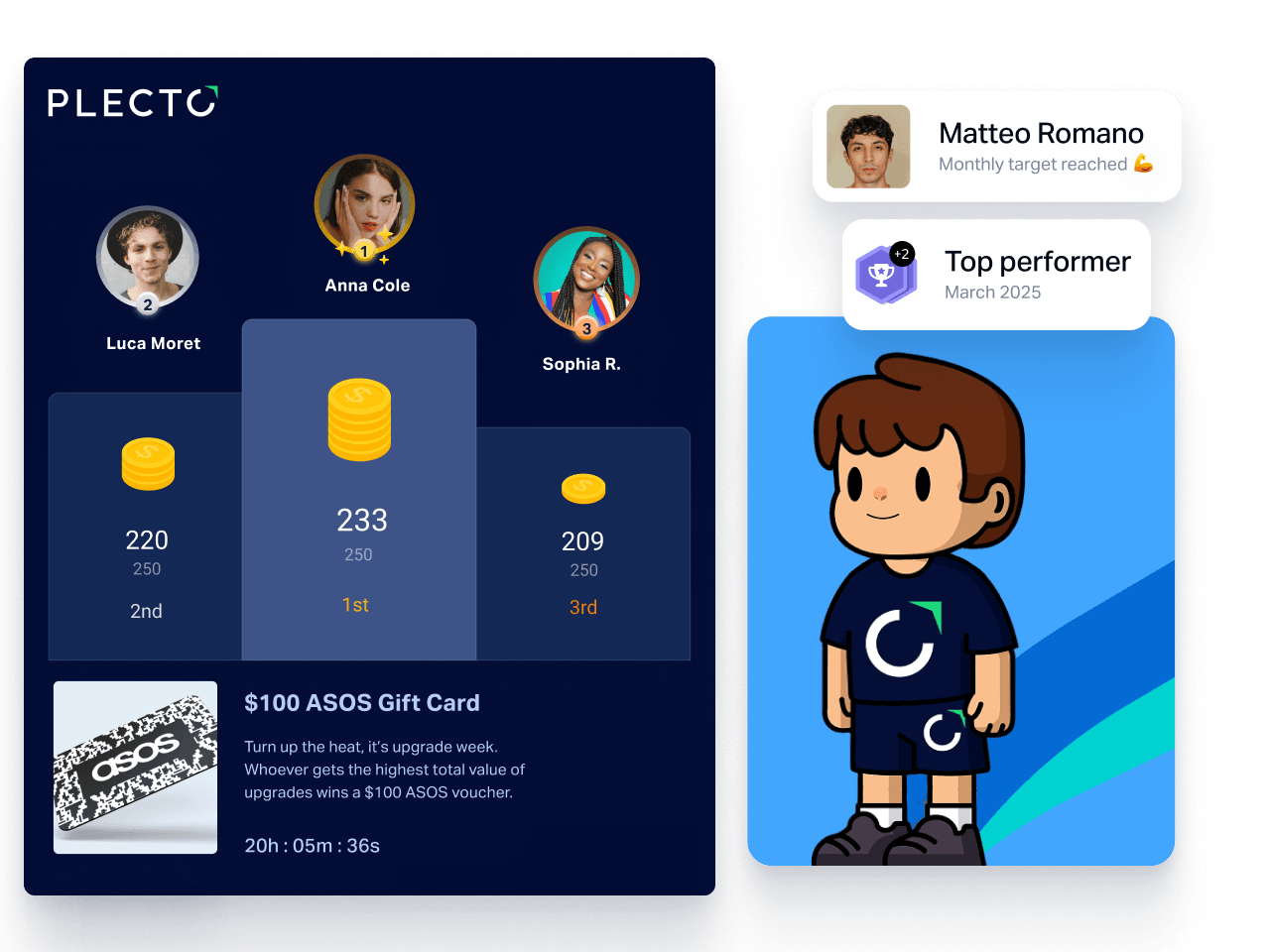
The Gamification Reset: What To Do When Your Team Has Gone Blind to the Scoreboard
Gamification applies game elements (points, levels, leaderboards, badges, etc.) to everyday work. When it works, teams see progress more clearly. They celebrate wins. They focus on the right behaviors.
Managers use it to make sales performance and customer service performance more visible. They also leverage wallboards and dashboards to make coaching more targeted and employee motivation stronger.
But over time, even the sharpest-looking leaderboard can fade into the background. The numbers are still there, and the widgets still glow. However, nobody's really looking anymore. That's scoreboard blindness…when the game keeps running but your team stops caring about the score.
Keep reading to learn how to reset your gamification after scoreboard blindness sets in.
What Is Scoreboard Blindness in Gamification?
Scoreboard blindness occurs when performance visuals, such as wallboards and dashboards, stop driving attention and action.
Sure, the board is visible. However, it no longer changes what people do. That quiet, gradual leak of motivation makes scoreboard blindness so common.
 Build your own
In practice, this means the top of the leaderboard rarely changes. The same names sit there week after week. Think:
- People stop checking dashboards unless asked.
- Spikes during contests vanish fast.
- Baseline performance dips below its starting level.
- Recognition moments feel routine rather than energizing.
- Coaching conversations reference the board less and less.
How to Reset Gamification When Your Team Has Gone Blind to the Scoreboard
1. Know What's Causing Scoreboard Blindness
Why does gamification lose steam over time? A few common culprits usually work together:
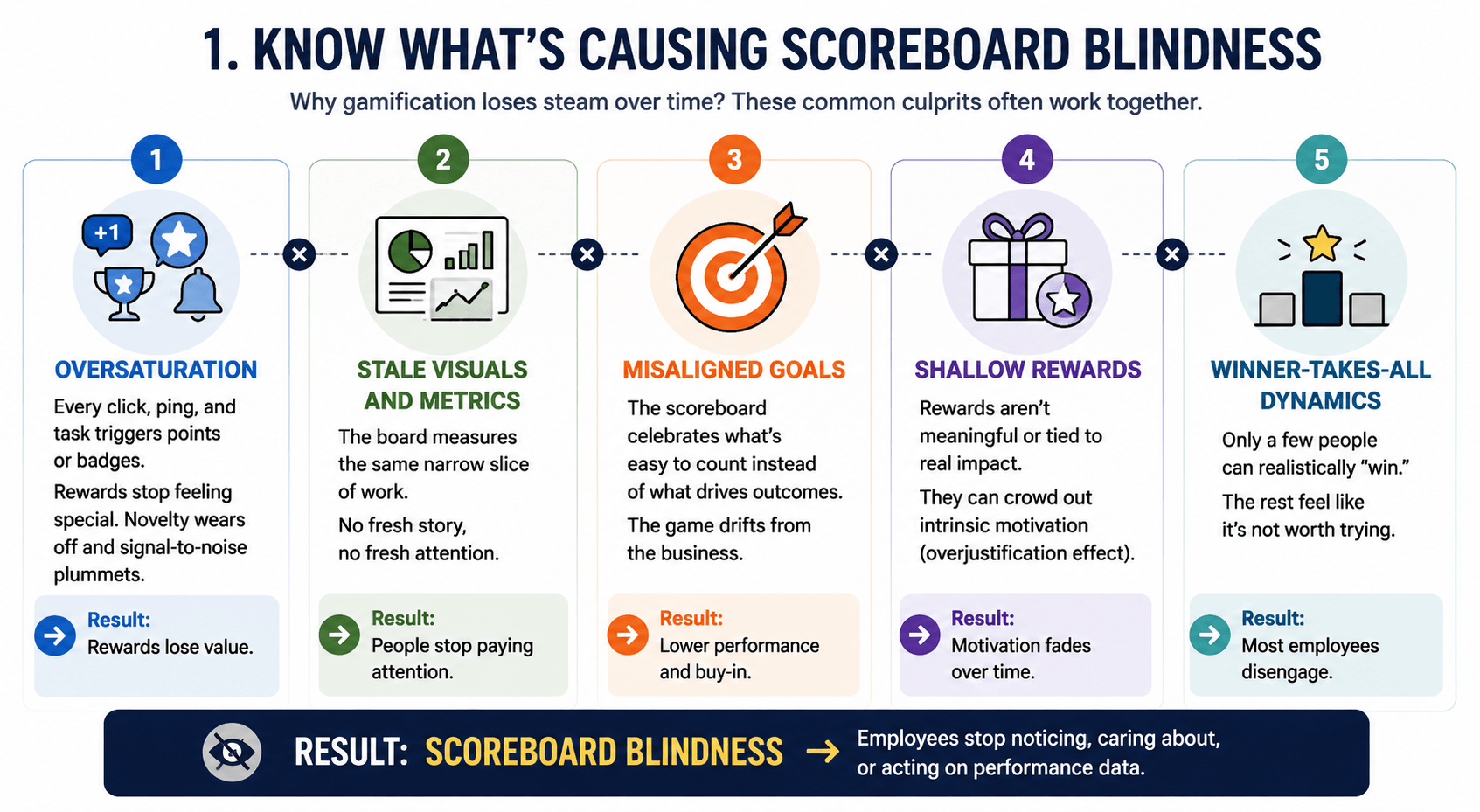
- Oversaturation: This occurs when every click or task earns a point or badge. Rewards stop feeling special. The novelty wears off, and the signal-to-noise ratio plummets.
- Stale visuals and metrics: They cause problems when the board measures the same narrow slice of work. People stop scanning for meaning. No fresh story, no fresh attention.
- Misaligned goals: These mean the scoreboard celebrates what's easy to count rather than what really drives outcomes. Performance and buy-in both suffer. This is where the game drifts from the business.
- Shallow rewards: These can crowd out intrinsic motivation if they're not designed thoughtfully. Consider the classic overjustification effect documented in meta-analyses.
- Winner-takes-all dynamic: This creates another problem. If only a few people can realistically "win," the rest sit out.
Take it from Gregor Emmian, Deputy Chief Digital Growth Officer at Rise. He claims that scoreboard blindness often happens when gamification becomes predictable rather than purposeful. From a digital growth perspective, he believes people stay engaged only when the experience remains relevant and rewarding.
Emmian says, "Gamification loses its impact when employees stop seeing how their actions contribute to meaningful progress. If the same metrics and rewards rarely change, people naturally tune them out. The key is to keep the experience aligned with real goals and give teams new reasons to stay engaged."
A strong reset doesn't mean tossing everything and starting from scratch. It means rethinking what winning looks like and why the game matters to people…today.
2. Align the Scoreboard with Meaningful Goals
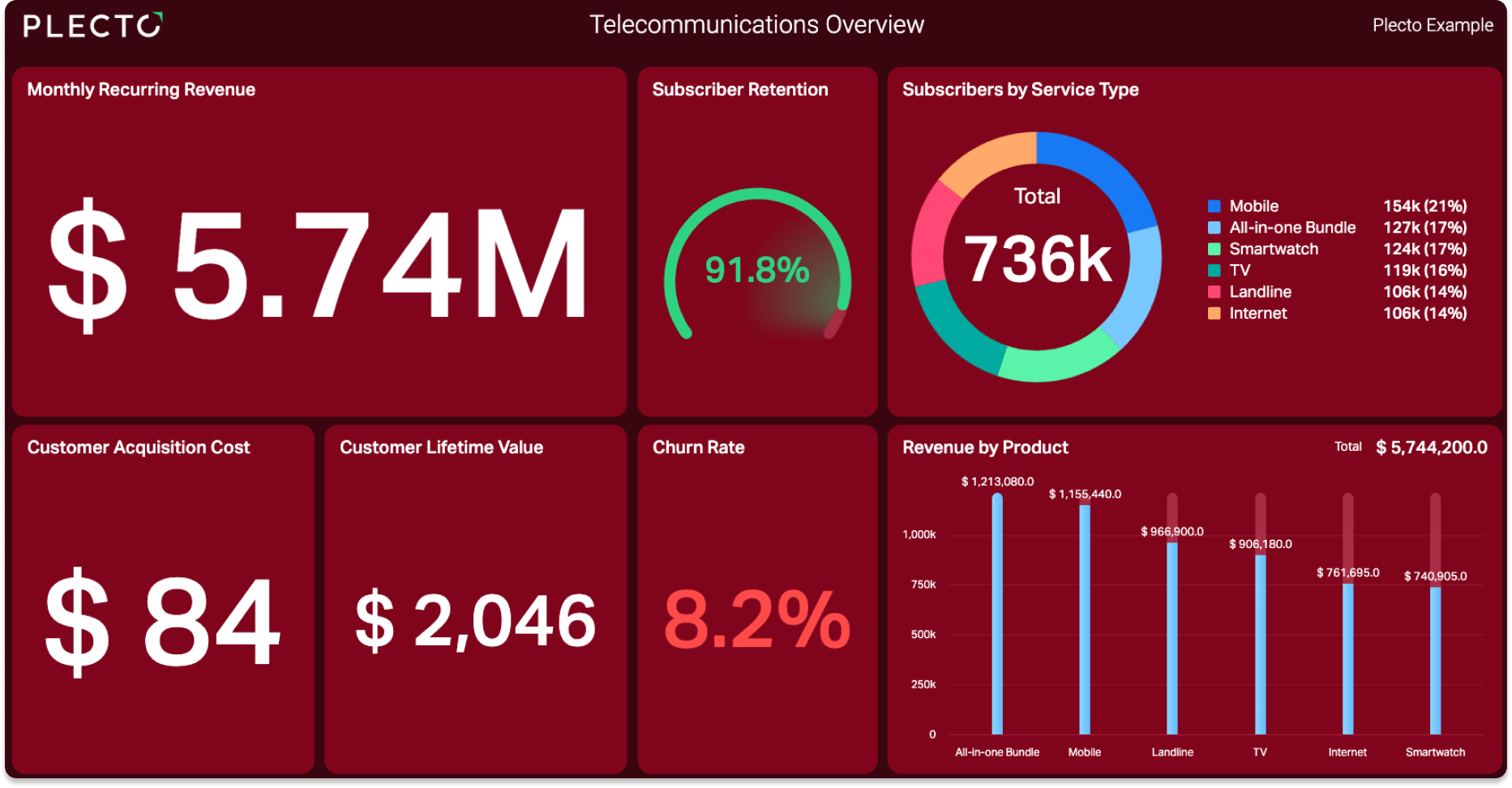
Start by aligning the scoreboard with what the business actually cares about. Set objectives and key results (OKRs) that appear on the gamification dashboard or wallboard, such as the one from Plecto shown below.

Bryan Henry, President of PeterMD, believes effective gamification starts with measuring the outcomes that matter most to the business. In healthcare, he has seen how clearly defined goals help teams stay focused on delivering better patient experiences.
Henry explains, "A scoreboard should reinforce the behaviors that create real value. Whether that's improving patient satisfaction or reducing response times, every metric should connect to a meaningful business outcome. When employees understand why their goals matter, engagement follows naturally."
Short, specific, challenging goals tend to focus effort better than vague targets. Goal-setting theory has a robust evidence base. Aim for goals that people can realistically influence this week, not just by quarter's end.
With an objective-driven gamification, you can align employee behavior with company goals. To do so quickly and easily, here's how:
- Map each scoreboard metric to a business outcome (sales performance, customer satisfaction, retention, revenue quality, or cycle speed)
- Drop any metric that doesn't change decisions or behavior
- Add lead measures, not only lagging ones, so people see how daily action shifts the future
3. Refresh the Way Employees Engage
Even great goals get dull if everything looks the same. Mix up modes of play:
- Time-bound sprints
- Streaks
- Head-to-head challenges
- Team-based quests
- Personal bests
Sprinkle novelty into a predictable cadence (monthly themes, rotating "focus" metrics, new visual treatments) so the board keeps earning attention. Whether you're tracking sales performance or customer service performance, refreshing challenges keeps employees engaged and prevents your gamification program from becoming predictable.
Implementing the best gamification practices can make a world of difference in how your employees participate and engage. Take a glimpse of Plecto's dashboard with a handful of games they can offer:
Alex Byder, Founder of BD Homebuyer, believes keeping employees engaged requires more than setting goals. For him, it means giving them fresh reasons to stay motivated.
In a fast-paced real estate business, he has found that variety keeps teams focused and prevents performance routines from becoming stale.
Byder shares, "The biggest mistake is assuming the same incentive will motivate people forever. Some team members thrive on friendly competition. Others are driven by personal improvement or team success. Ultimately, refreshing challenges and recognizing different kinds of wins keep people engaged long after the novelty wears off."
4. Get Your Whole Team Involved
If you want buy-in, build with the people who will use it every day.
Learn from Omer Reiner, Founder of Texas Home Buyers. He believes the most effective gamification systems are built with employee input. Not just handed down by management.
In a fast-moving real estate business, he has seen that involving the team in shaping performance initiatives creates stronger buy-in and long-term engagement. Reiner notes, "The best ideas don't always come from leadership. When employees help define goals and suggest challenges, they're far more invested in the outcome. That sense of ownership is what turns a scoreboard into something people actually want to follow."
That said, bring folks into the process with:
- Quick workshops
- Small pilots
- Opt-in experiments
Share early data, and let the team help decide what sticks.
5. Measure Results and Continuously Improve
A reset isn't a one-and-done relaunch. Treat your scoreboard like a living system that responds to feedback and evolves over time. That's where game-changing gamification ideas come to life!
For example, a company that sells custom hoodies could reward teams for improving customer satisfaction or meeting delivery targets. By tracking real-time performance data, managers can see which incentives drive lasting improvements rather than short-term spikes.
But here's the truth: you can't really manage what you don't measure. In gamification, track engagement and performance indicators over time. Then adjust based on what the data actually tells you. Small changes keep the system relevant far longer than any single big relaunch ever will.
Here's what to monitor and measure:
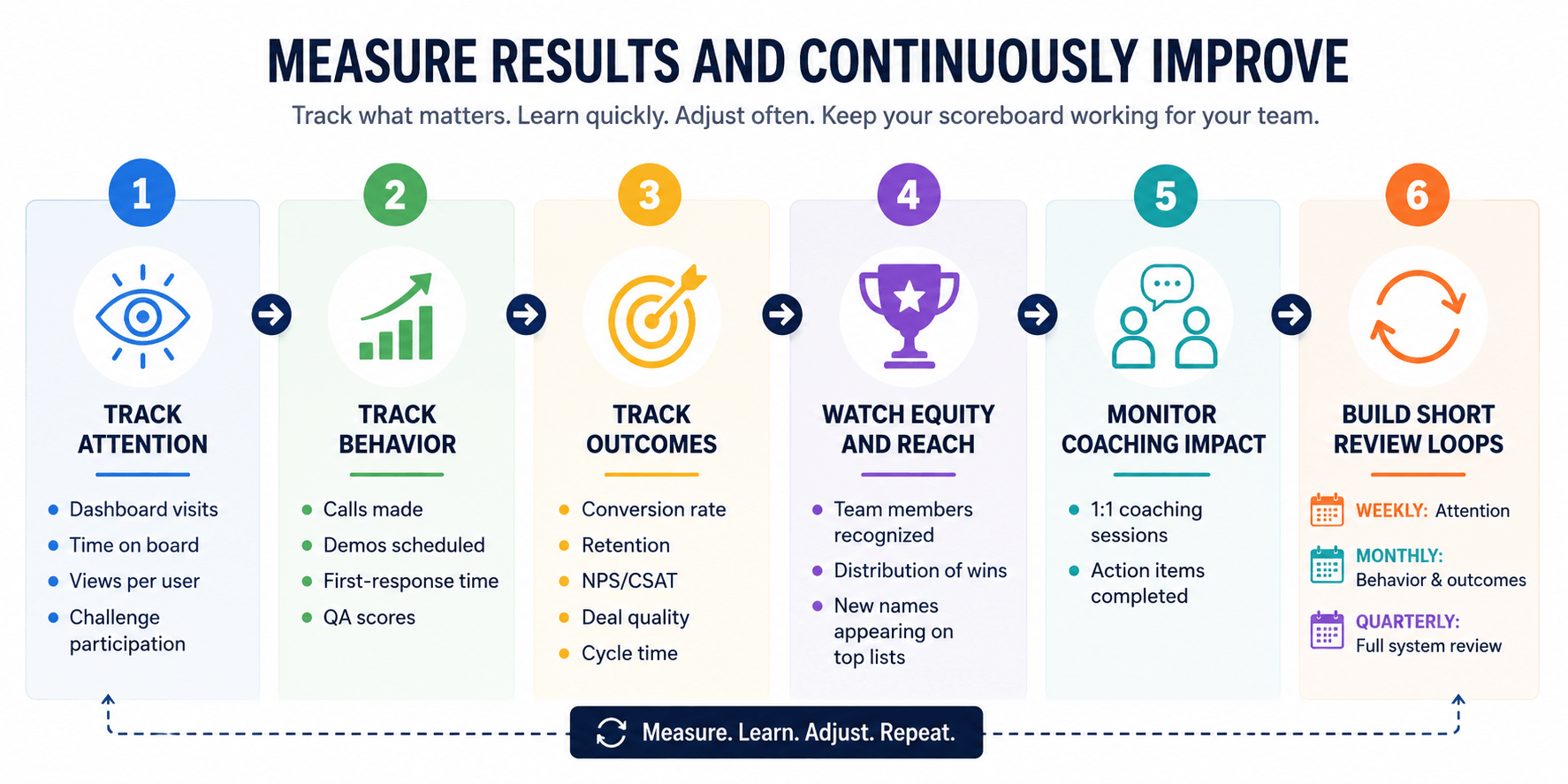
- Track attention — through dashboard visits, time on board, views per user, and participation in challenges
- Track behavior — through activity tied to lead measures, such as calls made, demos scheduled, first-response time, QA checks
- Track outcomes — like conversion rate, retention, NPS/CSAT, deal quality, and cycle time
- Watch equity and reach — through the percent of team earning recognition each week, distribution of wins, new names appearing on top lists
- Monitor coaching impact — by tracking the frequency of 1:1s using the board and action items completed
- Build short review loops — weekly reads on attention, monthly on behavior and outcomes, quarterly on the full system
Feedback interventions work best when they're timely, specific, and behavior-linked. Remember that intrinsic motivation needs room to breathe. Avoid designing a reward scheme that accidentally narrows focus or dampens autonomy.
6. Use Tech That Keeps Gamification Fresh
Tools matter because they shape what's easy to change. Flexible dashboards and digital wallboards with real-time performance data reduce the friction of experimentation. For instance, teams using contract management software can gamify contract reviews and approval times with live dashboards and automated progress tracking.
Platforms like Plecto gamification are built for this kind of iteration: pulling data from your systems. Visualizing it live. And layering in achievements, leaderboards, and contests without a rebuild every time you learn something new.
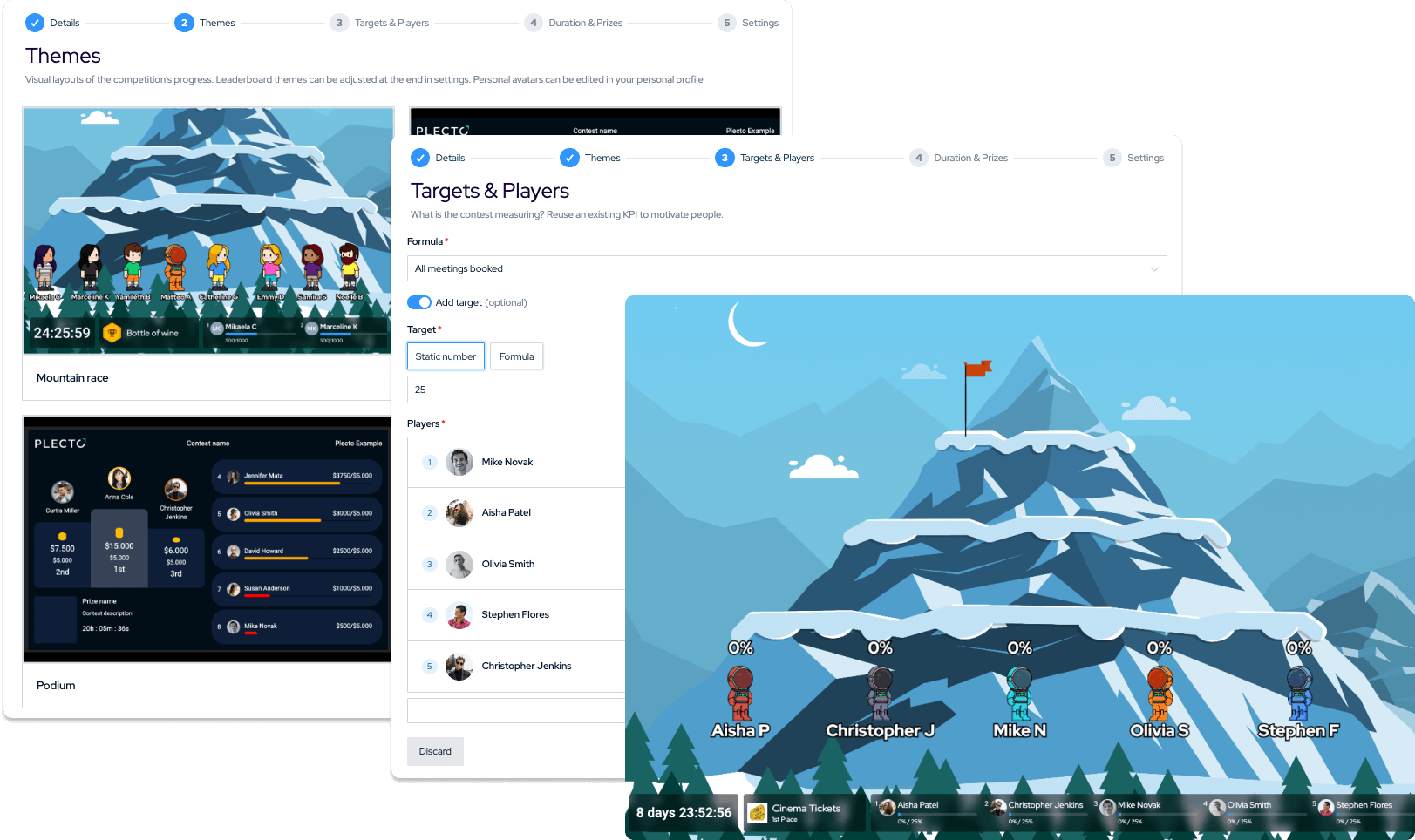
Platforms like Plecto keep gamification alive because the picture is always moving. Real-time updates and customizable dashboards with fresh visuals mean the scoreboard never settles into the background. Flexibility is what lets you keep evolving the experience before your team has a chance to grow numb to it.
It's clear: the right technology keeps gamification from going stale. They have real-time feedback and dynamic visuals as tools that continually re-earn a team's attention. Think of AI-powered gamification that makes forecasting, feedback, analysis, and reporting efficient and reliable.
Final Words
Scoreboard blindness isn't a failure; it's a signal. The human brain adapts. Teams evolve. And the work shifts. When that happens, the game has to change, too.
The reset path is straightforward: pick goals that actually move the business, refresh how progress shows up, personalize for different motivations, and co-create the system with your team. Keep your tech flexible so it's easy to evolve the experience before people tune it out.
Gamification isn't about louder bells and brighter badges. It's about giving employees meaningful feedback and improving employee motivation. Ultimately, it's about building a rhythm of learning that keeps the scoreboard useful and worth watching.
If you're looking to make your KPIs fun and motivating through gamification, Plecto can help. Sign up today to get a 14-day free trial!
Start your 14-day free Plecto trial today.
Enjoyed the article? Share it:


ROMAN SCHYVDUN