 Sign in

Beyond Leaderboards: 6 Sales Floor Gamification Mechanics That Don't Burn Out Your Team
Sales floor gamification that engages every rep, not just the top three. Six inclusive mechanics, from team relays to milestone prizes, that avoid burnout.
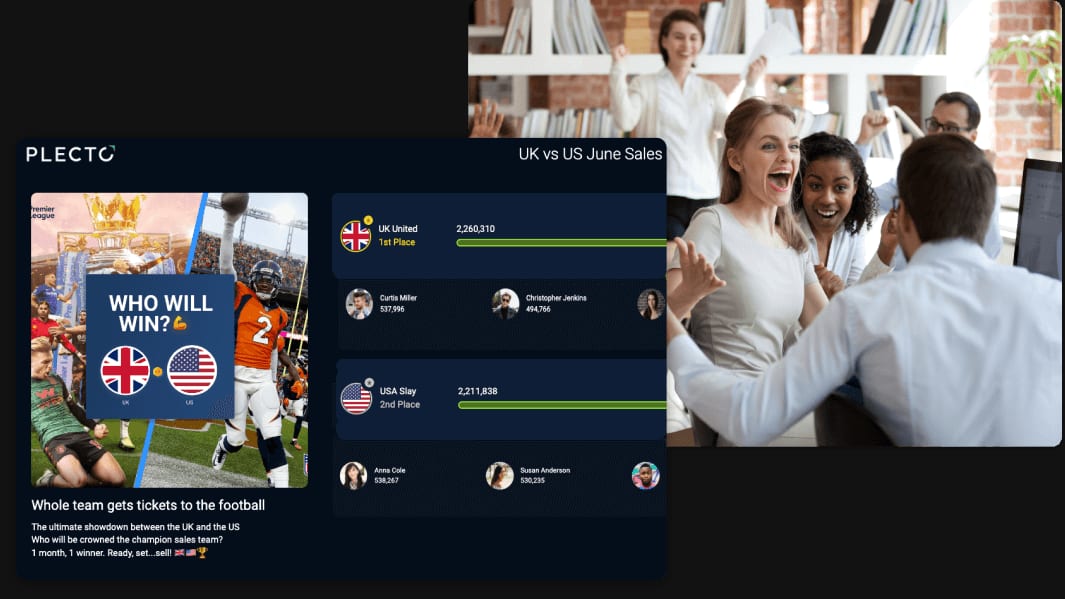
Sales floor gamification often starts and ends with a single stack-ranked revenue leaderboard. It motivates the handful of reps at the top, while the rest of the floor checks out by the second week of the month. Relying on that one board actively demotivates your middle-tier performers. Effective gamification needs mechanics that engage every rep, not just the veterans who always close the biggest deals.
The upside is real when you get it right. In TalentLMS's 2019 Gamification at Work survey, gamification boosted competition and eagerness for 89 percent of employees whose work was gamified. And Gallup's 2024 meta-analysis found that teams in the top quartile for engagement show 18 percent higher sales productivity than bottom-quartile teams. You just need a system where everyone has a realistic reason to play. This guide covers six inclusive mechanics that lift performance across the team without burning anyone out.
Why traditional sales floor gamification fails the middle tier
Most sales contests reward lagging indicators like closed revenue. Because deals take time to close, the same three top performers usually pull ahead early. Once the gap is mathematically impossible to close, the middle performers stop trying, and most of your team feels ignored. We cover what leaderboards do well in how sales leaderboards help your team perform; the point here is what to add around them.
To fix this, run shorter contests, ideally two weeks, and score the behaviors your reps actually control. A rep cannot force a prospect to sign, but they can control how many doors they knock on or how many discovery calls they book. When you set up a performance platform, track these controllable inputs first.
6 inclusive sales floor gamification mechanics
Moving beyond the basic leaderboard means adding variety. These six mechanics keep the whole floor engaged.
1. Team relays: sales floor gamification built on collaboration
Cutthroat individual competition isolates reps. Team-versus-team relays shift the focus to collaboration. Group reps into small squads and track their combined metrics in a team contest. If one person has a slow day, their teammates can pick up the slack, and that peer accountability keeps activity consistent.
Show the team standings on office TVs with slideshows. Watching a rival squad pull ahead on the big screen creates instant urgency, and it encourages senior reps to coach newer squad members so the whole team succeeds. For more on this shift, read moving from individual competition to team quests.
2. Spin-the-wheel rewards for daily inputs
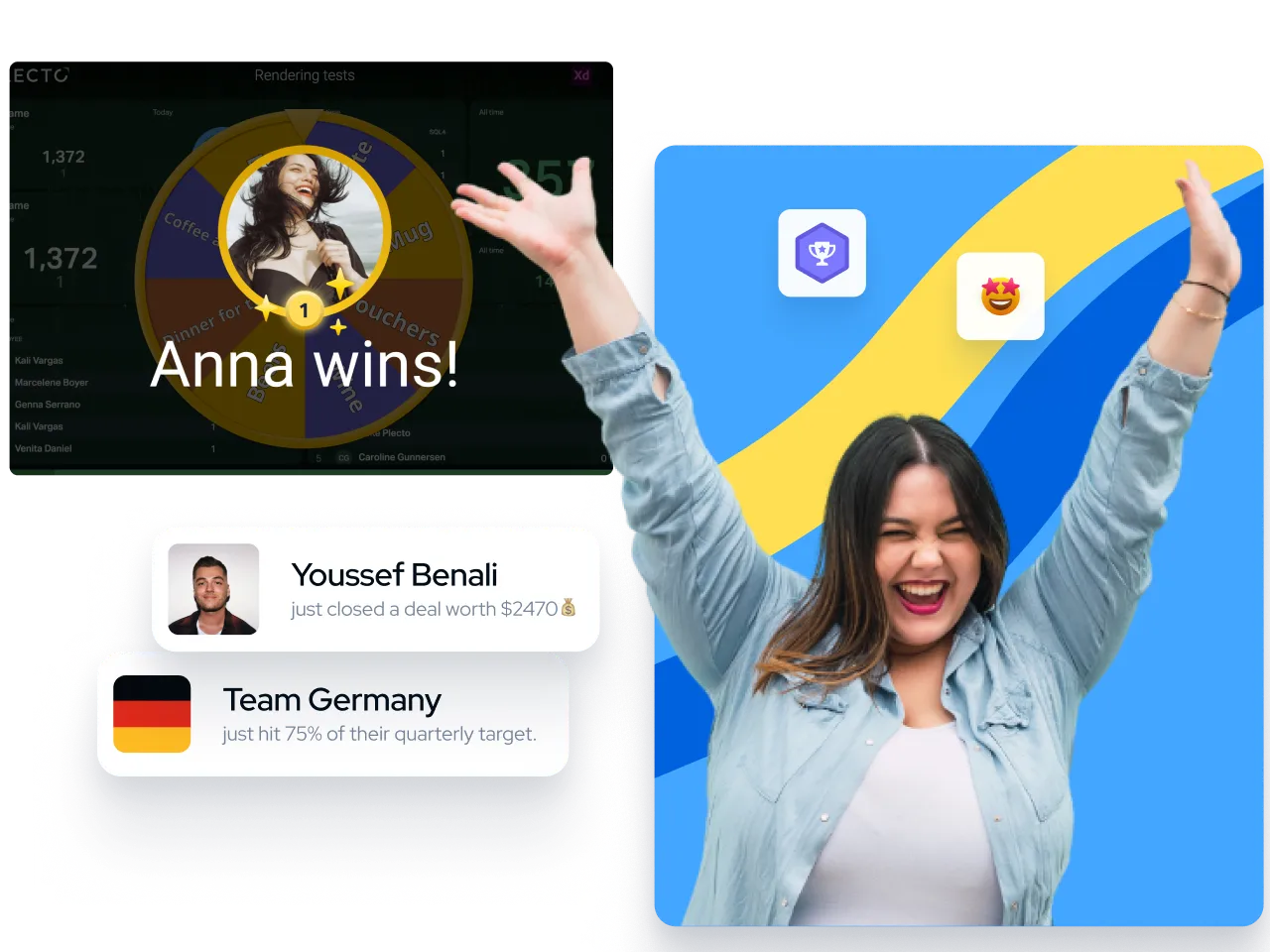
Randomized rewards keep the daily grind interesting. Instead of waiting until the end of the month for a payout, reps earn a spin of a digital wheel for hitting daily input targets. For example, booking three meetings in a day earns one spin.
In Plecto, Spin the Wheel is a notification action, and its prizes can come straight from your Reward Store: a free coffee, a longer lunch break or a stack of Coins. This mechanic levels the playing field, because anyone willing to put in the activity can win.
3. Milestone badges and streaks for personal bests
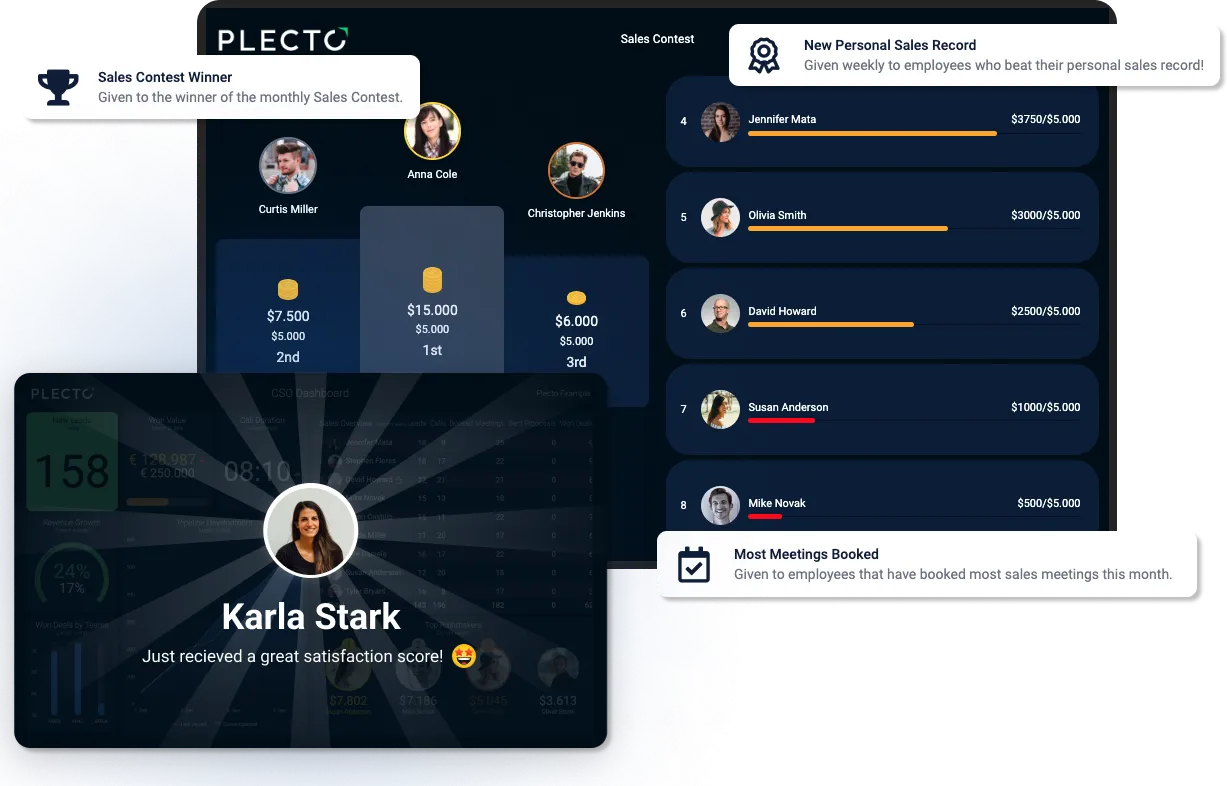
Not everyone wants to beat the person sitting next to them. Many reps prefer to compete against their own past performance. Reward personal bests, like the most calls in a single week, with achievements, and reward consistency with streaks, which count how many days or weeks in a row a rep keeps a habit going.
For a contest everyone can win, use a Milestone Contest: every rep who reaches a milestone earns its prize, regardless of where they rank. Managers can bring these milestones into one-on-ones, and coaching tools make sure each rep's individual progress counts.
4. Tiered sales floor gamification for fair competition
Putting a new hire in the same contest as a tenured enterprise rep guarantees the new hire loses. Tiering solves this. Split reps into divisions like Rookie, Veteran and Elite, and run a separate contest for each, with its own leaderboard and prize pool. Within a contest, you can also give each player an individual target.
This gives middle performers a realistic chance of winning their division. Build a dashboard per tier to track progress, and overall production rises when reps feel they have a fair shot.
5. Verified input contests for field sales
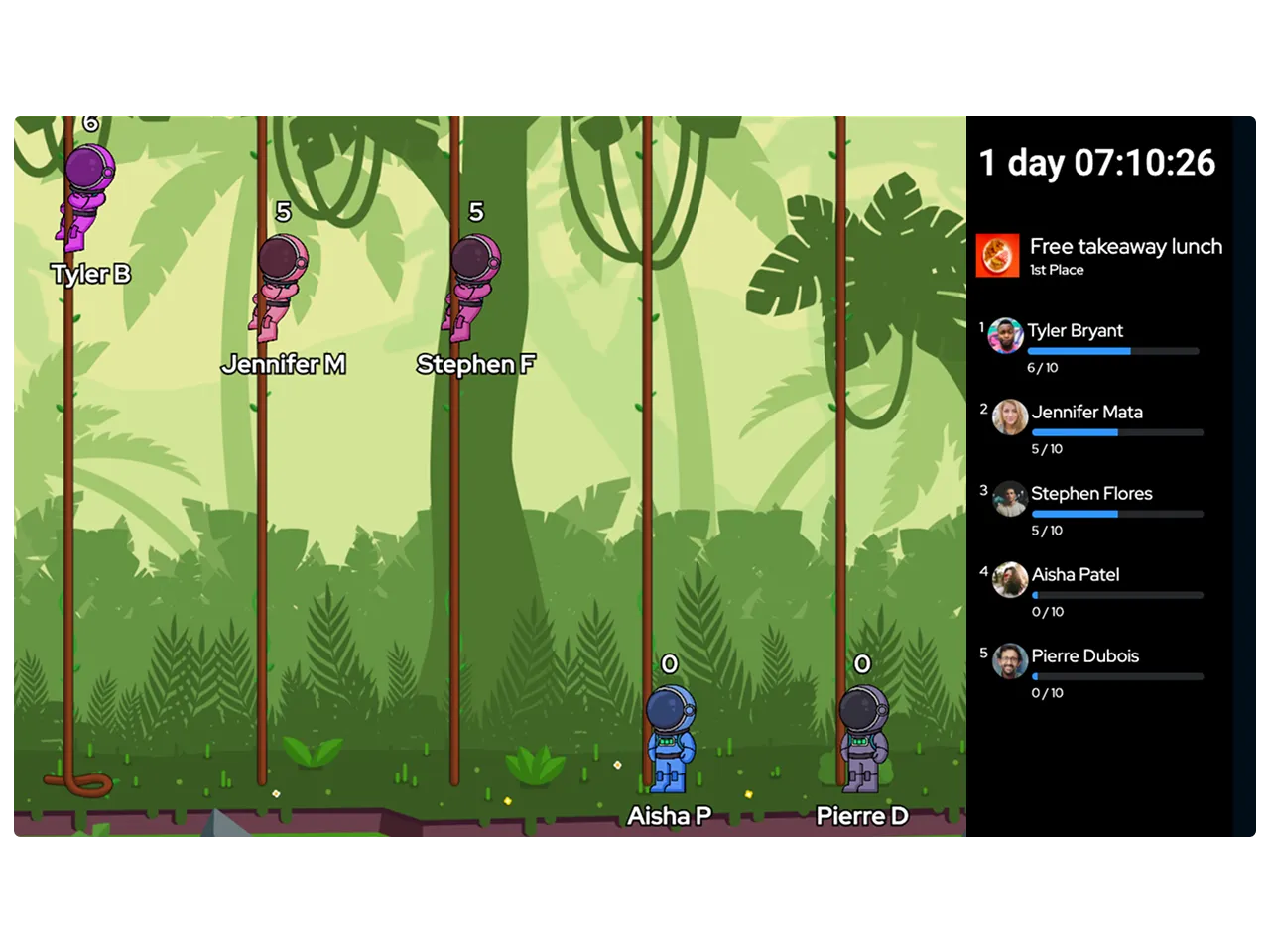
Field sales teams face a unique problem: unverified activity is the easiest number to pad. If you run a contest on doors knocked and reps tally their own numbers, honest reps will feel cheated by inflated ones.
Score field contests on data from your system of record instead of self-reported tallies. Many field sales apps check visits in with GPS, and your CRM logs meetings and deals as they happen. Pull that activity into Plecto through integrations, so the contest counts only what the systems recorded. When reps do need to log something by hand in the mobile app, keep those registrations visible to the team. That keeps the data clean and the game fair for everyone in the territory.
6. Adaptive goals that keep sales floor gamification fresh
Static goals get boring. A target that stretches a rookie is trivial for a veteran, and a target set in January may be meaningless by June. Base goals on each rep's own history instead, for example 10 percent above their four-week average for booked meetings.
Formulas let you calculate those personal baselines, and the AI Formula Assistant can write them from a plain-language description. As reps improve, the baseline moves with them, so the target stays a stretch without breaking anyone's spirit.
The business impact of sales floor gamification
When you implement these mechanics well, the results show up in the numbers. In a 2018 case study, &ranj's game for Albert Heijn store employees saw participating locations achieve 50 to 85 percent higher weekly sales growth than non-participating locations. During a focused rollout, stores where more than 25 percent of employees played saw an 84.59 percent increase in weekly sales growth.
The principle carries over to the sales floor: when more of the team is actively playing, more of the team is actively selling. For more ideas, see our sales gamification ideas and the four player types in gamification.
Start improving your sales floor gamification today
Relying on a single revenue leaderboard leaves money on the table. Team relays, tiered competitions, milestone prizes and verified input contests build a culture where every rep pushes for better results. Effective sales floor gamification turns the daily grind into an engaging challenge. Test these mechanics with your own data by starting a 14-day free trial of Plecto.
Questions
Frequently asked questions about sales floor gamification
We recommend two weeks. In longer contests, reps who fall behind lose interest. Short sprints keep energy high and let you reset the board often. Recurring contests restart automatically, so you do not have to set each one up again.
Use a platform that pulls everything into one place. Connect your CRM, support tools and spreadsheets through integrations and the API to keep contest data accurate as it comes in.
Remote teams benefit a lot from digital gamification. Notifications that post in Slack or Microsoft Teams, push notifications and mobile app access keep remote reps connected to the sales floor energy.
Start your 14-day free Plecto trial today.
Enjoyed the article? Share it:


