 Sign in

How to Recreate Sales Floor Energy for Hybrid Sales Team Motivation
Hybrid sales team motivation needs a system. Use live dashboards, instant recognition and coaching to recreate sales floor energy for every rep.
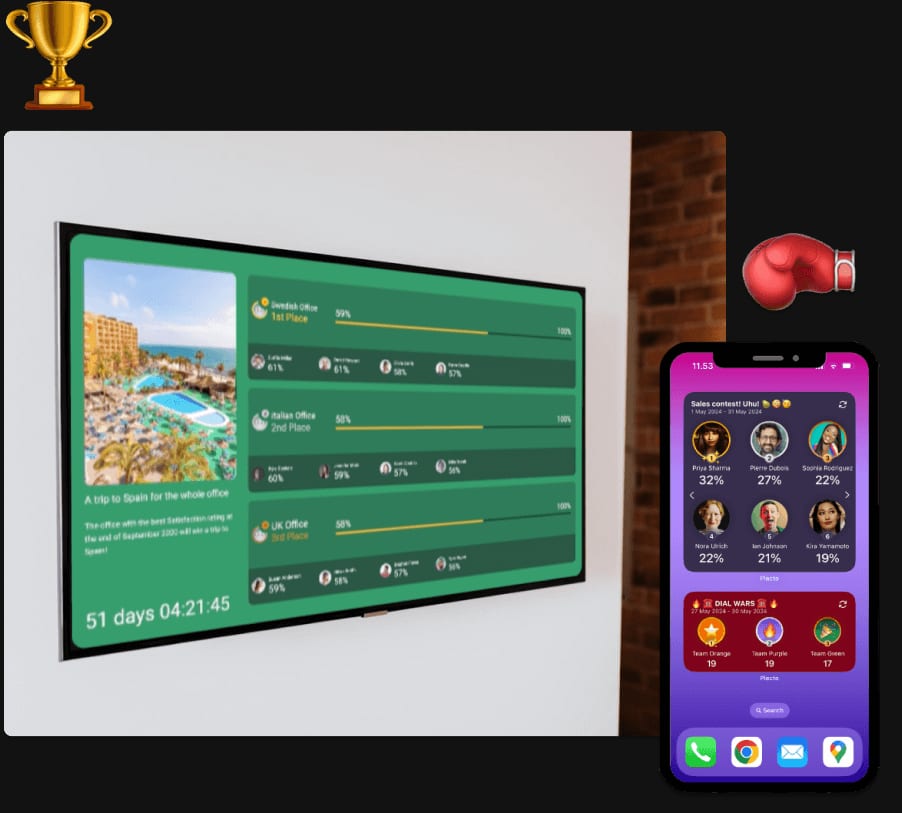
Hybrid sales team motivation starts with a simple problem: the sales floor used to run on proximity. You could hear a rep close a deal across the room, ring a physical bell and watch the energy spread to the rest of the team. Today half the team might be at home on any given day. The bell is gone, but the need for momentum remains. Keeping distributed reps connected, competitive and recognized takes a deliberate system.
Managing a split team means you can no longer rely on spontaneous high-fives or whiteboard updates to drive performance. You have to digitize the celebration and the accountability. This guide explains how to replace the traditional bullpen with shared dashboards, live news feeds and instant digital recognition, so your remote and in-office reps keep hitting their targets.
The data behind hybrid sales team motivation
The case for hybrid is well documented. McKinsey's research on B2B sales found that hybrid sales, which mix remote, digital and in-person selling, can drive up to 50 percent more revenue than more traditional models. HubSpot's sales research found that hybrid sales teams are 28 percent more likely to outperform fully in-person or fully remote teams. And Gallup's US data shows hybrid (31 percent) and fully remote employees (32 percent) are more engaged than their on-site counterparts (28 percent).
The challenge for sales directors is no longer proving the model. It is keeping energy high when half the team is working from the kitchen table. In a Dooly survey of 600 US sales professionals, 69 percent said they had experienced burnout because of their job, and 73 percent of those said it had hurt their mental health. Isolation makes this worse. When reps feel cut off from the team's momentum, their activity drops. Effective hybrid sales team motivation tackles that isolation by making every win visible to the whole company, wherever the rep is sitting.
Surveillance vs. visibility: hybrid sales team motivation without micromanagement
Managers often panic when they cannot see their reps making calls. That panic leads to surveillance: pinging reps for updates, demanding end-of-day activity logs or tracking keystrokes. Surveillance signals distrust and damages morale. Visibility creates alignment.
In the Nordics and much of Europe, trust at work is a cultural expectation, and micromanagement breaks it. Hybrid models there need systems that let employees manage their own time while their output stays visible to the team.
Visibility means giving everyone access to the same performance data, live. When you connect your CRM to live KPI dashboards, reps can see exactly where they stand against their targets and their peers. A rep working from home in Copenhagen can see when a colleague in Aarhus books a major meeting. That shared context replaces micromanagement. Managers check the dashboard for call volumes and pipeline movement without interrupting anyone's workflow. For more on why the same numbers can feel different at home, read why remote teams experience the same KPIs differently.
Recreating sales floor energy with digital recognition
You cannot rely on kitchen chats to build momentum in a distributed team. You need to digitize the celebration, so recognition reaches the home office and headquarters at the same moment.
When a rep closes a deal, an automated notification should fire across the company. In the office, it plays on the TV screens through slideshows. At home, the same win can arrive as a push notification in the Plecto mobile app, or as a message in Slack or Microsoft Teams. The remote rep feels the impact of their win, and the office sees what their remote colleagues contribute.
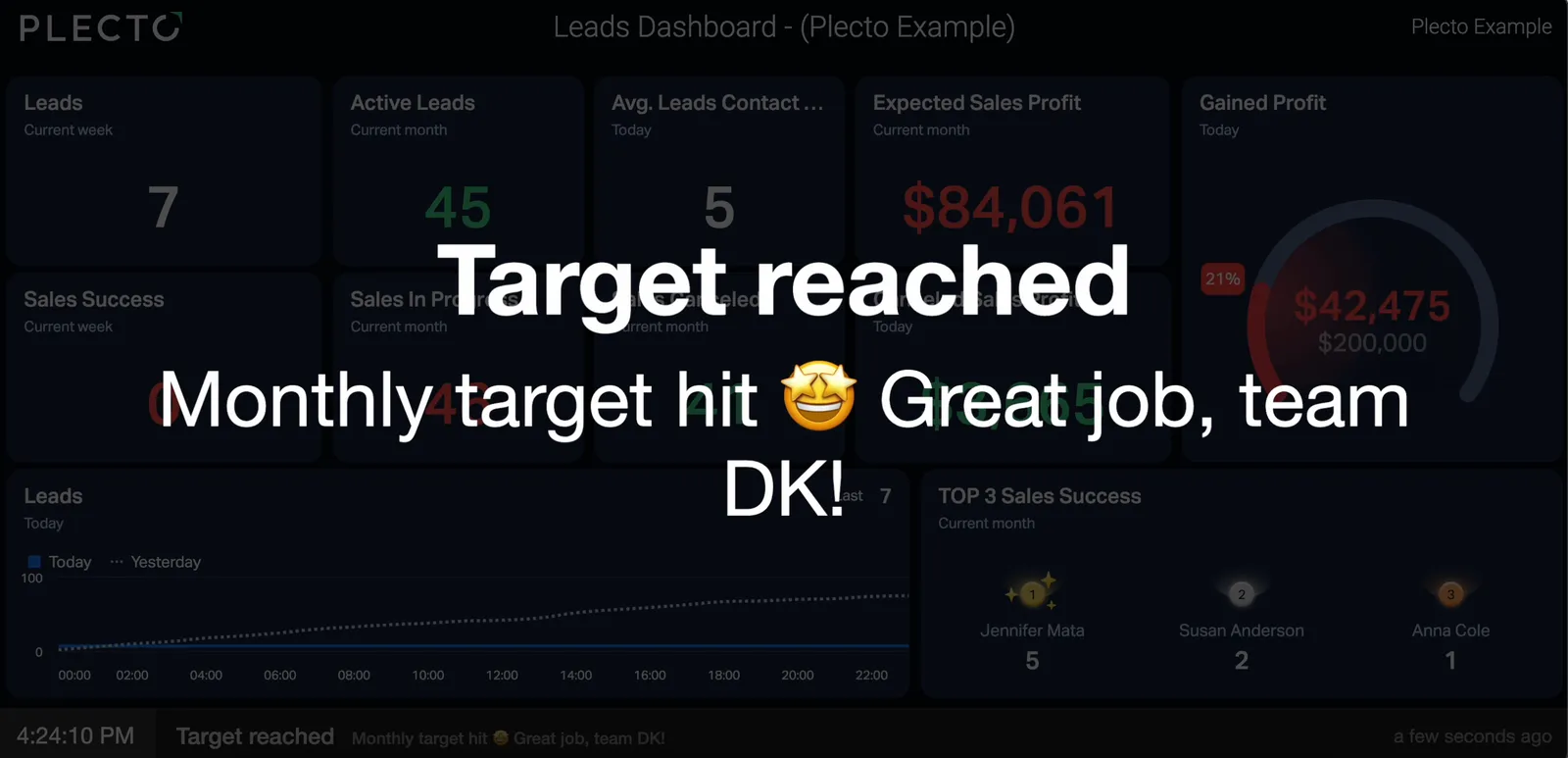
Structured gamification keeps the competitive spirit alive across locations.
Contests. Run daily or weekly contests on calls made, meetings booked or revenue. The leaderboard updates as data comes in, so a rep at home can see they are only two calls behind the leader in the office. That creates a healthy urgency that a static weekly report cannot match.
Achievements. Award digital badges for specific milestones, like closing three deals in one week or keeping the CRM up to date for a month. Achievements show up in the news feed and next to the rep's name on dashboard tables, so consistent effort gets public recognition.
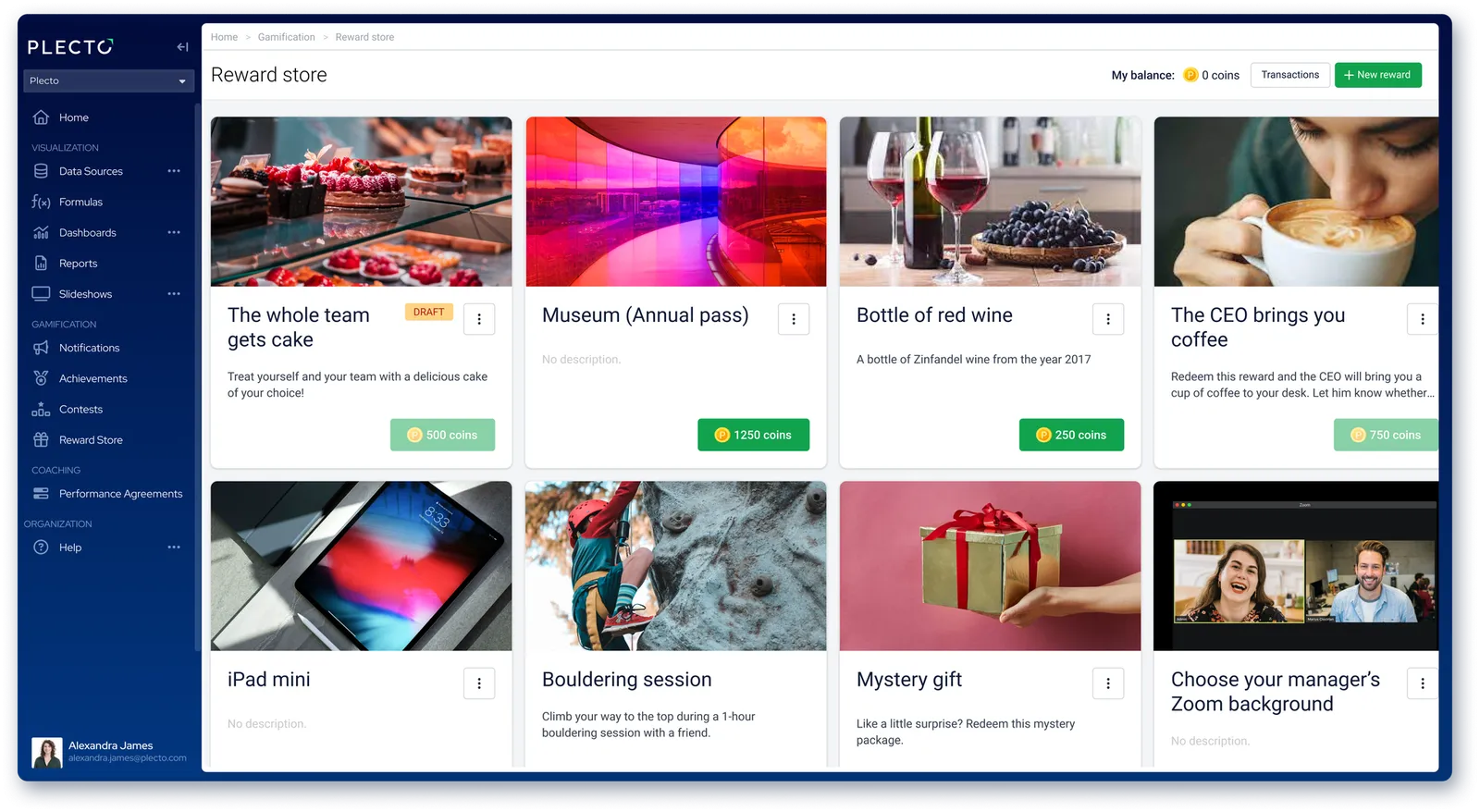
Reward stores. Let reps earn Coins for completing leading-indicator tasks, then exchange them in the Reward Store for a free lunch, company merchandise or extra time off. It gives reps immediate gratification for the daily grind of prospecting.
Hybrid sales team motivation without a fractured culture
Hybrid setups carry a specific cultural risk. In-office staff can resent remote workers' flexibility, while remote workers often feel cut off from decisions. Kixie calls this the risk of a fractured company culture.
To prevent an "us versus them" mentality, make digital channels the default for all communication. If a strategy shift happens during an impromptu conversation at the office, document it and share it right away on Slack or Microsoft Teams.
You can also use integrations to pull activity data from every tool into one shared view. That shows the in-office team that remote reps are actively working, removing suspicion and building trust. When everyone works from the same data, location stops mattering in performance reviews.
Commission and micro-incentives for hybrid sales team motivation
Traditional commission rewards the final signature on a contract. In a hybrid environment, reps need more frequent feedback to stay motivated through long sales cycles. Waiting three months for a commission check while working alone at home can drain anyone's drive.
Micro-incentives fill the gap. Instead of rewarding only the closed-won deal, attach small financial or point-based rewards to leading indicators, and track these sales KPIs daily:
- Booking a discovery call with a target account
- Completing a product demo with a decision-maker
- Updating CRM records accurately before Friday afternoon
- Sourcing a new qualified lead
Rewarding the behaviors that lead to sales keeps remote reps engaged even on days when deals stall. The points feed straight into the Reward Store, turning routine admin into something worth doing.
Virtual onboarding: hybrid sales team motivation for junior reps
Junior reps suffer most in a hybrid setup. They miss out on bullpen learning, where they pick up objection handling and pitch delivery just by sitting next to senior account executives. Without that passive learning, new hires take longer to ramp up.
Tara DiCristo-Schmitt, then VP of Small Business Sales at HubSpot, put it plainly in an interview with Dropbox: experienced reps can adapt to hybrid work, "but new hires can't". HubSpot responded by creating a ramp acceleration manager role to support them. Replace passive listening with active coaching, and guide new hires through their first 90 days:
- Hold weekly one-on-ones with a clear, documented agenda.
- Use performance agreements to set 30, 60 and 90-day expectations, and track progress on a private dashboard.
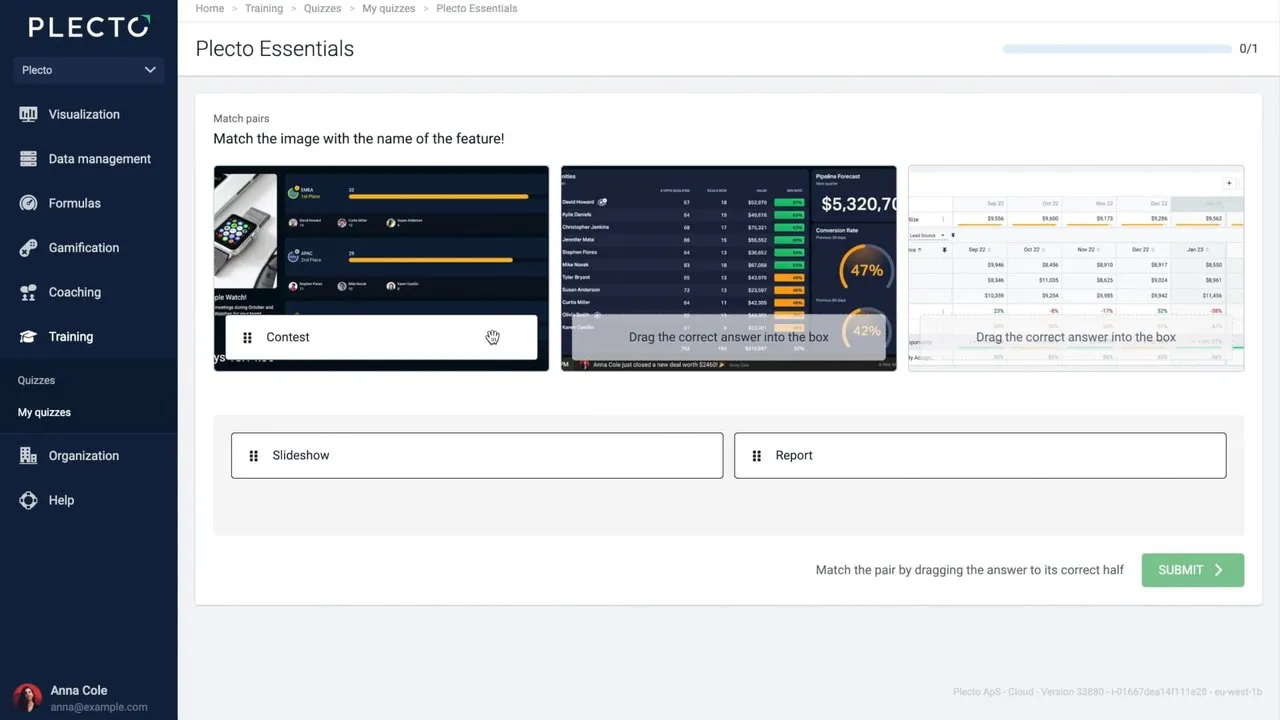
- Run short quizzes to check product knowledge without a high-pressure evaluation.
- Pair new hires with senior mentors and have them review recorded calls together.
The tech stack behind hybrid sales team motivation
A hybrid sales team needs tools for asynchronous communication and shared live data. You cannot run a modern distributed team on spreadsheets and weekly email updates.
Call intelligence tools like Gong record and analyze sales calls, so junior reps can listen to top performers' pitches on their own schedule instead of shadowing live calls.
For performance tracking, Plecto brings data from 150 integrations into live dashboards. You can build them with the AI Formula Assistant or in a conversation through Plecto's MCP integration. Home Østerbro, an 11-person franchise of the Danish real estate agency Home, runs its dashboards on the office TV and in the mobile app, so agents follow results even when they are out at viewings. As owner Martin Berg puts it, "Now I can see every day, even when I'm not at the office, what's going on right now."
To keep everyone on the same page for weekly meetings, set up reports that export to PowerPoint or Excel and arrive in your inbox on a schedule.
Build hybrid sales team motivation into your system
Hybrid sales team motivation does not happen by accident. You have to build a digital environment that replaces the physical energy of the office. Shift from surveillance to visibility, make recognition instant and structure your coaching, and your distributed reps will keep hitting their targets. Start building a transparent sales culture today with a 14-day free trial.
Questions
Frequently asked questions about hybrid sales team motivation
Give reps clear visibility into their performance metrics, celebrate wins instantly with digital notifications, and run short contests to break up the routine. Remote reps need to see how their daily actions contribute to the team's goals. Our guide to remote selling covers the day-to-day side.
Keeping access to information and coaching equal. Remote reps miss impromptu office discussions, so structured communication and shared KPI tracking are essential to prevent a fractured culture.
Weekly. In a hybrid setup, one-on-ones are the main venue for coaching, pipeline review and checking on a rep's well-being before stress turns into burnout.
Use shared live dashboards instead of manual activity logs. When reps know their calls, meetings and revenue are tracked automatically and visible to the team, managers do not need to ask for constant updates.
Start your 14-day free Plecto trial today.
Enjoyed the article? Share it:


