
The Psychology of Workplace Gamification: What Actually Sticks

The Psychology of Workplace Gamification: What Actually Sticks
Nothing is wrong with the gamification dashboard you have built. They work and assign points or wins as they are supposed to. But like a lot of gamification initiatives out there, it doesn't really answer the question: is this thing telling me anything about my work that I actually care about?
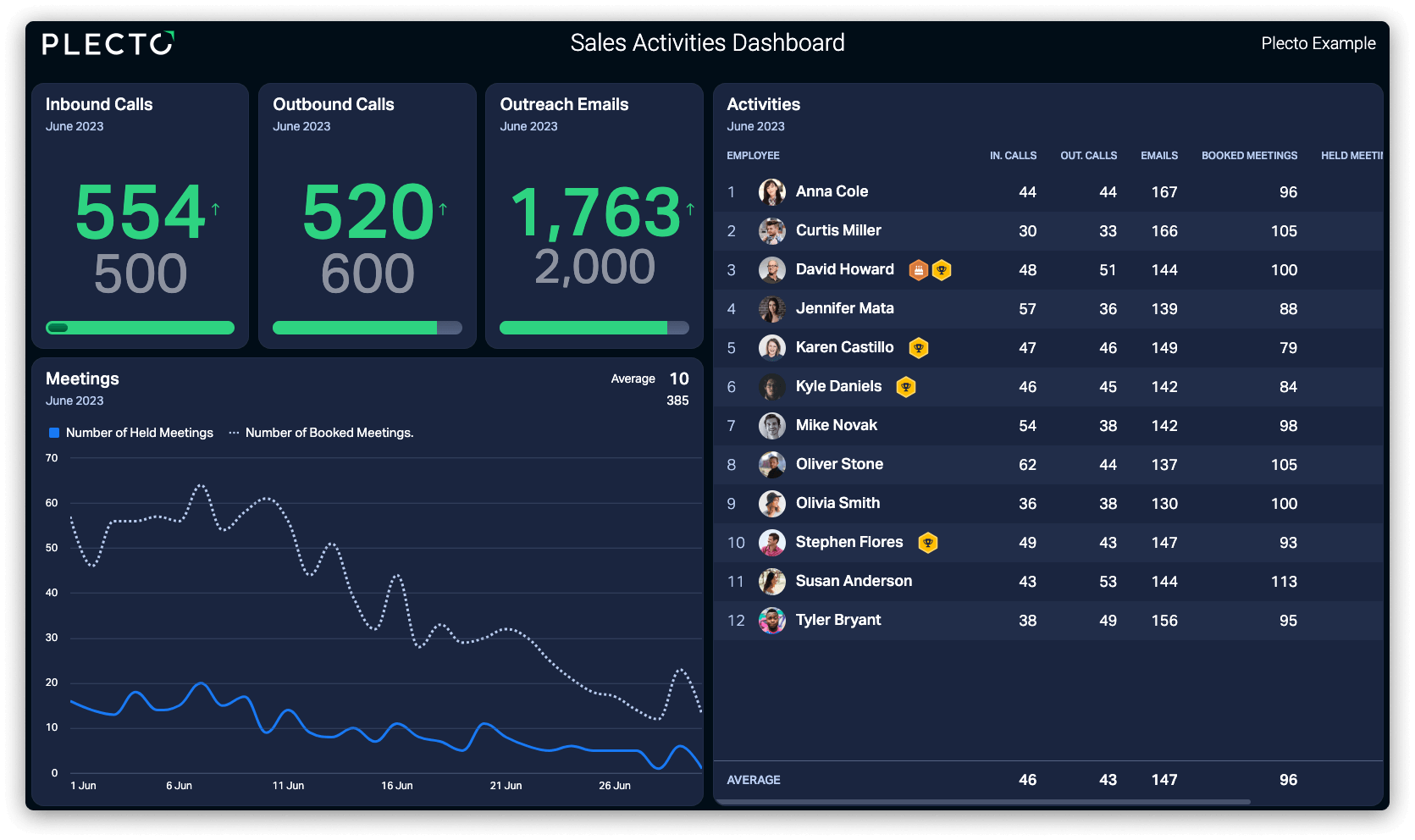 Build your own
You need to build a program that does answer that question, and this article helps you understand how.
What Do People Care About and Why?
Let's look at the Self-Determination Theory to understand this. In simple words, people stay engaged when three things are present:
-
Autonomy, which is some choice in how they work
-
Competence, a felt sense of getting better
-
A sense that their progress matters to people around them.
A gamified system has to feed those three needs. Lander's theory of gamified learning makes this point: game elements only move outcomes when they match the behavior that produces those outcomes. Seaborn and Fels also show us this with their review.
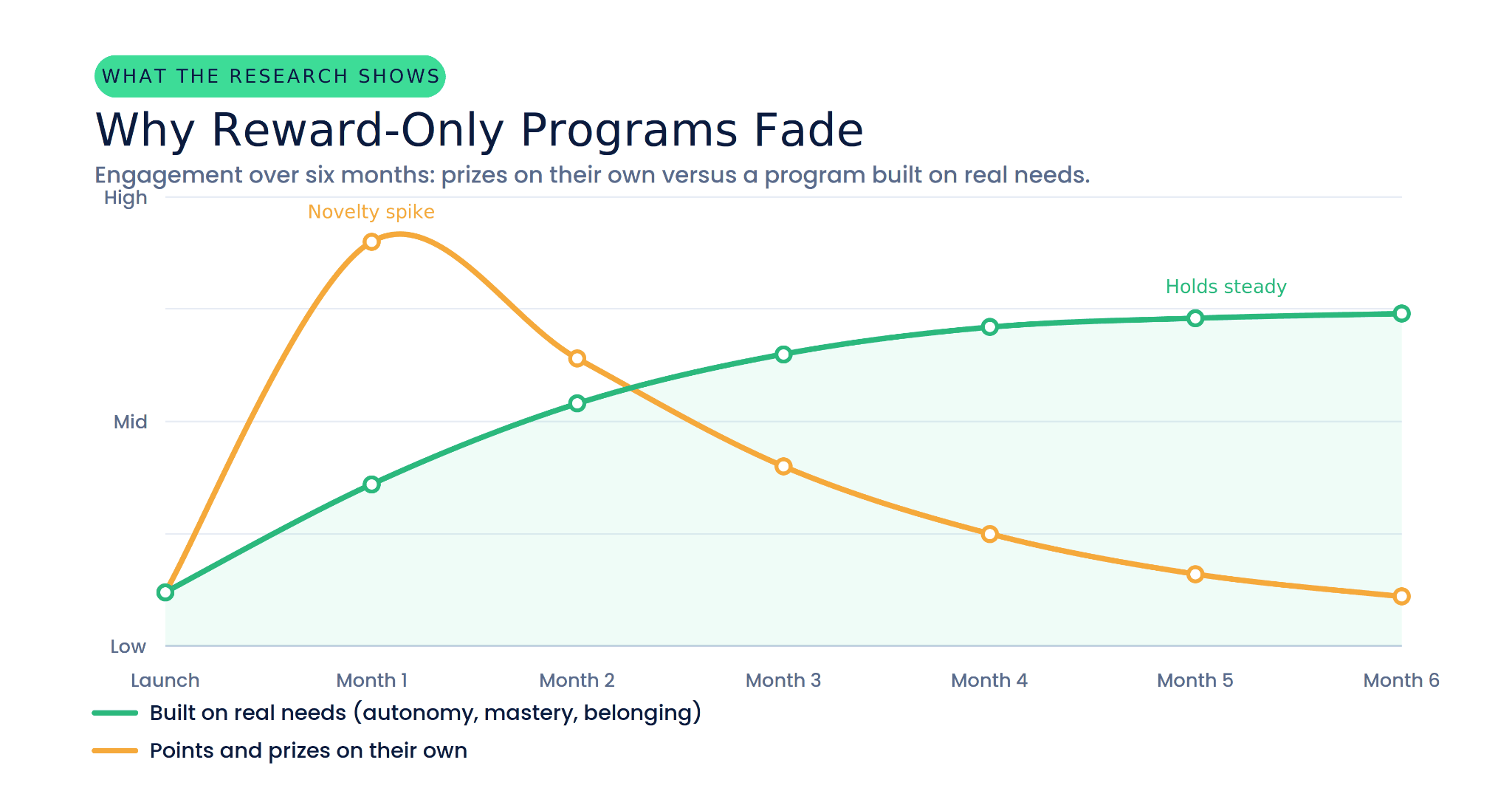
All of this to say, points work when they signify real progress toward these three needs.
What Each Mechanic Is Actually Doing
The following are ways you measure progress in a gamification dashboard.
Progress Bars and Streaks
Progress bars can make effort visible. A support agent who clears 30 tickets (with happy customers) can see the traction being built.
Course platforms understand this really well. They know that when people can see how far they've come, it gives them more traction to keep going. Everything from coding bootcamps to land investing education runs on module completion and visible progress.
Streaks also create loss aversion. A 40-day streak is motivating, but what happens when it's broken? Everyone has bad days, and that broken streak can send them right over the edge and end the habit entirely. But on the other hand, some people work differently, and this would only motivate them to work harder.
Badges
A good badge marks something the person is proud to have done. Could be a first solo client call, first shipped feature, or an earned certification.
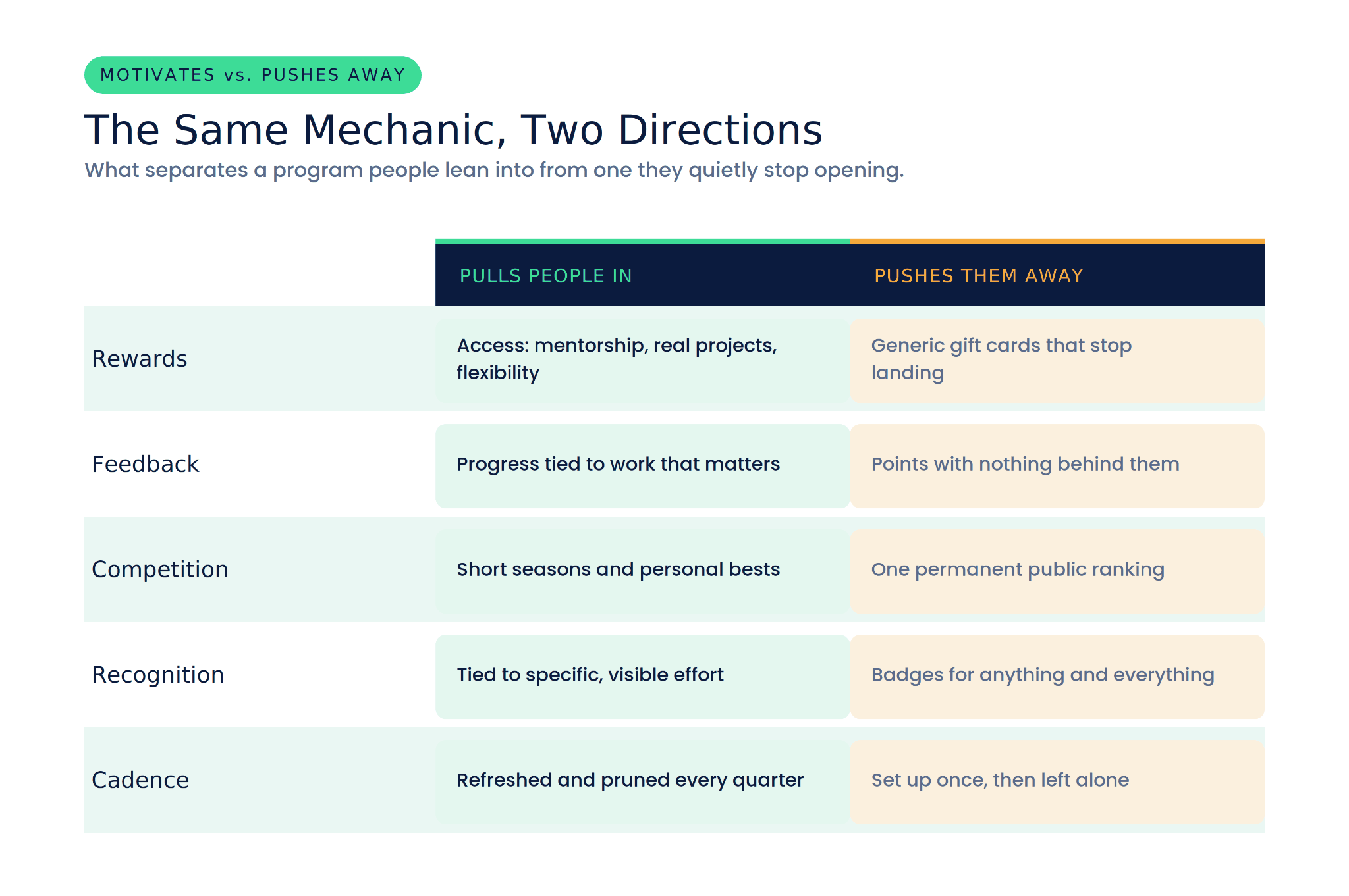
A bad badge cheapens all others. Don't congratulate people on random KPIs they don't really care about. Plecto lets you set the badge criteria yourself, so you’re rewarding people for the right KPIs, and not busywork.
Leaderboards
For the top five performers on your team, a leaderboard works just fine.
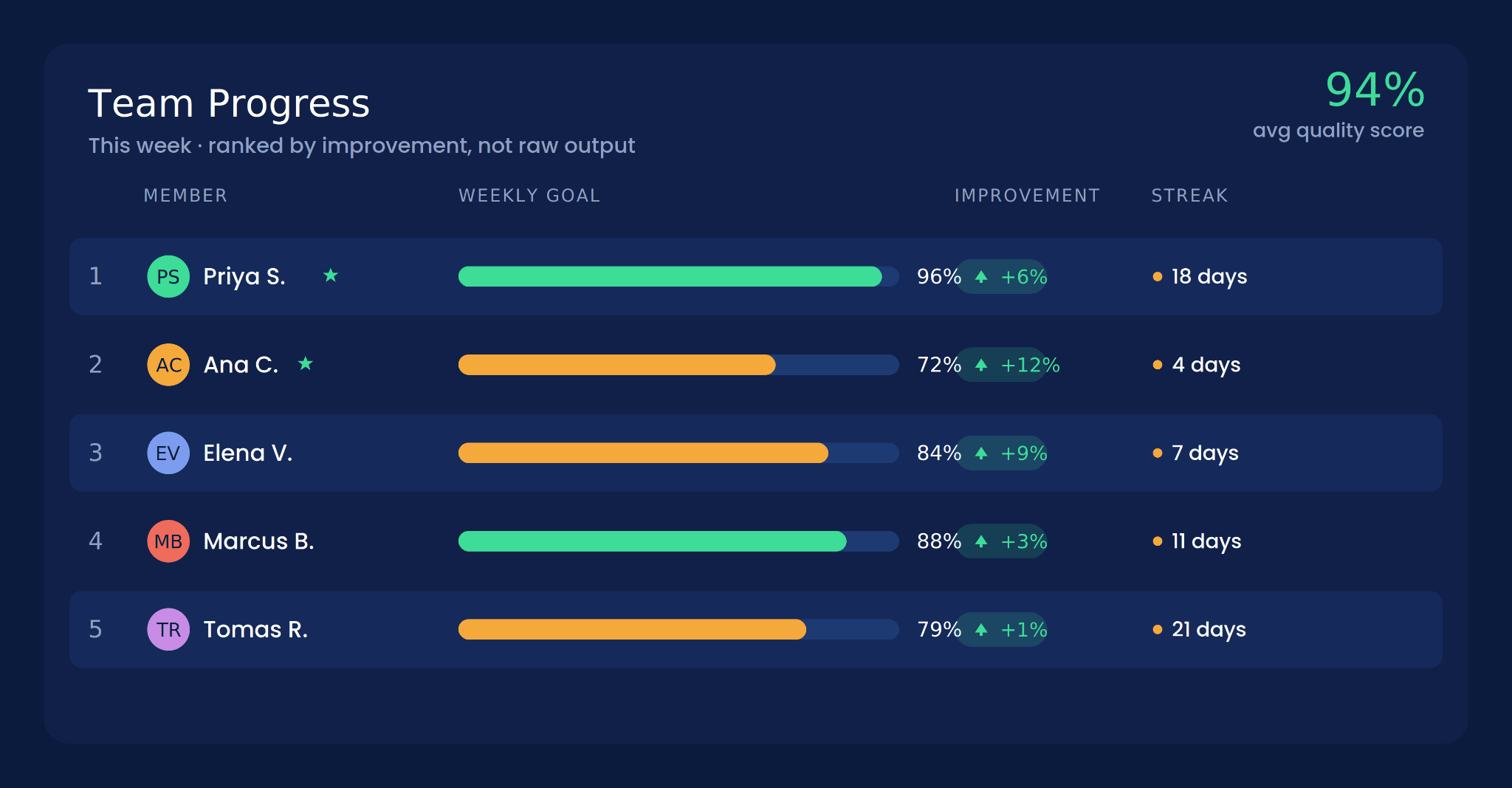
But for everyone else, it could be a weekly reminder that they're not doing very well. There have been studies that tell us public comparison without support reduces motivation and satisfaction over time. It's like constantly beratings with no game plan to get better, no acknowledgement of what they already did right.
If you run a leaderboard at all, try putting personal-best tracking right next to it so most people are competing with last month's version of themselves.
Plecto's real-time dashboards can help you do this. You can run its leaderboards as time-boxed contests rather than a permanent ranking, pair them with achievement badges and instant notifications when someone hits a personal milestone, and let reps redeem wins in the Reward Store.
Quests and Challenges
Quests offer novelty and structure, which is great because it breaks monotony. But they also have to be carefully designed and refreshed periodically. You don't want to slap another task on top of everything else.
Where Are You Already Using Gamification Successfully?
Onboarding is a good one, most companies have one.
What works for you in your onboarding programs? New hires get to know where they stand and what's next, and that motivates them to do more and progress.
Try gamifying operational work with built-in deadlines. But it can be a slippery slope. You can use it for legal and ops teams that live inside contract management software. They already have the raw material to track this, they can simply measure their renewal dates, review queues, and response times.
Turning task completion into a tracked, celebrated outcome is an easy way to reward exactly the behavior the business needs. But you have to be picky with what you apply this to. You don't want to gamify something like emails sent, because what does that reward?
Recruiting can also be gamified well, as you can tell from our onboarding example above.
Clutch's State of AI in Hiring report shows you how well this does. Since recruitment is scoring the employee anyway (number of hires, how many retained), you need to gamify it by rewarding judgement, not tack on yet another number.
If you're considering this system for sales too, consider that it's already a high-pressure job. Stacking public competition on top of quota pressure can be a lot, so design extra carefully.
How These Programs Die
The moment a number becomes the goal, people optimize the number.
Support agents (to reach high numbers) close tickets prematurely to protect resolution stats. Reps will log junk activities because they think you're focusing on the number of tasks and not how well they're executing them.
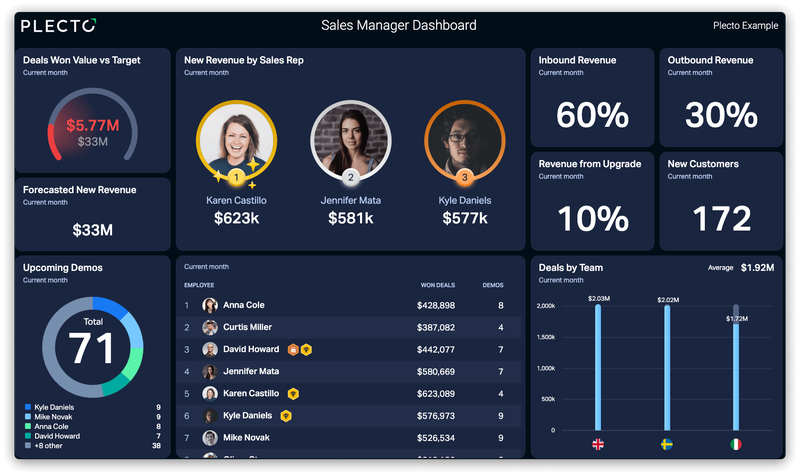 Build your own
That is normal human behaviour, not some character flaw in your employees.
You did this (or your system, at least): by telling them you want more closed tickets without specifying you also wanted happy customers.
Points and badges also lift engagement but fade if nothing evolves. Any mechanic that becomes predictable loses its appeal.
Also, when gamification is bolted onto a team that's under-resourced or badly managed, it reads as an insult. Give us a real solution, they'll say, motivation isn't the issue.
Test It Like a Product
Track participation, quality, satisfaction, and retention. Participation alone will just tell you people clicked, that could be passive as well, with nothing actually improving.
You can A/B test challenge lengths and streak rules. Do people respond better when the challenges are small or when it's long and their efforts can snowball? You'd be surprised by how small tweaks can help.
Survey for friction. Use pulse surveys to catch it early, and read the open-text answers.
Watch for employees losing sight of the actual goals and just trying to feed metrics, or employees collaborating less because helping a teammate doesn't score.
The rewards that hold up over time need to have some meaning. They could promise access in the form of mentorships, an interesting project, a learning budget, or schedule flexibility. A $25 voucher is easy to think of, and so easy to dismiss.
Where to Start
Start with a mechanic that can be clearly tied to one behavior you want more of. If it works, the systems worth keeping grow from there.
Plecto makes it easy to build real-time dashboards to track progress. So you can spend more time thinking about what to evaluate, instead of worrying about how you'll execute it.
Start your 14-day free Plecto trial today.
Enjoyed the article? Share it:


BROOKE WEBBER