 Sign in
How Gamification and Wallboards Turn Live Performance Data Into Action
See how gamification and wallboards help teams spot changes, coordinate responses, recognize progress, reduce rollout risks, and improve business performance.
How Gamification and Wallboards Turn Live Performance Data Into Action
At 9:00 a.m., a customer support team looks on pace. By 10:15, requests have doubled, several cases are nearing service deadlines, and one queue is close to overflowing.
What slows the team is not a lack of willingness. The shift is spread across reports, personal screens, and separate conversations. By the time everyone sees the pattern, the team is already responding late.
 Build your own
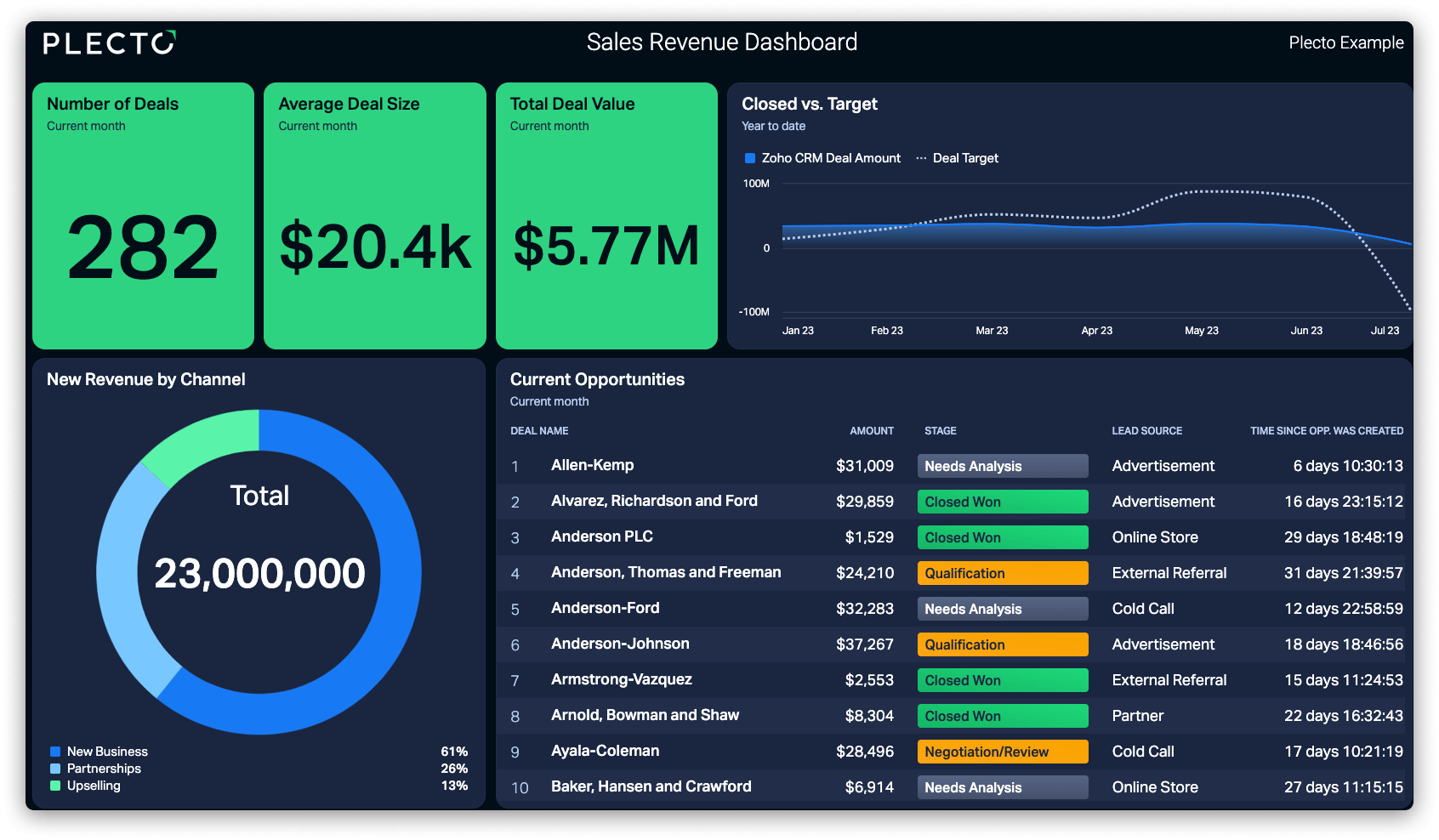
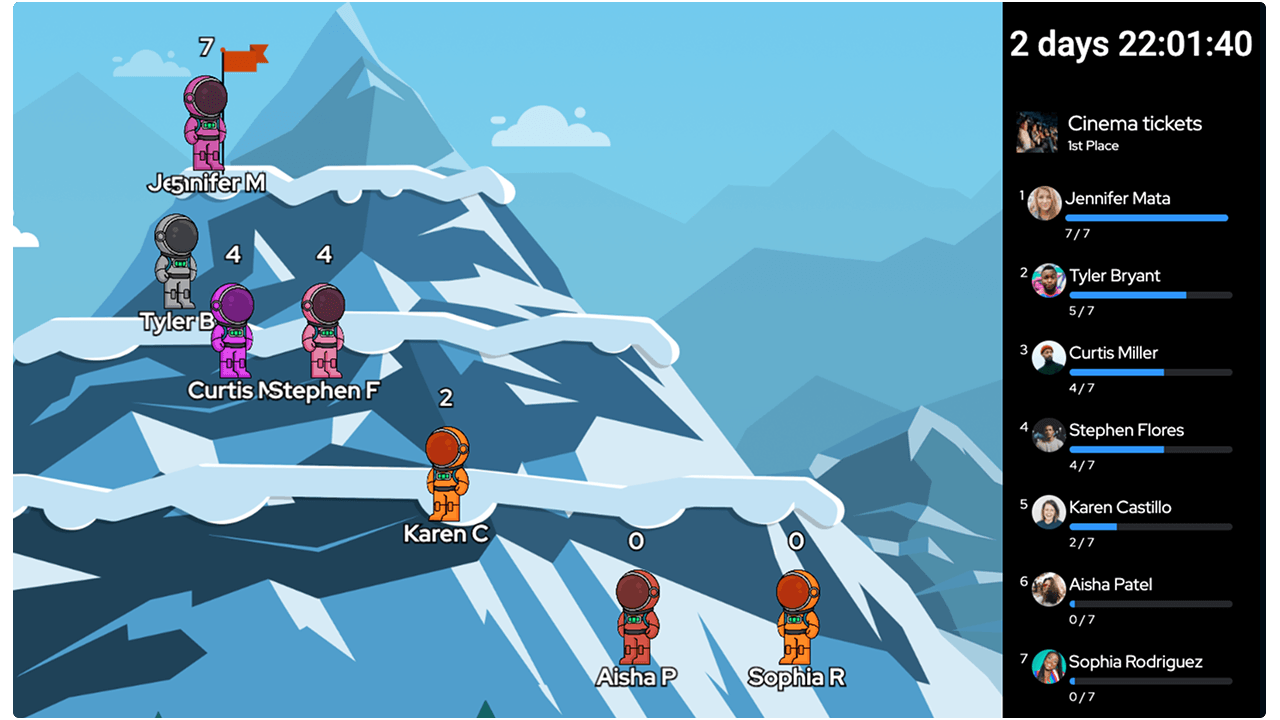
This is where gamification and wallboards work differently but reinforce one another. Gamification gives ordinary work a visible sense of progress through goals, points, badges, levels, streaks, and friendly competition. Wallboards create a shared view of sales totals, ticket queues, deadlines, response times, and daily targets while there is still time to act.
One tool encourages movement. The other helps the team decide where that movement is needed.
Together, they turn performance data into a live team conversation. People can see what changed, what matters now, and where a coordinated push could improve the outcome.
This article explores that response cycle rather than treating gamification as a collection of decorative rewards.
Why Live Performance Data Often Fails to Change Behavior
Most organizations already collect large amounts of performance data. The gap appears after collection. A weekly report may explain what happened, but it arrives too late to change the shift, save the customer, or protect today's target.
Private dashboards create another problem. Each person sees a fragment of the work. A sales representative sees a pipeline. A manager sees the team total. Operations sees a backlog. Customer support sees unresolved issues. Without one shared picture, people can work hard in different directions.
A wallboard closes part of that gap by making the current situation visible to everyone. Gamification can then focus attention on the response, such as recovering an aging queue, protecting quality during a rush, helping another department, or completing a critical milestone together.
This distinction matters. The aim is not to make every task feel like a game. It is to shorten the distance between noticing a problem and doing something useful about it.
The Psychology Behind Visible Progress
Teams respond to progress, feedback, and belonging, not prizes alone. Intrinsic motivation comes through work, growth, or purpose. Extrinsic motivation relies on outside cues like points, rankings, rewards, or recognition.
The strongest designs connect the two. A badge is external, but its value often comes from a deeper message: the effort was noticed, the person improved, and the work mattered to someone else.
Self-Determination Theory, a well-established framework in psychology, explains that people tend to thrive when work supports autonomy, mastery, and relatedness. Employees want control over how they contribute, a feeling of improvement, and connection with others doing the same work.
Wallboards can support these needs when they clarify the goal without dictating every move. A team can see the service risk, choose how to divide the work, watch its progress, and experience the recovery together.
Alex Byder, founder of BD Homebuyer, shares a perspective from building performance-driven teams:
"When you connect extrinsic rewards like points and badges to intrinsic drivers like mastery and belonging, something interesting happens. Recognition tells an employee their effort was seen, and timely feedback tells them they're improving. Those small psychological wins compound, and over time they build both motivation and morale."
A classic meta-analysis found that well-designed feedback interventions can meaningfully improve performance, particularly when feedback is focused on the task rather than the person. A progress bar, milestone, or task-specific badge gives a clear signal: this action worked.
Evidence suggests gamification can improve engagement and results, but the mechanics must suit the goal and the users. The same leaderboard can push one team forward and hold another back.
What Wallboards Add That Gamification Alone Cannot
Gamification can make a target more engaging, but game mechanics cannot show what is happening unless the data is timely and readable. Wallboards add shared context, urgency, and one place to coordinate action.
That shared context supports team motivation because the work stops feeling isolated. Instead of waiting for a meeting, spreadsheet, or end-of-week report, the team sees one picture it can rally around.
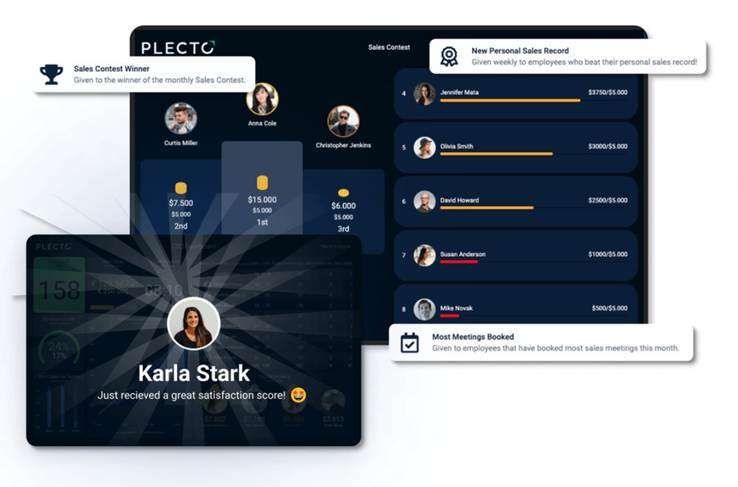
Useful wallboards highlight the few numbers that deserve attention today:
- Sales targets, bookings, conversion rates, and win/loss patterns
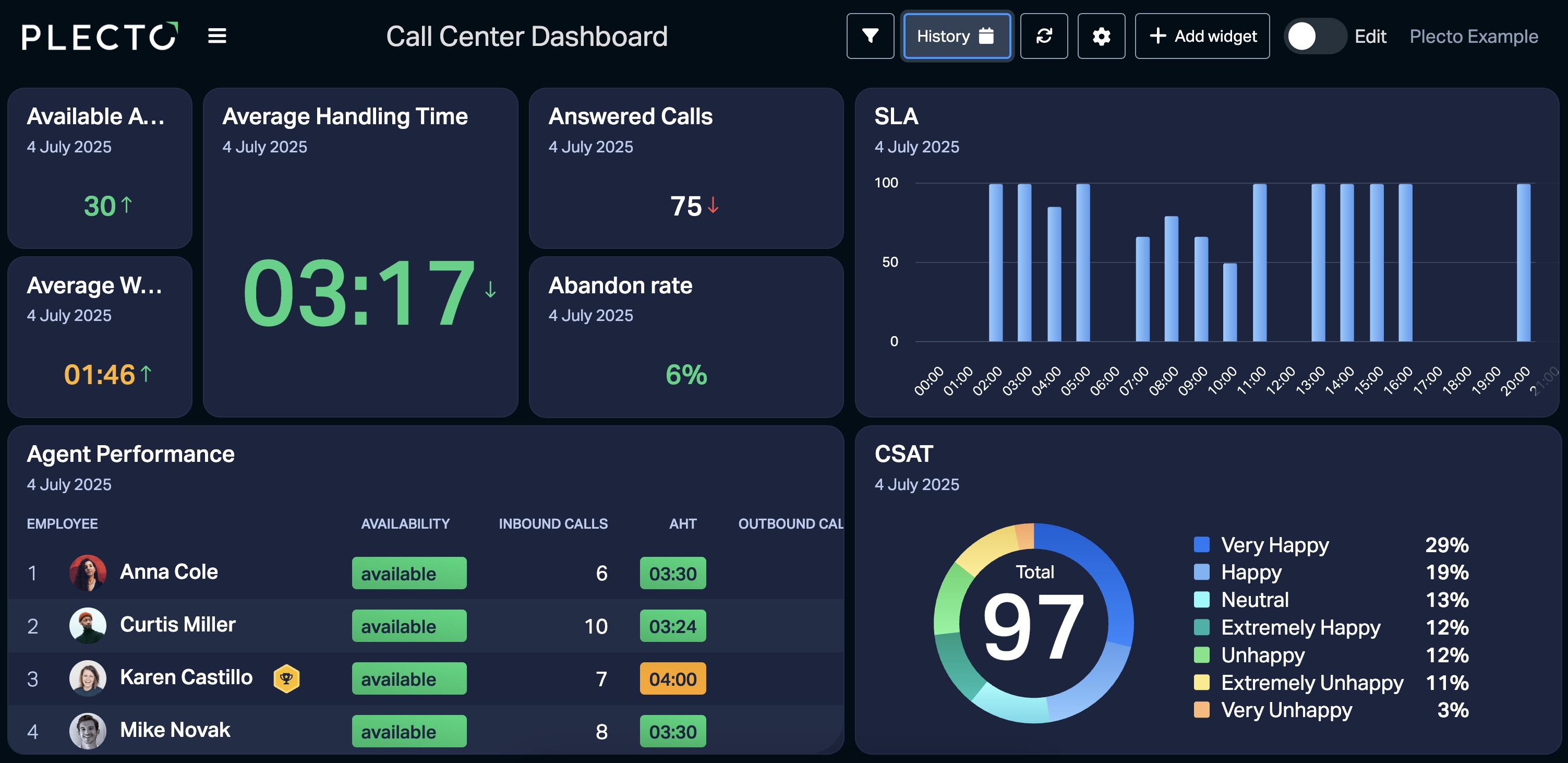
- Queue length, SLA countdowns, response time, resolution time, and CSAT
- Sprint burndowns, release deadlines, bug counts, and risk flags
- Shout-outs, anniversaries, coaching slots, and training progress
The goal is not to fill every pixel. It is to make the next useful action obvious. If the important thing is clear in 5 seconds, the wallboard is working.
A report in someone's inbox can be ignored. A live visual creates quiet pressure, not panic. Everyone sees the same target, deadline, and risk, so the discussion can move from "What is happening?" to "What should we do next?"
 Build your own
Two Examples of Live Data Becoming Team Action
Concrete examples show why the combination matters. In each case, the wallboard reveals the situation and the game mechanic encourages a useful response.
Example 1: Recovering A Support Queue Without Sacrificing Quality
At 10:15 a.m., the wallboard shows that the open queue has jumped from 24 cases to 61. Eleven cases are approaching the SLA limit, and billing requests are aging faster than other categories.
The team starts a shared recovery mission: clear the oldest 20 cases while maintaining its normal quality score. The board shows the backlog falling, highlights cases that still need attention, and records when another agent steps in to help.
The challenge rewards coordination rather than raw ticket volume. The quality requirement prevents employees from rushing through cases simply to earn points. A contact center could also build quests around first-call resolution when that better reflects customer value.
Example 2: Improving Sales Discipline, Not Just Activity
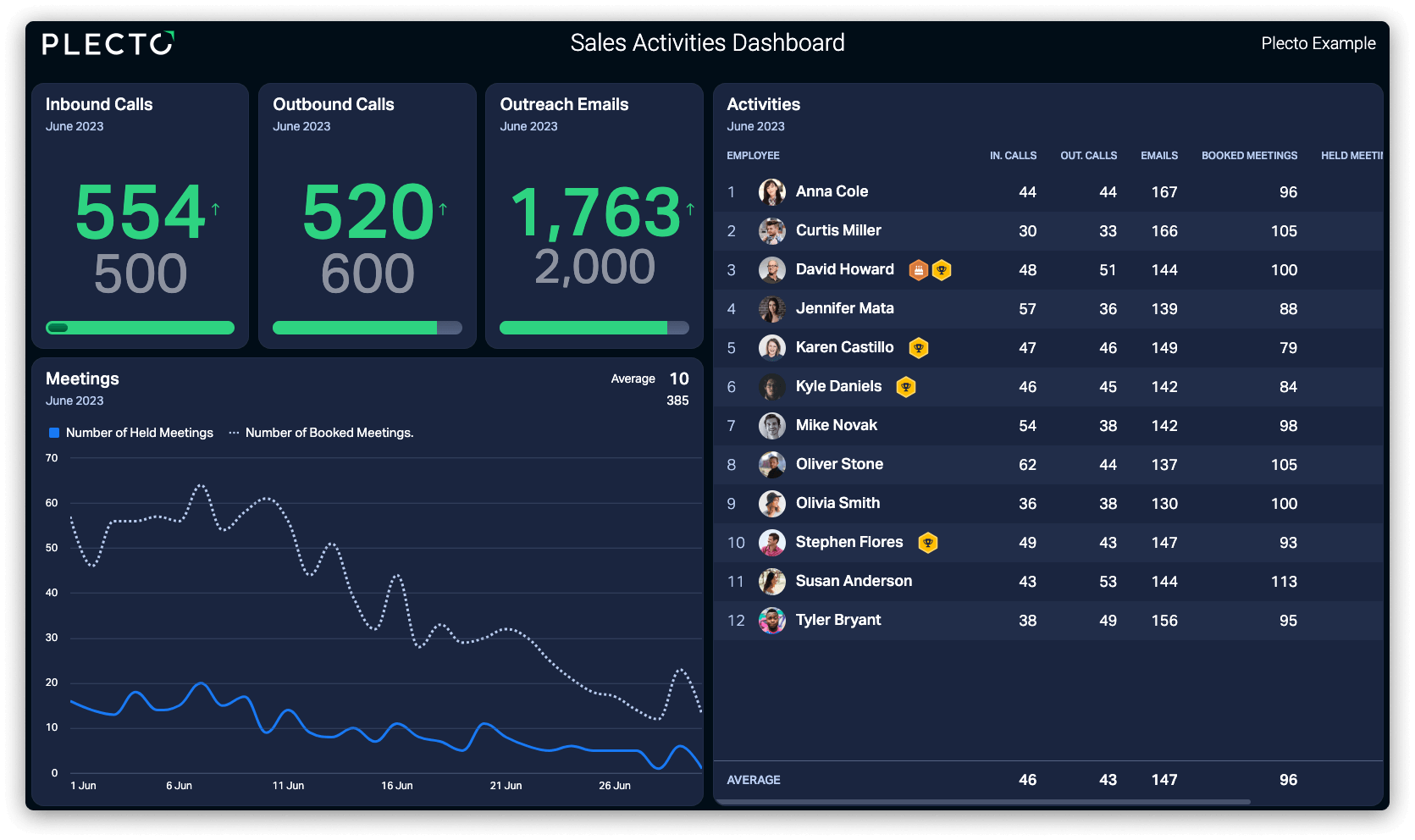
A sales wallboard shows meetings booked beside CRM completeness, follow-up quality, conversion rate, and aging opportunities. This prevents the most visible number from becoming the only number that matters.
Instead of rewarding the highest number of calls, the team earns progress for qualified opportunities created, accurate next steps, and clean pipeline updates. A weekly mission can focus on opportunities that have stalled without encouraging representatives to manufacture activity.
The board makes the story visible. Which actions improved the pipeline? Where is help needed? Recognition goes to repeatable behavior, not noise.
Integrating Gamification and Wallboards Without Creating Noise
The strongest results appear when game mechanics and live displays support the same behavior. Put the two together and you get more than the sum of the parts: gamification ties effort to progress, and wallboards make that progress visible while the work is happening.
1. Start with One or Two Behaviors
A leaderboard motivates and a wallboard informs. Put them together and the wallboard becomes where the game plays out live. The key is to layer them in gradually, tied to one or two metrics that matter, so people feel challenged rather than buried under flashing dashboards.
A private score hidden in an app gives the individual feedback. A live wallboard lets the team see the story unfold. What moved? Which metric needs a push? Who needs support?
2. Make the Reward Match the Behavior
Start small. Choose one or two metrics tied to value, such as first-call resolution, qualified opportunities created, or accurate follow-up. Avoid vanity numbers that encourage rushing, cherry-picking, or gaming the system.
The best setups make progress visible and meaningful. A streak can reward quality. A badge can recognize helpfulness. A weekly mission can invite new contributors to shine. Rewards do not need to be huge. Some teams use coaching time, lunch perks, donations, or printed rewards such as custom T-shirts when they fit the culture. The point is noticed behavior, not the size of the prize.

3. Keep the System Fair and Readable
A good system aligns individual behavior with company goals without making people feel managed by a scoreboard. If the board rewards only speed, quality may slip. If it rewards only individual wins, collaboration may suffer.
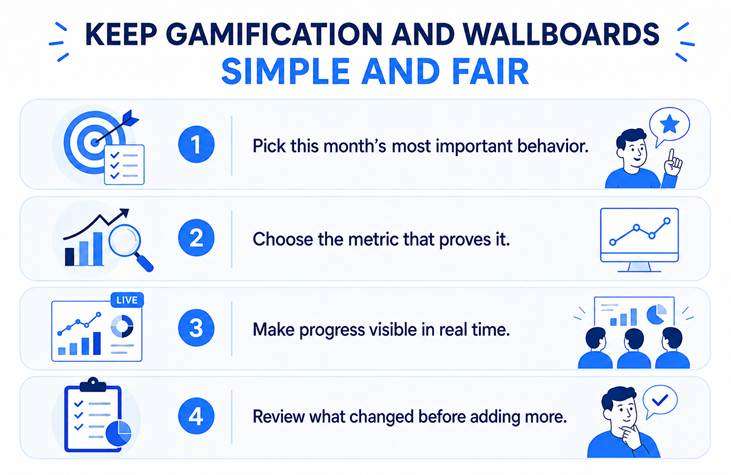
Try a 4-step rollout:
- Pick this month's most important behavior.
- Choose the metric that proves it.
- Make progress visible in real time.
- Review what changed before adding more.
In retail, a store might show live conversion rates with a mission around three add-on sales before noon. In B2B sales, SDRs might see meetings booked besides CRM quality. Better setups create momentum without making the screen loud.
Designing a Wallboard People Can Read in 5 Seconds
A wallboard is not useful simply because it is large or live. It must help someone interpret the situation quickly enough to make a decision.
- Show only three to five priorities. Anything else can sit in a deeper dashboard or report.
- Use thresholds. A number becomes more useful when the viewer can see whether it is healthy, drifting, or urgent.
- Display trends, not isolated totals. The direction of movement often matters more than the current number.
- Connect each warning to an action. A red indicator should tell the team what needs attention, not merely announce that something is wrong.
- Choose team visibility carefully. Public rankings are not always the best way to support shared work.
A wallboard showing "42 open tickets" gives information. A wallboard showing "42 open tickets, 11 nearing the SLA limit, billing queue needs two more agents" gives the team a decision.
Good design turns the wallboard into a working surface rather than a decorative screen.
Challenges and Considerations
No tool fixes a weak culture by itself. Technical setup can be difficult when data sits in different systems. Culture is harder. If the workplace already feels punitive, a leaderboard may intensify that feeling rather than improve performance.
 Build your own
There are ethical questions too. Too much emphasis on external rewards can crowd out intrinsic motivation. Displaying individual data can create privacy and fairness concerns when people do not understand what is tracked or how the numbers will be used.
The EU's GDPR, for instance, encourages data minimization: collect only what you need, for a clear purpose, and keep it secure. That principle fits workplace dashboards well. Just because something can be tracked does not mean it should be displayed.
A healthier rollout usually follows a few guardrails:
- Co-design with the team before scaling.
- Default to team metrics, then use individual data sparingly and with consent.
- Make employee recognition multi-directional, including manager praise, peer recognition, and customer kudos.
- Reset challenges often so new starters and steady performers can participate.
- Keep coaching visible, not just points and prizes.
Ask 3 questions before launch: What behavior are we encouraging? Could someone game the metric? Would this feel fair with my name on the screen?
Those questions keep the system human and reduce the risk of turning motivation into colorful surveillance.
The Future of Workplace Motivation
The future of workplace motivation will probably be less about bigger contests and more about better timing. Small nudges, cleaner visuals, and personalized feedback will matter while action is still possible.
Teams will also expect more care around privacy and psychological safety. A wallboard that celebrates effort, learning, and collaboration will travel further than one that only exposes laggards.
If you are starting now, keep it small. Pick one metric that matters. Add one clean wallboard. Run one weekly mission. Recognize repeatable behaviors. Then ask what helped and what should change. Simple systems tend to stick when people can understand them.
For teams that want leaderboards, contests, wallboards, recognition, and performance data together, Plecto gives those moving parts one useful home to work from. Sign up today for a free two-week trial!
Start your 14-day free Plecto trial today.
Enjoyed the article? Share it:


JESSE GALANIS