 Sign in
Why Your CRM Should Be the Single Source of Truth for Revenue (and How to Get It There)
Why Your CRM Should Be the Single Source of Truth for Revenue (and How to Get It There)
Ask five people in a company that is expanding rapidly how many deals closed in the previous quarter, and you‘ll get five different answers. Sales has one figure in the CRM, finance has another in the accounting system, marketing is tracking leads via a spreadsheet, and the founder is relying on his memory.
Everyone‘s looking at accurate data. The trouble is, none of it matches.
That is where one source of truth comes in. For most companies, that is the CRM. It is where marketing passes the baton to sales and sales turns into revenue.
 Build your own
When the CRM is reliable and clean, every report, forecast and dashboard downstream becomes automatically reliable. When it is not, every decision built upon it is a gamble in a three-piece suit.
What a Single Source of Truth Actually Means
A “single source of truth” is not one massive tool that does everything. Rather, it is one common database where the key metrics are entered, maintained and relied on, and which all other tools refer to rather than duplicate.
The CRM updates the deal record, the value, the stage, the ownership. Your dashboards, your finance system, your marketing front end all look at that record rather than maintaining different copies.
It's pretty straightforward. If we asked two people to pull the same metric from two different tools, would they come up with the same answer?
Yes—then you‘ve identified your source of truth.
No—then you‘ve identified many sources of confusion, and someone will be spending their Friday afternoon reconciling data, trying to get a match.
Why the CRM Is the Right Anchor
Revenue lives in the CRM whether you've planned it that way or not. Every lead, conversation, proposal and closed deal happens in the CRM. This makes it the only system that touches the entire customer journey, which is exactly what you want your source of truth to do.
Focusing on the CRM also establishes a positive discipline. If it’s not in the CRM, then it's not in the system. If a stage isn't up to date, then the pipeline is incorrect.
Teams that enforce this rule will stop losing deals in their inboxes and get rid of the surprise of a quarter falling apart three weeks in the past. The CRM is instead the shared reality that the team can plan off.
The Real Work Is Data Hygiene
Selecting the CRM to be your source of truth is the easy part. Maintaining its integrity is the ongoing effort and is where most implementations fail.
A source of truth is only as accurate as the data submitted into it, and dirty data quickly destroys trust. The second a team sees the CRM be incorrect twice, they revert to their personal spreadsheets, and you are back at square one.
The things you implement are dull, but critical.
-
Create a standard for the naming of deals, a consistent approach for how they should be staged so that all parties agree on what “qualified” means.
-
Remove duplicates from the pipeline before they distort the metrics.
-
Ensure required fields are in place so you‘re measuring the reality that gets entered.
-
Automate all data input so manual entry can’t be wrong. None of this is glamorous, and yet all of this is the key difference between a CRM you have faith in and one people ignore.
Connect the CRM, Don’t Replace Everything with It
Having a source of truth doesn’t mean making every tool be in one place. Your CRM should remain the system of record for deals, pipeline, etc. Specialised tools should do what they do best while reading from it.
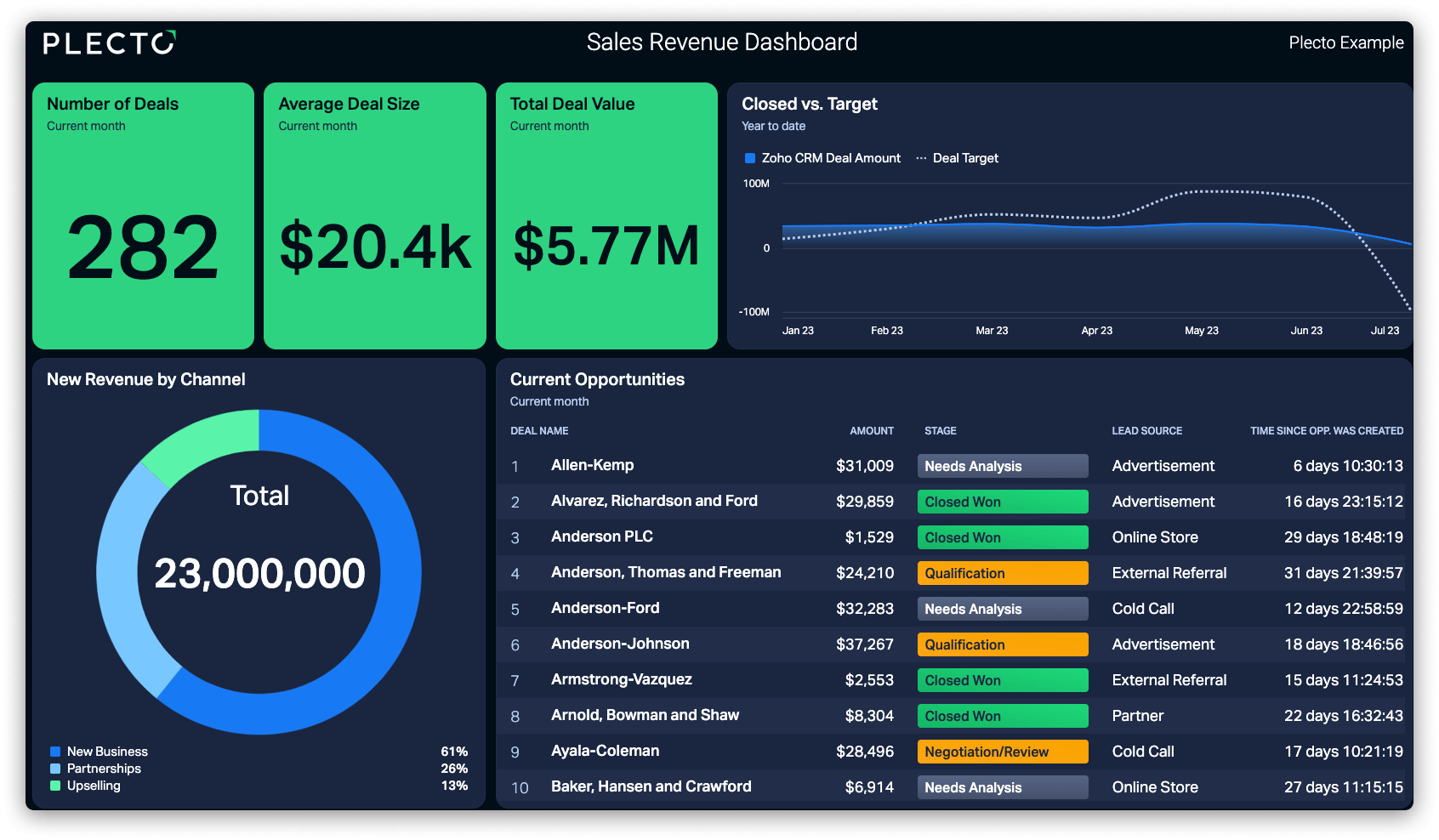
Performance, visualisation tools, etc. should pull live from the CRM to display live dashboards to the whole team based on that trusted data, nothing re-typed.
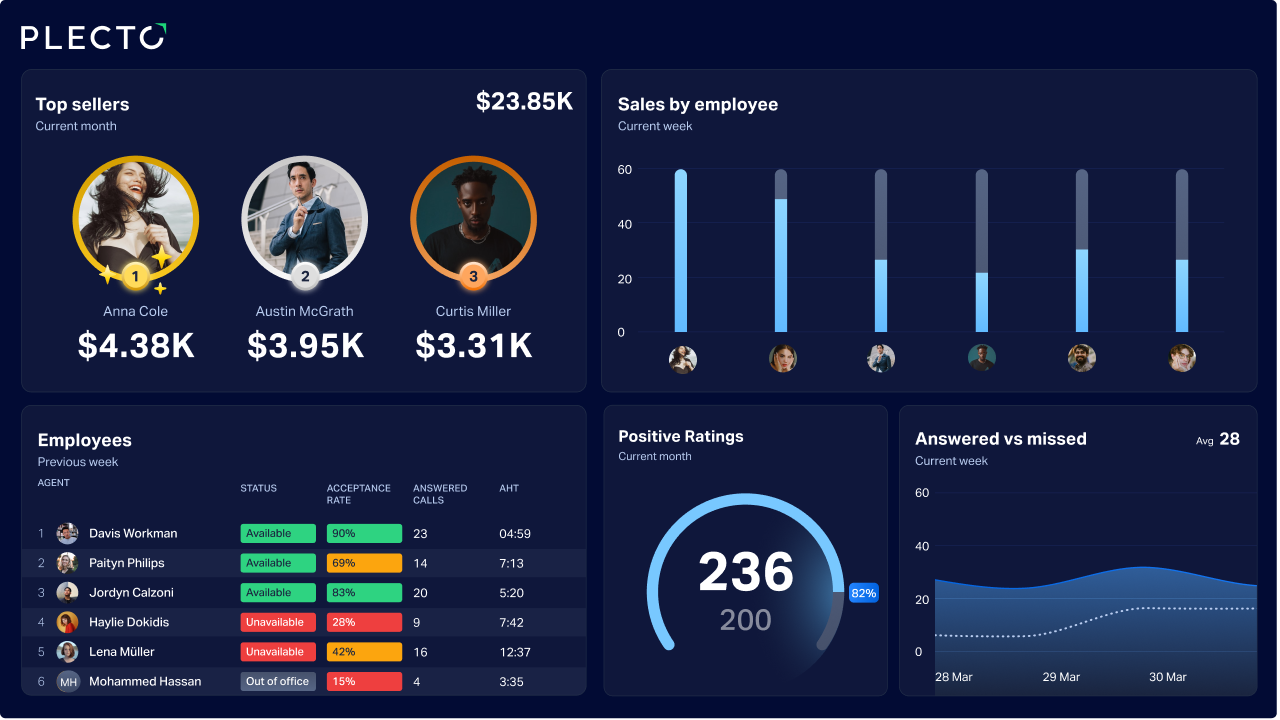
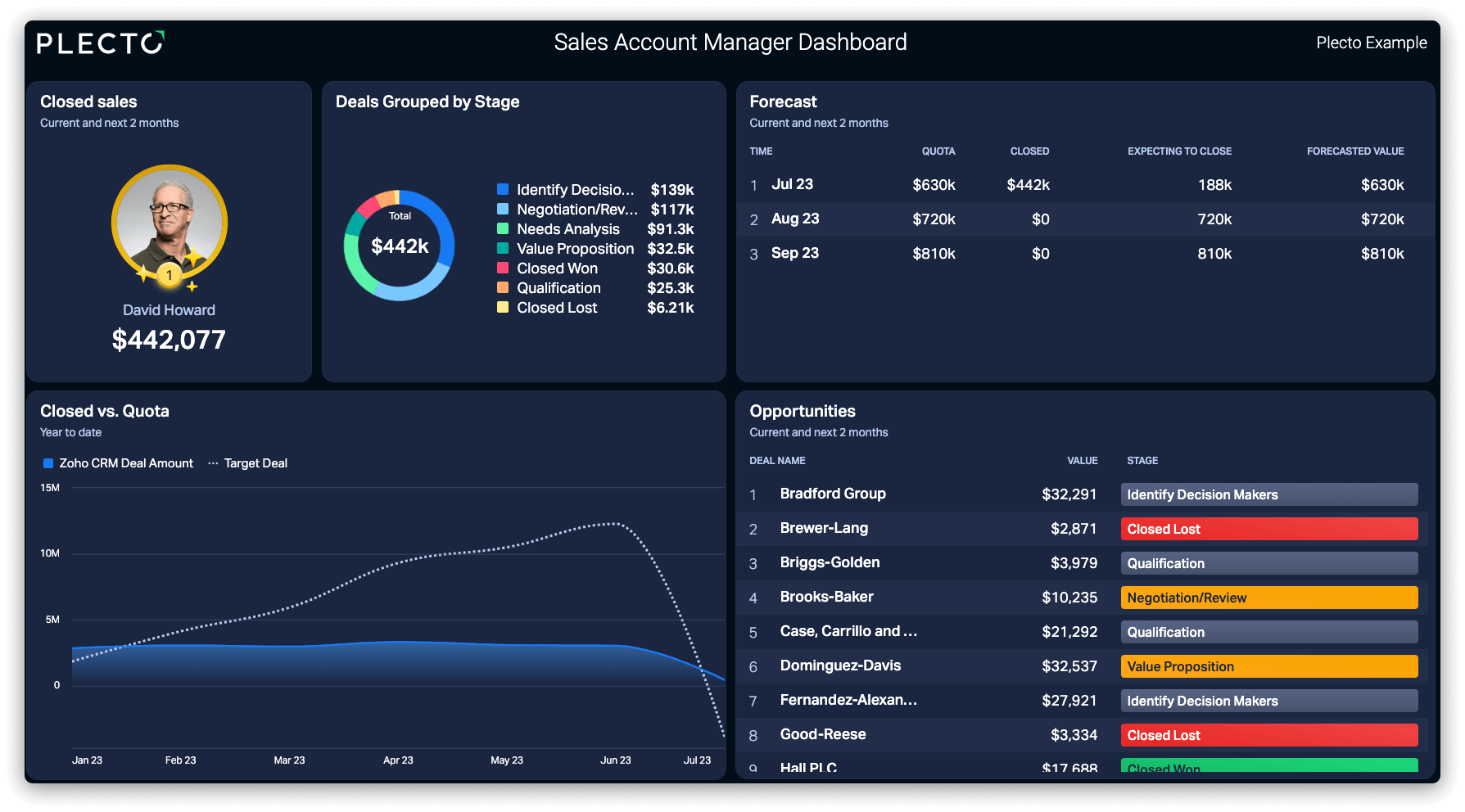
Plecto is just one example of that pattern. It links to the CRM and transforms the existing records into digital dashboards and wallboards visible to all on the floor, so the pipeline figure on the monitor is the same figure as in the CRM—updated immediately.
Since the wallboard is derived from the single source of truth and not a weekly export, no one is re-entering figures into a PowerPoint presentation before the Monday morning meetings, and no one is arguing about which version is right.
The team is working with a single set of numbers, all day long, without ever leaving the tools they already use.
This is the model that scales. The CRM is the single source of truth, integrations push the truth around, and every tool delivers the slice of reality its users want to see.
The one you are trying to avoid, and that fails hardest at scale, is five tools all holding different parts of the truth—and not being sure which them to trust.
Getting There Is Its Own Discipline
Making a messy CRM into a true single source of truth is not just a matter of changing a setting. It requires auditing all of the data you truly possess, agreeing upon the definitions across sales and marketing, cleansing historical records, wiring integrations so data moves instead of copying, and defining rules to maintain the system moving forward. It is half strategy and half plumbing.
 Build your own
For businesses that do not have an operations team or an analytics team in-house, a digital marketing agency is often brought in to lead that build so that the source of truth is exactly how the business actually makes money rather than some default setup.
The magic is not the technology; it's the framework, the definitions and the discipline above it.
Start with Trust, Not Tools
The biggest mistake is assuming this is just a software purchase. Teams buy a new CRM, load it with the chaos, and wonder why nothing has happened.
The sequence is critical:
-
First, decide what metrics are required, and how they are to be defined.
-
Second, clean what you already have.
-
Third, link the applications that consume the data. The platform is not the starting point.
If you get that sequence correct, something quiet yet powerful takes place. The arguments about who was right with the numbers vanish.
Forecasts become more accurate, because they are based on facts everyone agrees on. New tools are easier to use as well, as they all reintegrate into the same simple core. That is the true value of a single version of the truth: not a prettier database or spreadsheet, but an organization finally deciding what the truth is.
Let Plecto’s real-time dashboards be your team’s single source of truth, and eliminate data confusion forever. Sign up for a free demo or trial today, and start outperforming—now.
Start your 14-day free Plecto trial today.
Enjoyed the article? Share it:


LAURA GREENE