
Omnichannel Marketing: How a CRM Creates One Customer View

Omnichannel Marketing: How a CRM Creates One Customer View
Introduction
The customer does not take a linear route from awareness to purchase. The customer may encounter the brand via search, social media, emails, the website, sales, and support. Omnichannel marketing ensures that all these interactions work together to create an experience that is seamless for the customer.
 Build your own
Seamlessness requires accurate customer data, a common language, and transparency. CRM software acts as the foundation, and dashboards bring the data to life.
Why Omnichannel Marketing Needs a Single Source of Truth
Multi-channel efforts provide a way for gathering helpful data; however, siloed systems may complicate the trustworthiness of the data. Marketing might be measuring the response to the campaign in one channel, sales might be following the leads in the CRM, while customer support could be using another system to handle the helpdesk.
CRM becomes valuable when all the customer data, communication, opportunities, and activities are stored consistently. This does not mean the functions have to fit into one software; however, the systems should refer to reliable data.
Omnichannel marketing will become even more powerful when the customer information flows through different departments without excessive manual duplications. The person who opened the email, visited the product page, answered the ad and contacted the sales team should not be four separate contacts for your teams.
How Omnichannel Marketing Connects Customer Touchpoints
The customer journey isn’t linear. They may see your social media post, research reviews some days later, download a guide, and then come back through your advertising campaign. Every single touchpoint is an opportunity to gather insight into the customer’s intention, but it is even more valuable when contextualized.
A connected CRM will help align the touchpoints with customer profiles and opportunities. Marketing will know which campaigns bring qualified leads, sales will have information on the interaction before the conversation, and the service teams will know the background of the request. It helps to reduce any friction and redundancies.
It isn’t just about being everywhere. It is about making sure that every touchpoint contributes to the overall experience. The customers should feel like the business keeps up with all their interactions, understands their needs, and communicates at the right time.
The Role of Omnichannel Marketing Data in CRM Dashboards
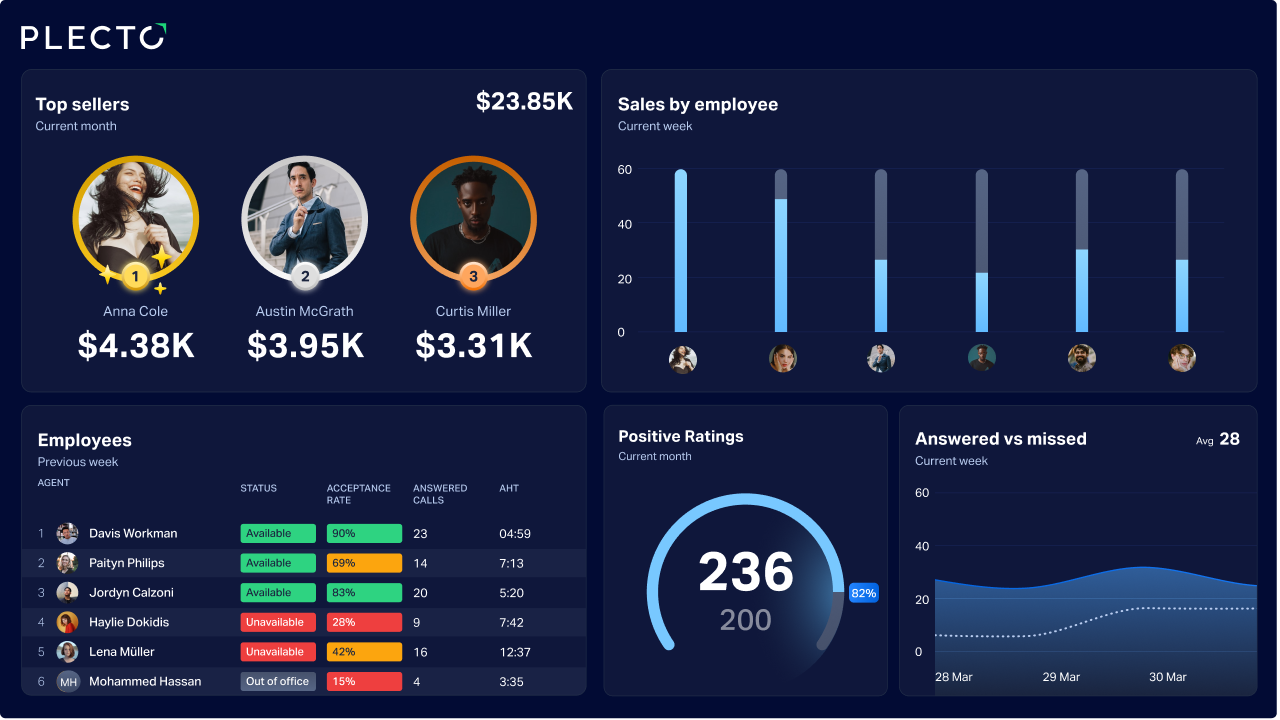
The problem of visibility emerges once the customer data is connected. While CRM stores many records and events, it is vital to find out how to see some trends and take the decisions on actions. Dashboards have the capability to convert the underlying records into easily comprehensible metrics.
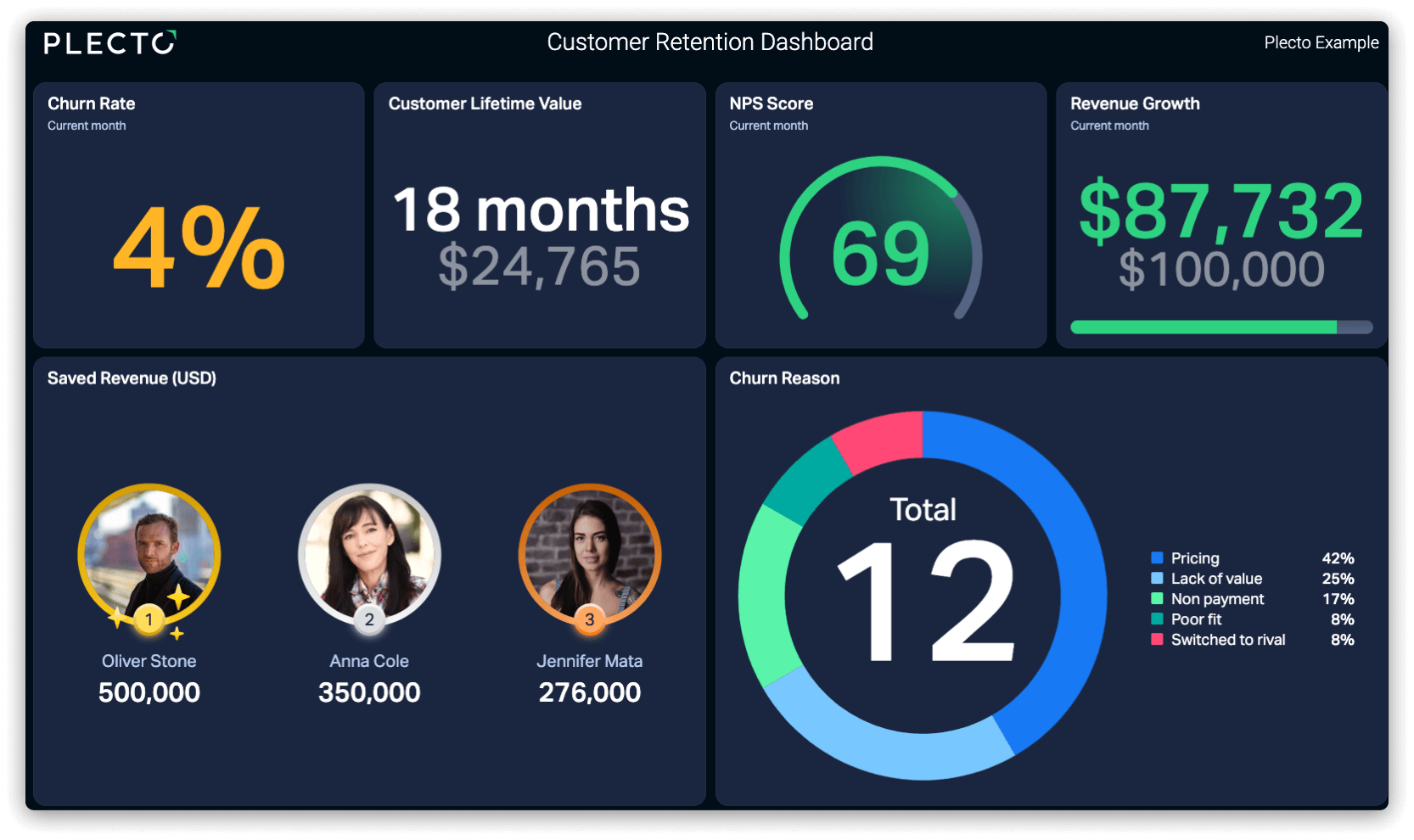
A dashboard may represent data on leads from the source, conversion rate, pipeline value, campaign performance, and retention factors. The one single dashboard allows managers to assess the relationship between the activity and the result instead of measuring campaigns based on the number of clicks.
Real-time visualization becomes handy when there is more than one team working on the same metrics. Plecto integrates the CRM data along with other system information into real-time visuals so that the teams can work on the same metrics.
Omnichannel Marketing Metrics Worth Tracking
Different KPIs are required depending on the company’s business model; however, there are certain types of metrics that could be applied universally. First, acquisition metrics should be used: leads by channel, cost per lead, conversion rate, campaign opportunities. Those metrics will help understand if the company’s efforts in marketing bring some results.
It is also important to measure the relationship between the marketing activities and income. Influenced pipeline, opportunity conversion rate, sales cycle length, customer acquisition cost, and revenue by source (when attribution is possible) will shift the focus from “Which channel was involved?” to “How did those activities contribute to the bottom line?” Customer experience KPIs include response time, repeat purchase rate, retention rate, customer satisfaction, and support calls.
How Omnichannel Marketing Improves Team Alignment
Customer information that is connected enables better coordination between departments. The marketing department will know how leads were managed after being transferred to the sales team, and the sales team can learn more about the campaigns and interactions that led to a prospect. The customer support department will have access to relevant history without the need for customers to provide information again.
It is easier to align departments when there are agreed-upon definitions before creating the dashboard. What qualifies a lead? What is the source of the opportunity? When is an opportunity considered to be active? This helps prevent having a well-designed dashboard but with inconsistent data.
The shared dashboard can also help with enforcing the standards through the dashboard itself because teams have one point where they can see their performance metrics. It would not be necessary to export spreadsheets each week for meeting discussions.
Building an Omnichannel Marketing Dashboard Teams Trust
First of all, define the decisions you want your dashboard to be able to make. The decision of a sales manager will be different from that of an executive, and you will need to know what kind of metrics he or she requires.
Then, define the systems holding the necessary data and determine which system owns each core record. Make sure you do not have duplicate records for one metric that is not owned by anyone, because the main goal of this process is to get reliable information flow into your visualization tool.
Keep your dashboard simple. Overloading it with charts can cover up valuable signals. Define clear KPIs, right time frames, useful filters, and visual comparators that show the difference immediately. If the teams understand the source of numbers, they will start using it daily.
 Build your own
Omnichannel Marketing Success Starts with Data Trust
However, creating a good customer experience involves more than just accessing customers across various channels. Creating a good customer experience involves identifying the customer through these channels and using accurate information to make the customer interaction relevant. This requires the establishment of processes where connections are made using information.
CRM software can act as the basis for these operations while dashboards help to create visibility from the available data. When data is clear, connected and consistent, teams do not waste time making reconciliations but use their time to optimize the customer journey process.
Conclusion
Overall, the best omnichannel marketing efforts involve technology that brings everyone to the same page concerning the customer. With the help of a reliable CRM, connected systems, and performance dashboards, organizations can transition from channel-specific operations to customer experiences.
Start your 14-day free Plecto trial today.
Enjoyed the article? Share it:


LAURA GREENE