
Gamification Bevæger Sig Udover Salg: Hvordan HR, Support og Drift Bruger Det til at Øge Ydelsen

Gamification Bevæger Sig Udover Salg: Hvordan HR, Support og Drift Bruger Det til at Øge Ydelsen
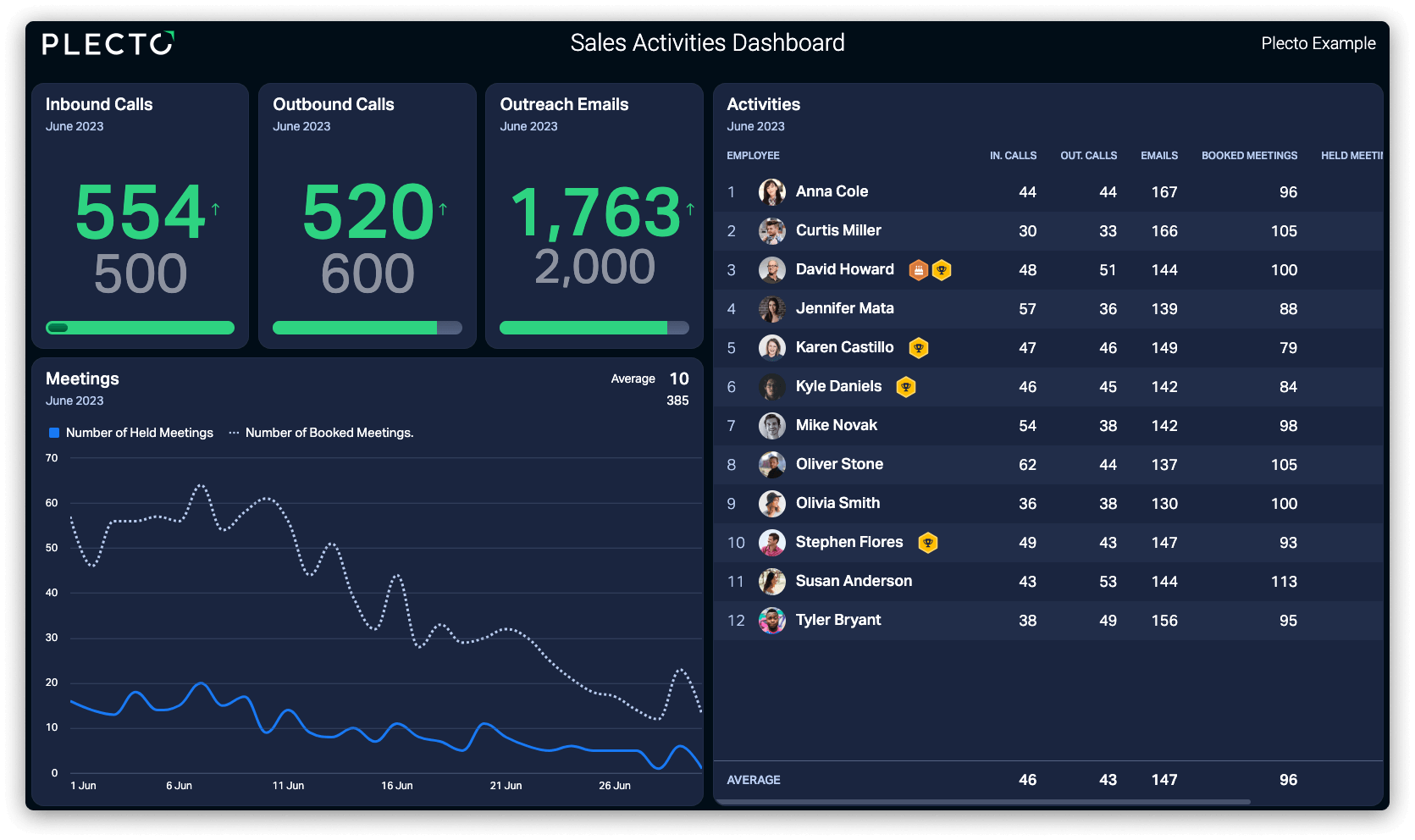
If you've worked in sales, you've probably seen a leaderboard. Your name, a number next to it, and everyone else's right beside yours. Simple idea. And it works because progress is visible and the stakes feel real.
 Build your own
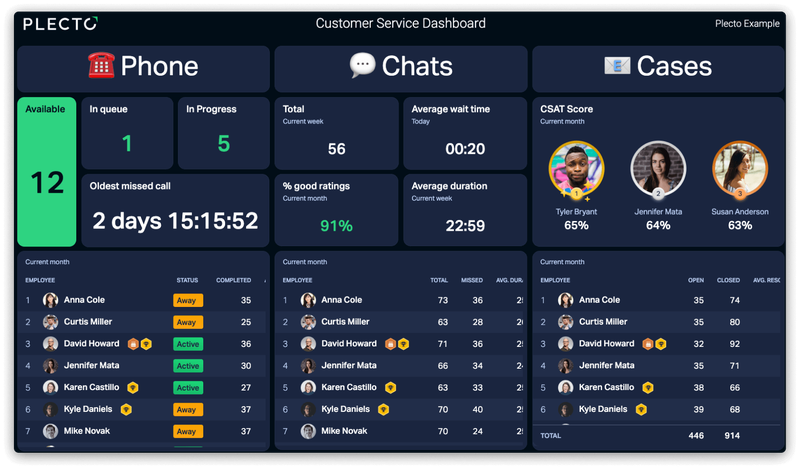
HR teams, customer support leads, and operations managers are now using the same mechanics, and seeing results in places that used to have no real-time visibility into how people were doing day to day.
In this article, we’ll discuss how they are doing that, and how you too can.
Why Gamification Works in the First Place
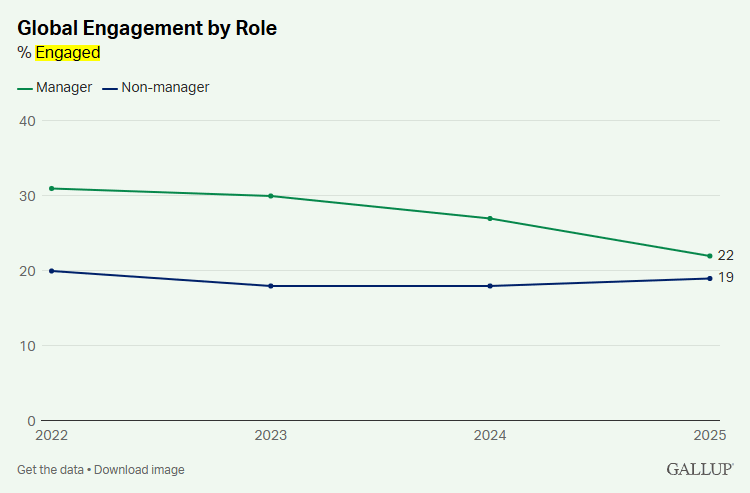
According to Gallup's State of the Global Workplace Report, only 19% of non-managerial employees globally were engaged at work in 2025, while disengagement cost the world economy an estimated $10 trillion in lost productivity.
Gamification addresses that disengagement by giving people a live picture of how they're doing every single day. You see where you stand and where you can be, and that motivates you to keep improving, hit the next milestone, and stay engaged instead of losing interest.
How HR Teams Are Using It
Training completion is one of the oldest problems in HR. You build a course, people start it, but most of them don't finish it. One reason is that there's nothing keeping them engaged after the first few lessons.
That explains why gamified e-learning sees 90% completion rates compared to 25% for traditional training.
Ford's gamified LMS saw a 417% increase in learning engagement after introducing game mechanics into product training. This happened because gamification gave people a clear sense of progress and a reason to keep going.
Beyond training, gamification is changing how HR handles onboarding and peer recognition. If your new hires can move through onboarding as a series of challenges rather than a stack of documents, they are more likely to engage with the material differently.
What Gamification Does for Customer Support
Support agents handle a lot. The queue is always there, and the tickets keep coming. Without any visible sense of momentum, even an agent who's doing excellent work can start to feel like none of it is adding up to anything.
A real-time wallboard changes that. Once your agents can see their first-contact resolution rate, quality score, and response time updating throughout the day, they don’t need a manager to know how well they are performing.
And when that visibility is paired with team challenges rather than just individual rankings, the culture in the support team changes. Experienced agents start helping newer ones because the team's number matters, rather than just their own.
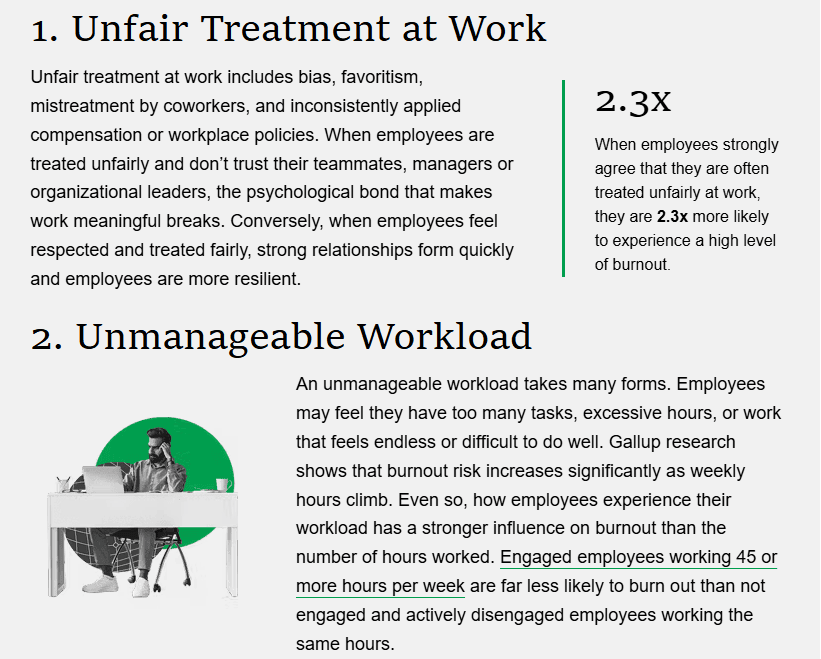
Of course, unmanageable workload and lack of recognition are two of the five root causes that most strongly predict burnout at work, according to Gallup's research on burnout. Therefore, a gamified support environment won't solve a staffing shortage. You still need to fix that issue.
One thing worth getting right early is that what you put on the leaderboard shapes how your team behaves. If the only metric on the wallboard is tickets closed per hour, some agents will rush through complex issues to hit the number. Put quality scores alongside speed metrics, and the incentive shifts toward actually solving problems, rather than just closing them fast.
How Operations Teams Are Applying It
Operations teams already track things like pick rates, error rates, and on-time deliveries. The problem is that most employees only see those numbers after the work is done, if they see them at all.
Gamification puts those numbers in front of people as they work. They can see how they're doing, spot problems early, and try to improve before the shift ends.
Good performance also becomes more visible. People share tips that work, and more employees are willing to learn new tasks because they can see the rewards that come with it.
What you put in the game matters, though. Amazon's early experiments with gamified productivity screens drew significant criticism because the mechanics only tracked speed. Critics argue the focus on speed could result in workplace hazards and injury without proper care. So, safety and accuracy need to sit alongside throughput, or the game works against you.
How to Set Up Gamification So It Actually Sticks
Gamification in HR, support, and operations only works best when you set it up the right way. Here’s how:
Pick the Behaviors First, Then the Platform
Before anything else, write down two or three behaviors that, repeated consistently every week, would genuinely move your results by the end of the quarter.
For a support team, that might be quality score and first contact resolution. For operations, it might be error-free packing percentage and cross-training completions. For HR, it might be learning streak days and peer recognitions given.
Close the Gap Between Action and Recognition
The further apart those two things are, the less the recognition changes behavior. A monthly report doesn't move people the way a live wallboard does.
So, set up separate views for individual progress and team performance. Plecto's real-time dashboards pull data from your existing tools and display it where your team can see it throughout the day.
Your team should also be able to track their own development without constantly measuring themselves against whoever is at the top of the board.
Mix Individual and Team Recognition
Find a balance between individual and team recognition. One week, you can focus on team quality, the next on individual productivity speed, and then another on cross-training outcomes per unit.
As part of the rewards for team recognition, you can consider printed certificates, a milestone displayed via custom frames in the office, or blank apparel that can be branded with achievements in the talk, reminding people that their effort is noticed long after the notification disappears.
Ask Your Team Before You Build It
Before you finalize your metrics or choose your rewards, talk to the people who'll use the system. Ask what would feel meaningful to them. Ask what part of their work they wish more people could see.
 Build your own
Run a pilot with one team before rolling it out everywhere. Four to six weeks is enough to see what's working and what isn't.
Conclusion
Gamification works in sales because it makes progress visible every day rather than once a quarter. That same logic applies in HR, support, and operations.
Your people are already doing measurable work. All gamification does is give them a way to see it, track it, and feel recognized for it in real time.
To make it possible, start with the behaviors that actually matter in your context and build from there on the right platform. Ensure your teams are recognized as early as possible, mix individual and team recognition, and ask your team before you choose which rewards or metrics to use.
Start din gratis 14-dages Plecto-prøveperiode i dag.
Kunne du lide artiklen? Del den:


JESSE GALANIS